
DOMINANT ANGLE
Lisbon measures the Iranian offer by its immediate effect on the markets and on fuel prices, between stock market relief on Wall Street and domestic political pressure on fuel tax.
Dominant angle identified — does not reflect unanimity of this country’s media
KEY POINTS
- 01
The Iranian plan conditions the reopening of the Strait of Hormuz to the lifting of the naval blockade, the end of oil sanctions, and respect for the Israel-Hezbollah ceasefire in Lebanon (RTP)
- 02
Wall Street closed higher (Dow +0.93%, Nasdaq +0.48%, S&P500 +0.51%) amid a decline in oil prices linked to hopes of reopening the Strait of Hormuz (RTP)
- 03
According to the Wall Street Journal, cited by Observador, Donald Trump rejects the proposal and Washington could resume its strikes after the November 3 midterm elections
ANALYSIS
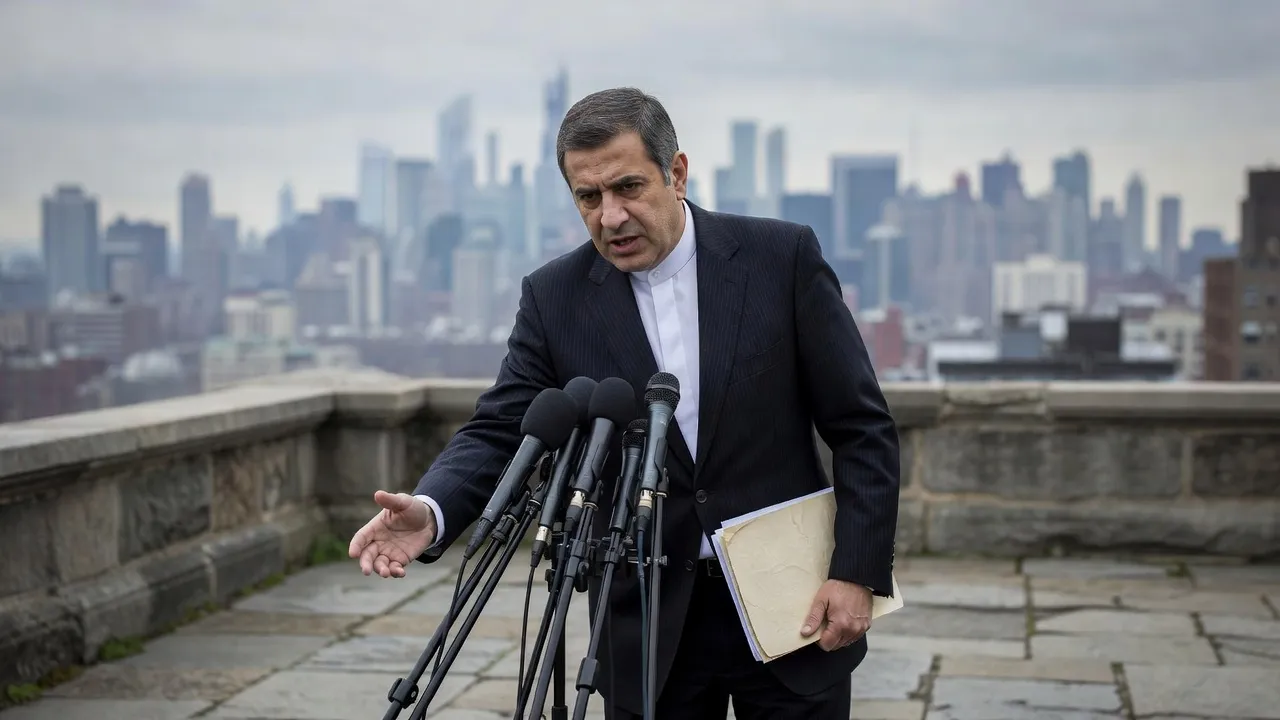
Lisbon, September 26, 2026. In New York, on the sidelines of the United Nations General Assembly, Iranian Foreign Minister Abbas Araghchi presented a seven-day plan on Friday to reopen the Strait of Hormuz. According to RTP, the proposal, transmitted to US envoy Steve Witkoff on Tuesday, conditions the reopening on the lifting of the naval blockade of Iranian ports, the end of sanctions on oil sales, and respect for the ceasefire between Israel and Hezbollah in Lebanon. "If certain conditions are met, the strait will be reopened within a seven-day period and negotiations will resume," Araghchi said. Trita Parsi, vice president of the Quincy Institute, notes that the plan was presented during a private meeting with US representatives last Thursday. For researcher Urban Coningham, of the Royal United Services Institute, quoted by Al Jazeera, Tehran is pressuring Donald Trump on oil and gas prices, reminding him that this window of opportunity may not present itself again before the US midterm elections.
The Portuguese press first notes the shockwave on the markets. According to RTP, Wall Street closed higher, driven by the decline in oil prices: the Dow Jones gained 0.93%, the Nasdaq 0.48%, and the S&P 500 0.51%. "Hopes for a diplomatic solution to the conflict in the Middle East have led to a decrease in oil prices today," explained Angelo Kourkafas, of Edward Jones, to AFP. However, investors remain concerned about the rise in bond yields: the 30-year rate reached 5.50%, a high since 2004, and the 10-year rate 5.22%, unseen since 2007.
Observador reports that the Wall Street Journal, citing anonymous US officials, claims that Donald Trump is rejecting the proposal, doubting Tehran's ability to keep its commitments, and that Washington may resume its strikes after the November 3 election.
In Portugal itself, the oil equation is fueling an internal debate: Iniciativa Liberal, PCP, and CDS are criticizing the government of Luís Montenegro for not lowering the ISP. "The government is not legally obligated to do so, but it is morally obligated," said IL president Mariana Leitão, citing families "deeply affected" by the rise in fuel prices.