
DOMINANT ANGLE
Dhaka is first concerned about the security vulnerability of the Saudi kingdom: airport struck, crown prince taken to safety, air defense called into question, amid the regional US-Iran war.
Dominant angle identified — does not reflect unanimity of this country’s media
KEY POINTS
- 01
Saturday, October 10, attack on Riyadh's airport: 13 dead and at least 300 injured, the worst for Saudi Arabia in a decade (The Daily Star).
- 02
An Aramco administrative building in Dhahran was hit Tuesday evening: "limited fire", no casualties; four injured and 15 homes damaged in Riyadh by missile debris.
- 03
The coalition called on civilians to evacuate the central station of the Yemen Petroleum Company in Sanaa before the operation; the Houthis promised a "harsh and painful" response (TBS News).
ANALYSIS
Dhaka, October 14, 2026. In the Bangladeshi press, the escalation between Riyadh and the Houthis is first reported as a matter of the kingdom's security. The Daily Star recalls that Saudi Arabia suffered its worst attack in a decade on Saturday, October 10: 13 dead and at least 300 injured at Riyadh's international airport. The newspaper quotes information from the Independent, the Wall Street Journal, and the AP, according to which Crown Prince Mohammed bin Salman has been moving from palace to palace, equipped with bunkers, and has not been seen in public since the previous Tuesday.
The daily also details the investigation opened by Riyadh into the failure of its air defense. The first elements indicate that the Houthis first launched several drones to pave the way for a mix of cruise and ballistic missiles, which traveled more than 1,000 kilometers. These missiles, capable of changing trajectory in flight, pose a challenge to Patriot interceptors. Donald Trump says he is considering joining Saudi strikes, and the allies of the "Makkah Pact" have expressed their support.
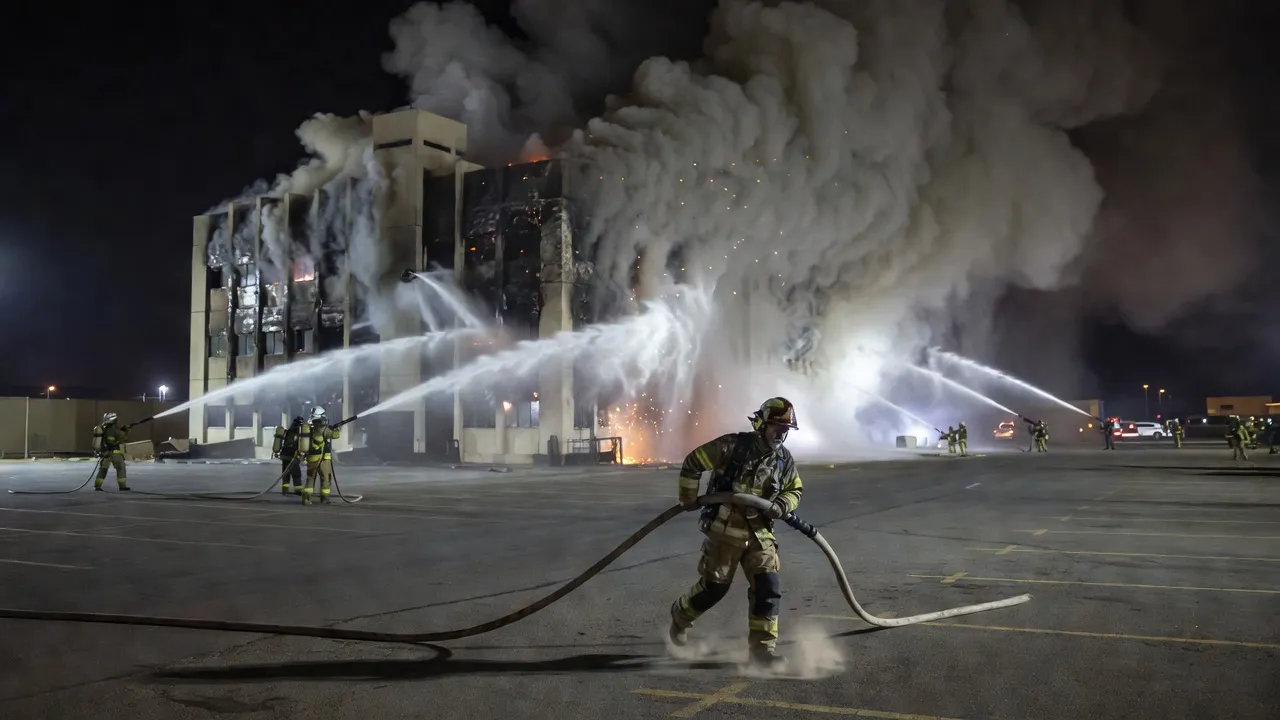
For Tuesday, October 13, The Daily Star reports that the coalition struck oil sites in western Yemen, in Sanaa, and in the provinces of Dhamar and Saada. Spokesman Turki al-Maliki claims they were fueling the Houthis' "war effort" against the kingdom and the Red Sea. In the evening, an administrative building of Aramco in Dhahran was hit, with a "limited fire" and no casualties, according to the Ministry of Energy. The debris of two intercepted cruise missiles injured four people in Riyadh and damaged 15 homes, according to civil defense.
TBS News focuses on the warning that preceded the strikes: the coalition called on civilians to evacuate the central station of the Yemen Petroleum Company in Sanaa. Houthi military spokesman Yahya Saree promised a "tough and painful" response to Riyadh. The Houthis, in turn, summoned employees near Aramco facilities to leave, calling them legitimate targets.
TBS situates the confrontation within a broader regional conflict between the United States and Iran, of which it is presented as an overflow. It notes that Riyadh has struck the Houthis in recent weeks and supports a counter-offensive by the Yemeni government after the group's capture of a strategic territory on the Red Sea coast. Riyadh's airport remains closed, disrupting Saudi air traffic. Both media outlets primarily cover the consequences for the kingdom; the fate of Yemeni civilians remains in the background.