
DOMINANT ANGLE
Singapore gauges the Saudi-Houthi escalation in terms of straits and energy prices: Hormuz restricted to the east, Bab al-Mandeb threatened to the south, and oil that Washington says is being driven up ahead of the elections.
Dominant angle identified — does not reflect unanimity of this country’s media
KEY POINTS
- 01
The Saudi coalition struck the Sabah station of the Yemeni Petroleum Company near Sanaa on October 13, as well as sites in Hodeidah and Dhamar; the company says the site had no inventory.
- 02
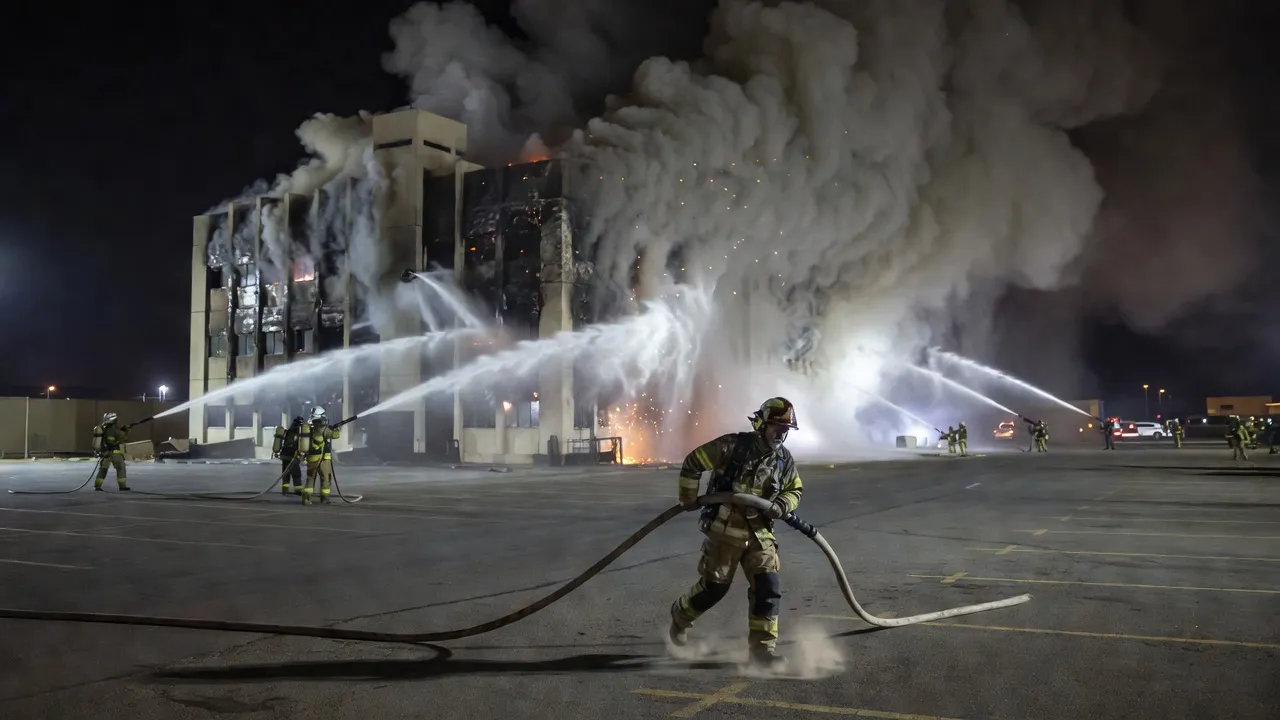
According to an Aramco source cited by Reuters, a ballistic missile hit the Dhahran complex on the night of October 13, damaging the top three floors of an office tower.
- 03
Donald Trump accused the Houthis, "probably at Iran's request", of trying to drive up oil prices before the US elections.
ANALYSIS
Singapour, 14 October 2026. The Straits Times, which largely reprints Reuters, and Mothership are treating the escalation between Saudi Arabia and the Houthis as a shock to the maritime and energy arteries that the city-state depends on.
On Tuesday, 13 October, the coalition led by Riyadh asked civilians to leave the central Sabah station of the Yemeni Oil Company, on the outskirts of Sanaa, before an announced operation. In the evening, it declared that it had struck this site and others in Sanaa, Hodeidah, and Dhamar in order to "neutralize the capabilities" of the Houthis to threaten the kingdom and international shipping lanes. It claims that they were used to supply their arsenal of missiles and drones. The Yemeni company specifies that the station did not contain any stock at the time and that the strike did not affect the reserves or supply chains.
The retaliation is reported based on a source from the company cited by Reuters: a ballistic missile hit the Aramco complex in Dhahran on the night of 13 October, damaging the last three floors of an office tower, which caught fire. Aramco has made no official comment. The daily recalls that this is the headquarters of the company, "the backbone of the kingdom's economy". The Houthis had threatened a "tough and painful" response and warned oil sector employees to stay away from targeted sites.
Mothership, in an explanatory article, presents the kingdom facing a two-front situation: to the east, the American war against Iran has restricted the Strait of Hormuz; to the south, the Houthi advances threaten Bab al-Mandeb, which connects the Indian Ocean to the Red Sea and the Suez Canal. The media sees a cascading effect on the transport of global energy supplies. It recalls that the Houthis control at least a third of Yemeni territory and govern about two-thirds of a population of 34 million inhabitants.
The American aspect is viewed from the angle of prices. Donald Trump accused the Houthis, "probably at Iran's request", of seeking to "deliberately" drive up oil prices before the midterm elections, while saying he would never forget their attacks. He also mentioned the idea of asking Turkish President Erdogan to support Saudi interests, after saying he was considering joining the strikes. The Straits Times notes that the rise in fuel prices is weighing on American households as Republicans defend their majority in Congress.
SOURCES (2)
- Straits TimesMEDIUM
- MothershipMEDIUM