
DOMINANT ANGLE
Paris is deciphering an escalation where the Houthis, with low-cost missiles, are testing Saudi defense and Aramco's infrastructure.
Dominant angle identified — does not reflect unanimity of this country’s media
KEY POINTS
- 01
The coalition struck al-Sabaha site near Sanaa on Tuesday, October 13, as well as sites in Saada and Dhamar, in the name of the Houthi "war effort" (RFI).
- 02
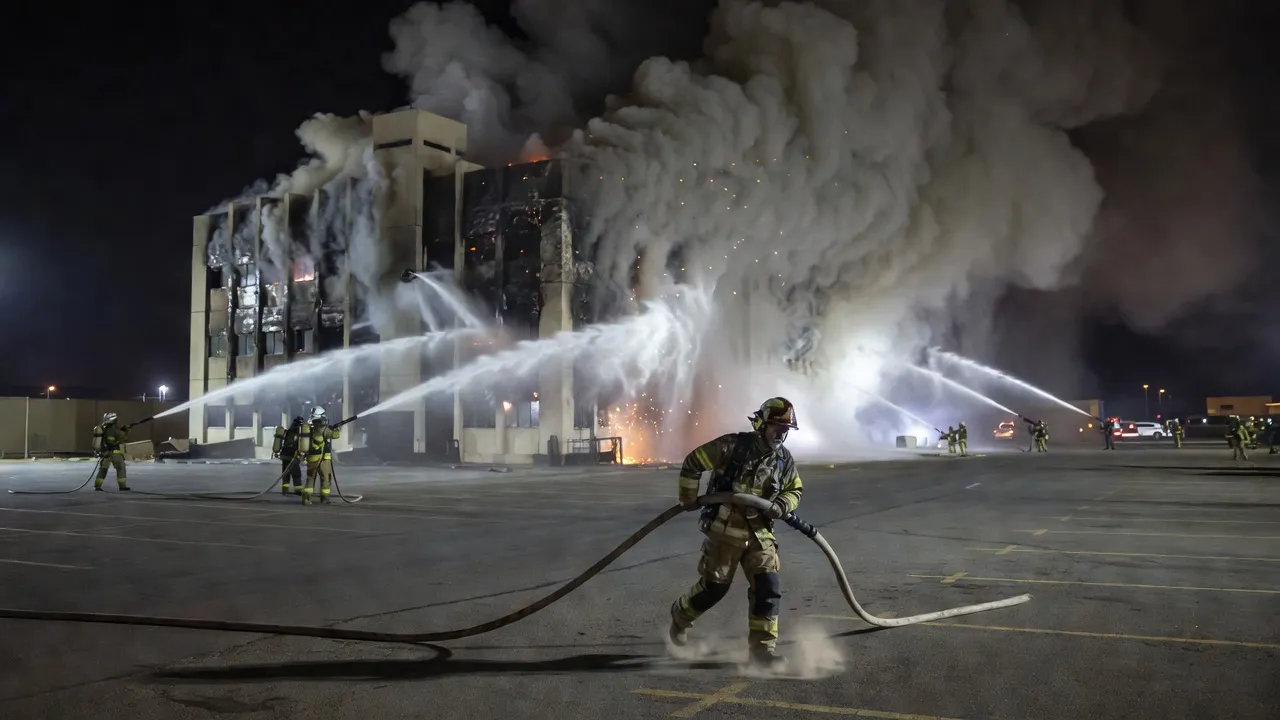
An Aramco administrative site in Dhahran was hit, with a limited fire and no casualties, and four people were injured in Riyadh by missile debris (France 24).
- 03
The embassy strictly advises its nationals to avoid the airports of Riyadh, Jeddah, and Dammam (France 24).
ANALYSIS
Paris, October 14, 2026. The French press is covering the escalation between Riyadh and the Houthis from a military and security angle. On Tuesday, October 13, the coalition led by Saudi Arabia bombed the al-Sabaha site of the Yemen Petroleum Company, west of Sanaa, as well as installations in the provinces of Saada and Dhamar. According to RFI, its spokesperson Turki al-Maliki claims that these sites supported the "war effort" of the Houthis. The coalition had called for the site to be evacuated, which pushed many Yemenis towards gas stations. The Yemen Petroleum Company assures that it contained "no stock of petroleum products".
Le Monde details the response: intercepted missiles and drones, a strong explosion heard by AFP journalists in Riyadh, a ballistic missile shot down heading towards Dhahran, the headquarters of Aramco, and a second missile targeting Harad, which hosts petroleum installations. The Houthis, through the voice of Yahya Saree, accuse the Saudi aviation of 104 strikes in twenty-four hours and report civilian deaths; the newspaper attributes these figures to their sole spokesperson.
France 24 reports on Wednesday, October 14, that an administrative site of Aramco in Dhahran was hit, with a limited fire and no casualties according to the Ministry of Energy, and that four people were injured in Riyadh by missile debris, according to the SPA agency. The channel also broadens the scope: the director of the IMF, Kristalina Georgieva, mentions potential negative repercussions for everyone, and two Iranian officials tell Reuters that Tehran is seeking to maintain high oil prices before the US midterm elections.
The national dimension is concrete: the French embassy in Riyadh "strongly" advises its citizens not to pass through the airports of Riyadh, Jeddah, and Dammam, and not to travel to these cities unless necessary. The airport in Riyadh remains closed after a deadly strike on Saturday, October 10, claimed by the Houthis.
On BFM Business, Mathieu Jolivet judges that Riyadh is "overwhelmed" and speaks of a "fiasco": the Houthis have "a true warrior culture" and their low-cost missiles make their attacks less expensive than the Saudi defense. The French narrative thus emphasizes the asymmetry of means and the security of infrastructure, more than the fate of Yemeni civilians.
SOURCES (4)
- BFM BusinessMEDIUM