
DOMINANT ANGLE
Doha views the escalation between Riyadh and the Houthis as a security tipping point: deadly airports, strikes on Sanaa, retaliation on Aramco, with the Yemeni government's offensive in the background.
Dominant angle identified — does not reflect unanimity of this country’s media
KEY POINTS
- 01
Since October 5, five Saudi airports have suffered ten attacks, with 20 dead and hundreds injured (Al Jazeera Arabic).
- 02
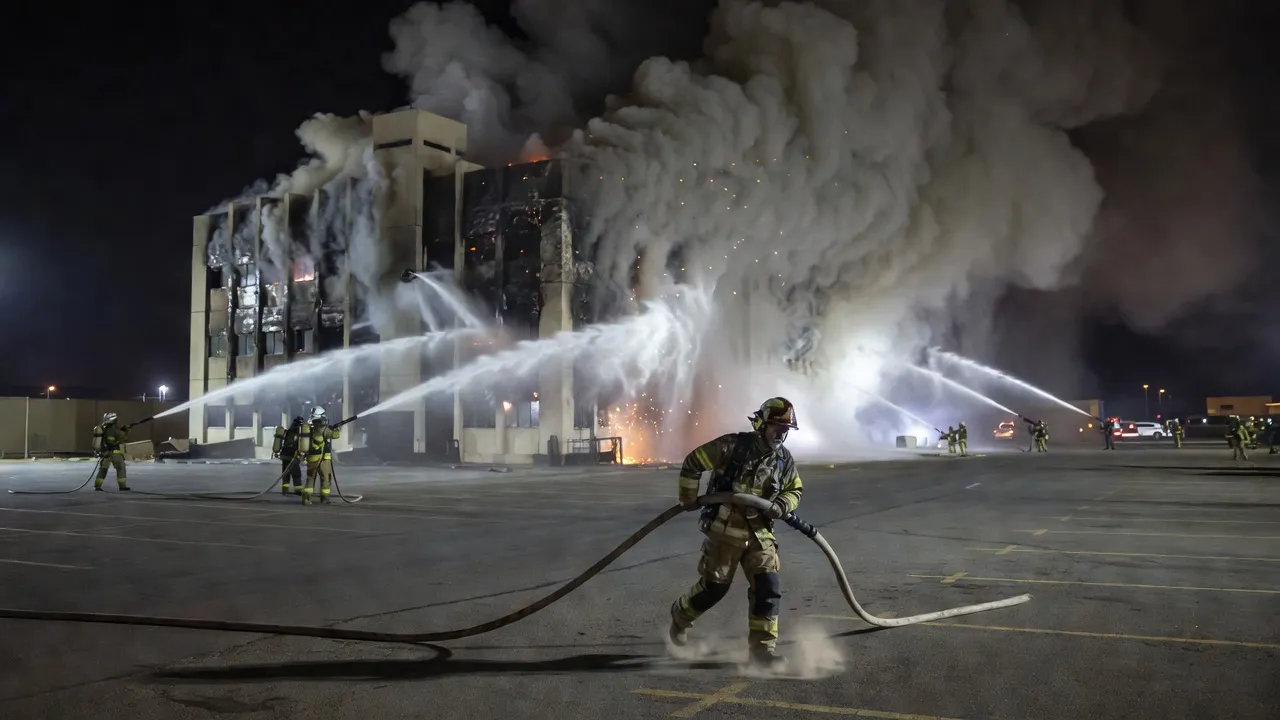
The Saudi Ministry of Energy reports a small fire with no injuries in an Aramco building in Dhahran (Al Jazeera).
- 03
On October 10, the attack on Riyadh's King Khalid Airport killed 13 people, the deadliest against Saudi Arabia in over ten years (Al Jazeera).
ANALYSIS
Doha, October 14, 2026. Qatar's primary voice, Al Jazeera, frames the Saudi-Houthi escalation from a security angle. On Tuesday, October 13, the Saudi-led coalition asked civilians to evacuate the site of the Yemen Petroleum Company and the central station of al-Sabaha in Sanaa, ahead of a "qualitative operation". Houthi spokesman Yahya Saree retorted that any strike on the capital would be met with a "tough and painful response to Riyadh" and called on employees to leave Aramco facilities.
Al Jazeera's live report on October 14 states that the Saudi Ministry of Energy reported a small fire with no injuries in an Aramco building in Dhahran. The coalition claims to have struck Houthi energy terminals and fuel reserves, with its spokesman Turki al-Maliki saying precautions were taken to avoid "collateral damage" among civilians. A cruise missile was intercepted over Al-Kharj, and debris injured at least four people in Riyadh.
The context is one of a bleak series: since October 5, five Saudi airports have suffered ten attacks, resulting in 20 deaths and hundreds of injuries, according to the channel. It also devoted a segment to the funeral of Azza Ramzy, a 28-year-old Egyptian flight attendant killed on October 10 at King Khalid Airport, in an attack described as the deadliest against the kingdom in over a decade.
On the ground, the channel is following the government's "Yemen Dawn" operation. Rashad al-Alimi, president of the Presidential Council, sets the objective: to retake all Houthi territories, including Sanaa. An Arabic-language editorial sees the recapture of Dhubab and positions on Bab al-Mandeb, with around 100 coalition fighters in support, but judges that military support is insufficient. The human aspect is evident in Taiz, where Houthi bombings have killed dozens of civilians, and the UN warns that wheat and flour could run out in less than three weeks.
The diplomatic aspect involves Washington and the Gulf capitals. Donald Trump accuses the Houthis, "probably at Iran's request", of trying to drive up oil prices before the midterm elections, and promises to "never forget" these attacks. Gulf Times relays the call between Saudi Foreign Minister Prince Faisal bin Farhan and his Emirati counterpart, Sheikh Abdullah bin Zayed, who expressed Abu Dhabi's "full solidarity". Al Jazeera also cites Recep Tayyip Erdoğan, who condemned the attack to Mohammed bin Salman, and the US embassy, which advises its citizens to reconsider any travel to the kingdom.