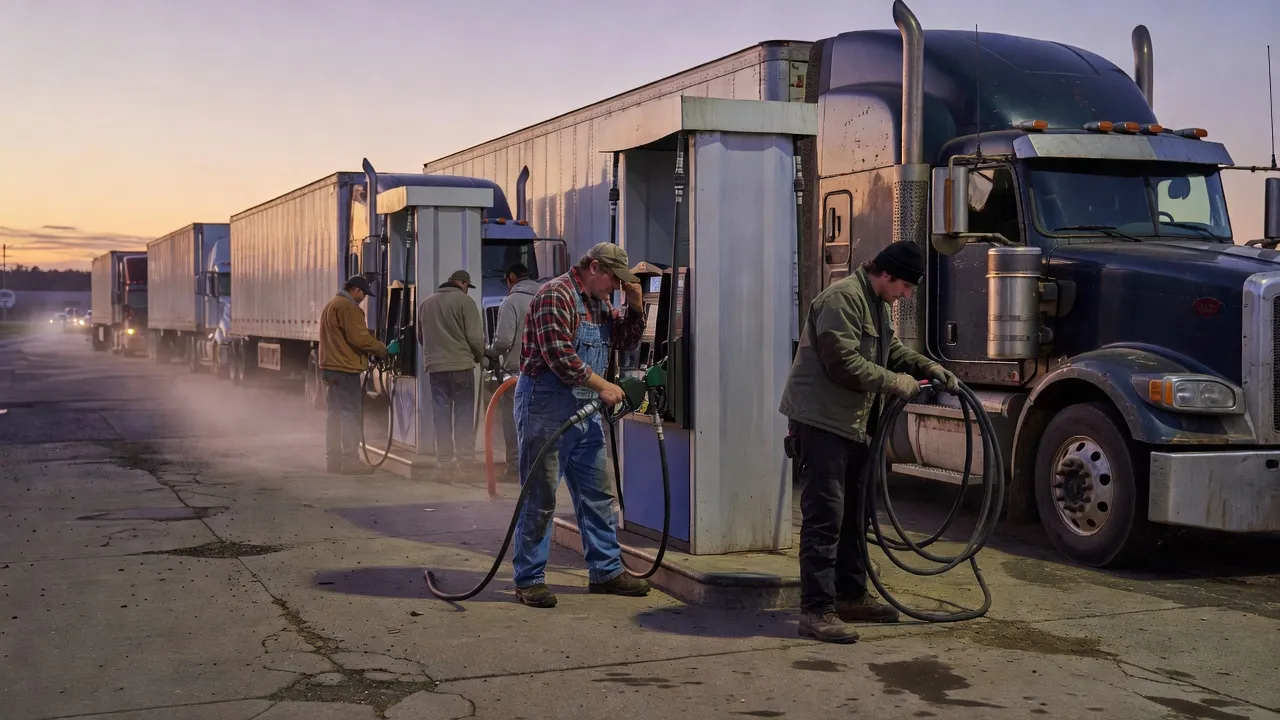

DOMINANT ANGLE
Kuala Lumpur is weighing the deal on Russian diesel in terms of fuel: the Malaysian press sees it first and foremost as a response from Trump to the surge in prices before the midterms, far ahead of the dispute over sanctions.
Dominant angle identified — does not reflect unanimity of this country’s media
KEY POINTS
- 01
Trump announces over 300,000 tonnes of Russian diesel immediately, 500,000 tonnes in November, then one million tonnes (Malay Mail, The Vibes).
- 02
The US Treasury has issued a temporary license authorizing the import of Russian diesel until April 7, according to The Vibes.
- 03
US diesel was at $6.28 per gallon on Thursday, about 70% higher since February 28, according to AAA as cited by The Vibes.
ANALYSIS
Kuala Lumpur, October 10, 2026. Malaysia's government views the announcement by Donald Trump as a matter of pump prices and the American electoral calendar. On Friday, October 9, after a meeting with Vladimir Putin, the American president wrote on social media that Russia would provide "immediately" more than 300,000 tonnes of diesel "to the American and global market", equivalent to around 2.25 million barrels, according to The Vibes. This would be followed by 500,000 tonnes in November, then one million tonnes, with larger volumes promised afterwards.
The two Malaysian news outlets emphasize the context. The Vibes cites the AAA association of motorists: American diesel reached $6.28 per gallon on Thursday, up around 70% since the start of the war with Iran on February 28. Malay Mail notes that regular gasoline has risen by more than 46% since the end of February, to $4.37 per gallon (17.85 ringgit), after the blockade of the Strait of Ormuz by Tehran. Diesel futures contracts fell by nearly 5% on the announcement, to $4.64.
The legal aspect is presented as temporary: the US Treasury has issued a license authorizing the importation of Russian diesel until April 7, which relaxes the restrictions imposed on Russian oil companies in October 2025. The Vibes, citing Reuters, specifies that subsequent deliveries will depend on the state of Russian refineries, some of which have been damaged by Ukrainian attacks. The Kremlin said that Russia "reaffirmed its willingness" to supply oil and petroleum products to the American and global markets.
The political aspect is seen from Malaysia's perspective: the rise in prices threatens to become a handicap for the Republicans, who risk losing their narrow majority in Congress on November 3. Trump justifies his decision with a priority: lower prices for Americans, "especially our Great Farmers, Ranchers, and Truckers".
The Ukrainian reaction is reported without comment. According to Malay Mail, Volodymyr Zelensky judged the decision "certainly not honest", "unworthy of our partners" and "weak". The articles provided do not develop the reaction of Congress or the effects of the mechanism on Asian or Malaysian markets; the emphasis remains on the price mechanism and the American electoral calendar.