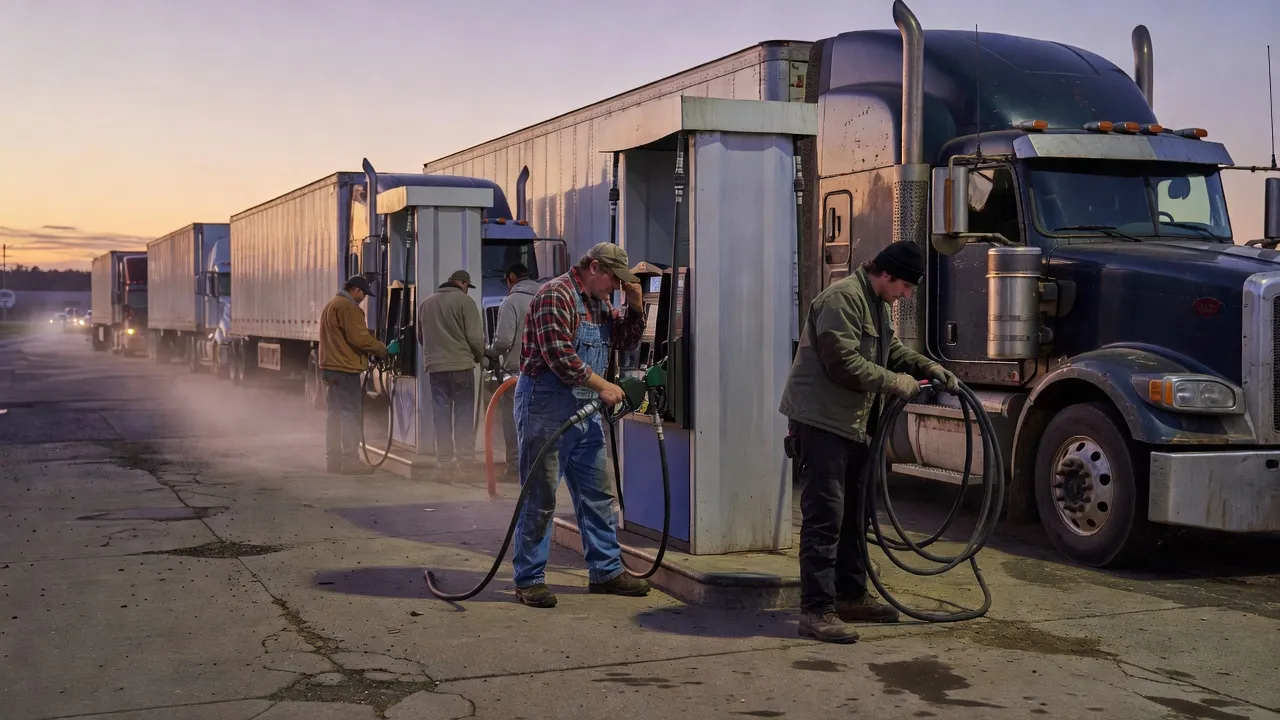

DOMINANT ANGLE
Singapore views the agreement as a benchmark: Russian diesel is judged by its effect on prices, which analysts say is limited, and in the context of the blockade of the Strait of Hormuz.
Dominant angle identified — does not reflect unanimity of this country’s media
KEY POINTS
- 01
Trump announces that Russia will deliver over 300,000 tonnes of diesel immediately, 500,000 tonnes in November, then 1,000,000 tonnes and 3,000,000 tonnes (Channel News Asia).
- 02
The US Treasury has issued a temporary license allowing Russian diesel to reach global markets until April 2027 (Channel News Asia).
- 03
Zelensky judges the agreement "a weak decision by strong partners" and "an investment in a war that must be ended" (Straits Times).
ANALYSIS
Singapour, October 10, 2026. The city-state's press initially treats the agreement as a gesture on prices. The Straits Times reports that Donald Trump announced, on October 9, that Russia would provide "immediately" more than 300,000 tonnes of diesel to the American and global markets, after a meeting described as "highly successful" with Vladimir Putin. The newspaper specifies that diesel, used in agriculture, heating, and road transport, is close to a record, and that the November 3 election will determine control of Congress.
Channel News Asia details the schedule advanced by Trump on his Truth Social platform: 500,000 tonnes in November, then 1,000,000 tonnes, and finally 3,000,000 tonnes "within a short period of time", depending on the state of Russian refineries. The US Treasury issued a temporary license on Friday, October 9, allowing Russian diesel to circulate to global markets until April 2027. The channel puts the rise in pump prices into the context of the war: since late February, American-Israeli strikes targeting Iran have led Tehran to block the Strait of Ormuz, a critical energy transit passage, which weighs on American households.
The Straits Times relays the caution of analysts: the volumes should not strongly lower prices. It adds that the White House is also considering recourse to the Defense Production Act to increase American diesel production. Kirill Dmitriev, Putin's emissary, hailed the Russian-American cooperation on diesel and energy on X.
On the Ukrainian side, the newspaper quotes Volodymyr Zelensky, who describes the agreement as a "weak decision by strong partners" and an "investment in a war that must be ended, not prolonged". According to him, "Russia will repay the diesel with more terror and perfidy". He estimates that the agreement would bring additional funds to Moscow and hinder the search for a settlement, while a Ukrainian delegation was in the United States. He calls for "real de-escalation" on a reciprocal basis.
The two media outlets align announcements, reactions, and expert reservations without editorial commentary on the sanctions regime itself.