
DOMINANT ANGLE
Brasilia links the sale to the regional crisis: the press connects the American authorization to the renewed war against the Houthis and to the Israeli-Greek naval exercises targeting Turkey, an ally of Riyadh.
Dominant angle identified — does not reflect unanimity of this country’s media
KEY POINTS
- 01
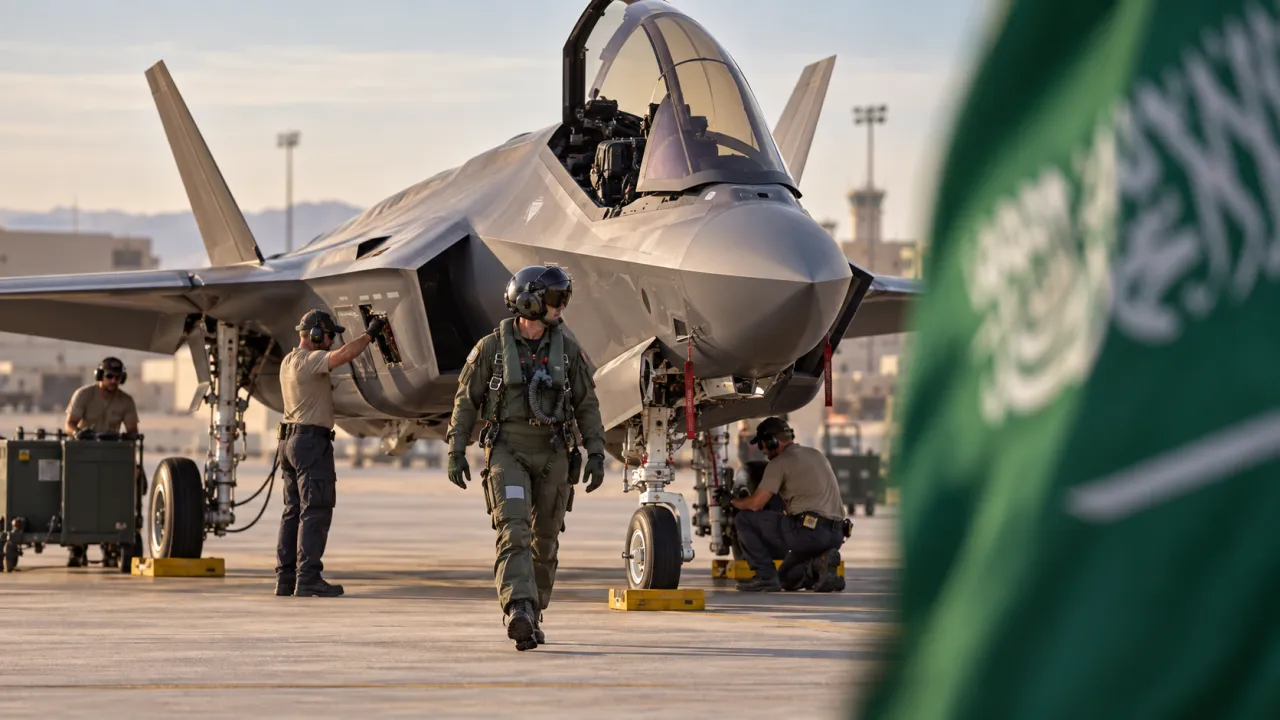
The State Department has approved the sale of 48 F-35A aircraft and 49 Pratt & Whitney F135 engines for approximately $24.3 billion, according to AFP cited by the Jornal de Brasília.
- 02
The agreement, announced by Trump in November during Mohammed bin Salman's visit to Washington, still needs to be reviewed by the US Congress.
- 03
Only Israel operates F-35s in the Middle East and its officials have expressed reservations about the sale to Riyadh, according to the Folha.
ANALYSIS
Brasília, September 18, 2026. The Brazilian press sees the US authorization to sell 48 F-35s to Saudi Arabia as a signal sent to the Middle East in the midst of recomposition, rather than just a simple arms transaction. According to the US Department of State, cited by the Jornal de Brasília via AFP, the sale involves 48 F-35A stealth fighter jets, accompanied by 49 Pratt & Whitney F135 engines, for an estimated amount of $24.3 billion (approximately 125 billion reais). The agreement still needs to pass Congress, which has now been notified.
Washington justifies the sale by stating that it "will improve Saudi Arabia's ability to deter current and future threats," by strengthening "the defense of its territory" and "interoperability with US forces." The State Department also notes that it "will increase the number of operational aircraft" in the kingdom and consolidate its air-to-air and air-to-ground self-defense capabilities.
The newspaper recalls that the announcement was made by Donald Trump in November, during the visit to Washington by Crown Prince Mohammed bin Salman, but that the authorization only comes now, "at a time of crisis for the Saudi kingdom." Riyadh had been demanding a fifth-generation aircraft for years, until now having a mixed fleet of American and European aircraft. In the region, only Israel operates F-35s — with, as Folha highlights, more real combat experience than the Americans themselves; its officials have expressed their reservations to Washington.
The Brazilian coverage inserts the sale into a context of expanded tension: it comes just after Trump refused to support bin Salman in the conflict reopened since July against the Houthis, who have resumed their offensive on the Yemeni coast of the Red Sea and are threatening the Yanbu oil terminal, Saudi Arabia's alternative since the blockade of the Strait of Hormuz by the US-Iran war. On the same day, notes Folha, Israel conducted naval exercises with Greece targeting Turkey, an ally of Riyadh — two moves that the press sees as part of the same geopolitical recomposition of the Middle East.