
DOMINANT ANGLE
Singapore views the sale as a test of the qualitative military edge guaranteed to Israel, as well as a risk of the F-35's stealth technology leaking to China.
Dominant angle identified — does not reflect unanimity of this country’s media
KEY POINTS
- 01
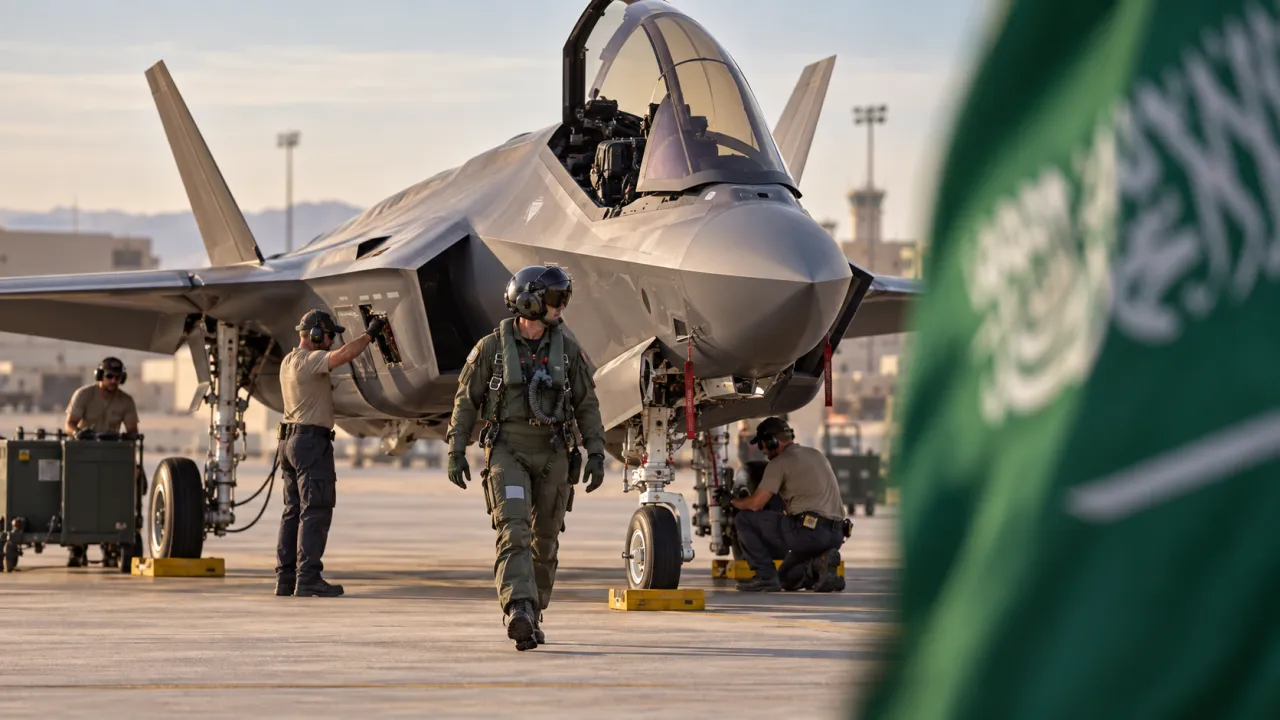
The sale approved on September 17 involves 48 F-35A aircraft and 49 Pratt & Whitney F135 engines, estimated at $24.3 billion (30.9 billion Singapore dollars), notified to Congress without a specified delivery schedule.
- 02
Israel remains the only country in the Middle East to operate the F-35, a decade after it entered service, and US law requires preserving its qualitative military edge over Arab states in the region.
- 03
Washington had excluded Turkey from the F-35 program in 2019 after Ankara's purchase of a Russian air defense system, out of fear that Moscow could access the aircraft's stealth technology.
ANALYSIS
Singapour, Friday, September 18, 2026. The US State Department approved on Thursday, September 17, the potential sale of 48 stealth F-35A fighter jets from Lockheed Martin to Saudi Arabia, for an amount estimated by Washington at $24.3 billion, or $30.9 billion Singapore dollars according to the conversion used by the Straits Times. The contract includes 49 Pratt & Whitney F135 engines, communication equipment, spare parts, and logistical support. The US Congress, now notified, must still weigh in; no delivery schedule has been announced.
For the city-state's press, the issue goes beyond a simple arms contract: it is a test of the American doctrine known as "qualitative military edge" for Israel, the only country in the Middle East to have operated the F-35 for over a decade. The Straits Times notes that the sale would mark "a significant policy shift," likely to alter the balance of military forces in the Middle East while putting this American commitment to Tel Aviv to the test. Riyadh, the world's largest customer for American arms, has been demanding the aircraft for years to modernize its air force and counter regional threats, particularly Iranian ones; the kingdom reportedly made a direct request to President Donald Trump in early 2025.
Channel News Asia links this approval to a precedent: Washington had excluded Turkey, a NATO member, from the F-35 program in 2019, after Ankara's purchase of a Russian air defense system raised concerns that Moscow could access the aircraft's stealth technology. The same concern, the channel notes, now resurfaces around Saudi partnerships deemed close to Beijing. The State Department nonetheless assures that the sale "will not alter the military balance in the region" and that it will strengthen Saudi territorial defense as well as interoperability with American forces.
For Singapore, a small state that has itself bet on the F-35 for its air force, the question of control over this stealth technology - and the conditions imposed on each new buyer - is not abstract: it conditions the strategic value of the aircraft for all its operators, including the most discreet ones.