
DOMINANT ANGLE
Pretoria gauges the shock as a matter of rates and raw materials: the US inflation in September, driven by gasoline, revives the prospect of a Fed hike and weighs on copper as well as tech stocks.
Dominant angle identified — does not reflect unanimity of this country’s media
KEY POINTS
- 01
The US price index rose 0,6 % in September, with more than half of that due to a 9,1 % increase in fuel prices (Business Day, TimesLIVE).
- 02
Operators see a 37 % chance of a Fed rate hike this month, up from 22 % the previous day, according to the CME's FedWatch tool (Business Day).
- 03
Copper fell 1,1 % to $14 338 a tonne in London, its third consecutive daily decline (Moneyweb, Bloomberg).
ANALYSIS
Johannesburg, October 15, 2026. South Africa's economic titles, Business Day, TimesLIVE, and Moneyweb, are covering US inflation in September through agency dispatches, focusing on energy prices and the cost of money.
According to the report from the US Department of Labor, published on Wednesday, October 14, the consumer price index rose 0.6% over the month, after 0.4% in August, in line with economists' expectations. A 9.1% increase in fuel prices explains more than half of the increase. Business Day and TimesLIVE relay a Reuters dispatch: "the US-Israeli war against Iran is driving up energy prices," with diesel reaching record levels, and fears of a rapid impact on supermarkets. The text also notes an expansion of price tensions beyond energy, which raises fears of persistent underlying inflation.
The US political dimension is present but secondary: the dispatch talks about a new blow to Donald Trump and the Republicans before the November 3 midterm elections, and cites a Reuters/Ipsos poll according to which about 78% of Americans blame the price increase on the president's policies, including tariffs and conflict in the Middle East.
The focus is mainly on the Federal Reserve. Operators now give a 37% chance of a rate hike this month, compared to 22% the day before, according to the FedWatch tool from CME. Economist Jeffrey Roach, from LPL Financial, judges that "the last mile to the goal could remain chaotic and maintain high rates."
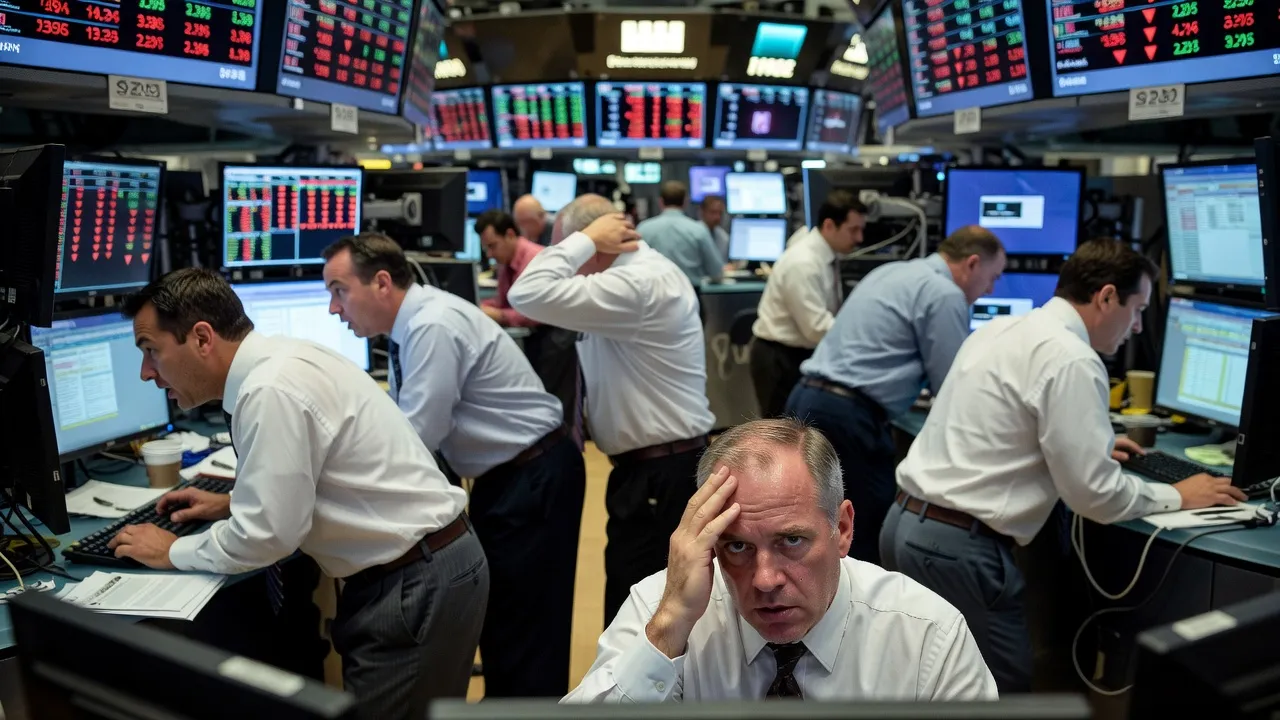
In the markets, Business Day describes a Wall Street in decline: the Nasdaq fell 2.02% and the S&P 500 1.35%. Oracle lost 7.3%, CoreWeave 15%, Nebius 10%, and Dell 12%. The Philadelphia semiconductor index fell nearly 4%, its sixth consecutive decline. Brent was trading around $106.56 a barrel after a Houthi attack on the Saudi Aramco headquarters.
Moneyweb, via Bloomberg, extends the analysis to metals, which the South African economy closely follows: copper fell 1.1% to $14,338 a ton in London, for a third daily decline, with aluminum hitting its lowest level since last year. The South Korean index plummeted 8% on Thursday, as investors doubt the sustainability of AI spending. None of the provided articles directly address the rand or the policy of the South African central bank.