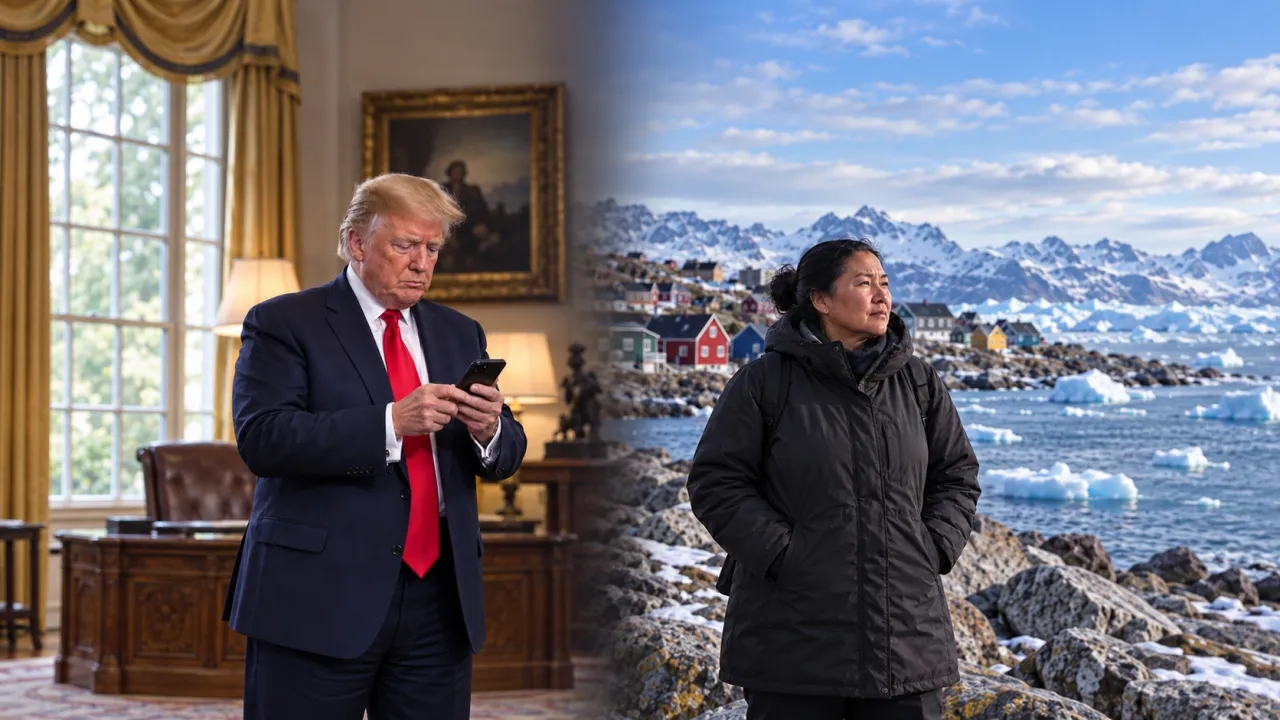

DOMINANT ANGLE
Israel takes away from the American-Greenlandic agreement a flawless security model: a minor ally placed under the permanent protection of a great power, with a formal ban on access for any external actor deemed hostile.
Dominant angle identified — does not reflect unanimity of this country’s media
KEY POINTS
- 01
Donald Trump announces on X that the United States will have the "forever" capability to ensure Greenland's security, in coordination with Denmark and Greenland
- 02
The agreement will incur "no cost" for the United States, and the strengthening of the US military presence on the island is to begin immediately, according to Trump
- 03
Arutz Sheva notes that the agreement prohibits adversaries from installing military bases in Greenland, Trump calling the text a "dream come true" for the United States
ANALYSIS
Jérusalem, September 19, 2026. The two Israeli titles reporting on the agreement between Washington, Copenhagen, and Nuuk do so using almost the exact words of Donald Trump, without adding any critical commentary. The Jerusalem Post quotes the message published by the American president on X in its entirety: "At my direction, we worked with representatives of Denmark and Greenland to guarantee that the United States will forever have the complete ability to do what is necessary in Greenland in order to secure and defend the security of Greenland, and the United States of America." The newspaper emphasizes that this security arrangement will cost Washington "no cost" and that the reinforcement of the American military presence on the island will begin "immediately".
Arutz Sheva, in its dispatch, retains a more offensive phrase from Trump — "This is a dream come true for the United States of America" — and insists on a specific point of the agreement: the ban on adversaries installing military bases on Greenlandic territory. It is this element of exclusion, more than the question of Danish or Greenlandic sovereignty, that structures the Israeli treatment of the file.
Neither the Jerusalem Post nor Arutz Sheva details the legal content of the text: the reference to a defense agreement inherited from the Cold War or the extension of the number of American bases does not appear in either of the two articles consulted. The two titles limit themselves to the presidential announcement and its immediate security scope, without taking up the statements attributed to a State Department official regarding access, stationing, and overflight rights.
Neither of the two articles mentions the reaction of Danish Prime Minister Mette Frederiksen or that of Greenlandic Prime Minister Jens-Frederik Nielsen, nor the scheduled signing calendar on the sidelines of the UN General Assembly. The prism retained is that of an unlimited-duration security agreement, consented to by a small territory to an allied power in exchange for total and free protection — a reading that echoes, without explicitly stating it, the defense arrangements that Israel itself depends on vis-à-vis the United States. Arutz Sheva's mention of the exclusion of potential adversaries from Greenlandic bases finds a particular echo in a country accustomed to measuring its own security by the presence or absence of rival powers in its neighborhood.