
DOMINANT ANGLE
Vilnius gauges the Greenlandic agreement in light of its own history as a small nation neighboring a great power, between displayed guarantees of sovereignty and financial influence networks revealed behind the scenes.
Dominant angle identified — does not reflect unanimity of this country’s media
KEY POINTS
- 01
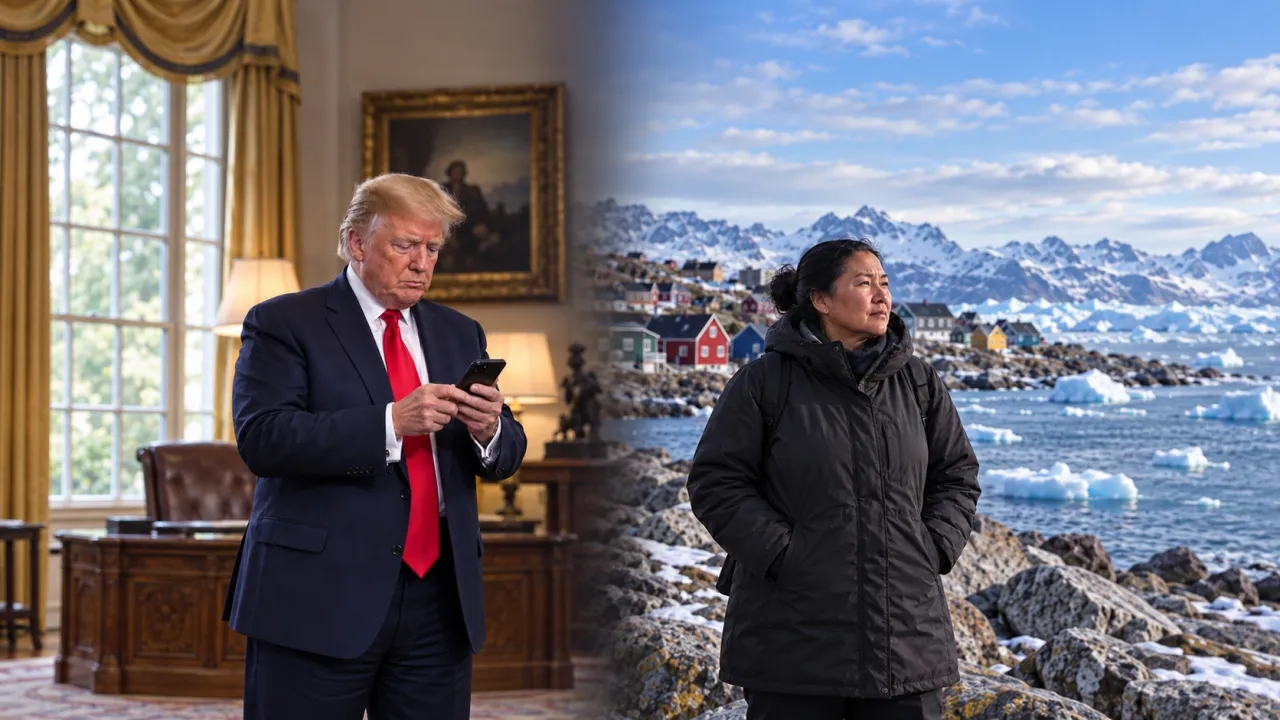
On Truth Social, Donald Trump announces that the United States is getting "permanent control of security and all other needs" in Greenland, an "infinite lifetime" agreement with no end.
- 02
Mette Frederiksen's office claims the text "jointly recognises the sovereignty and territorial integrity" of the Kingdom and "the right of the Greenlandic people to self-determination", signing is scheduled for next week at the UN General Assembly in New York.
- 03
According to Verslo žinios, citing Weekendavisen and Sermitsiaq, Ronald Lauder — a friend of Trump and the originator of the idea to acquire Greenland — is linked to the purchase of a house worth over 700,000 euros for Greenlandic political officials.
ANALYSIS
Vilnius, September 19, 2026. The Lithuanian press reports the agreement concluded between Washington, Copenhagen, and Nuuk with caution, colored by its own history as a small state neighboring a great power. According to 15min, Donald Trump announced on Truth Social that the United States will obtain "permanent control of security and all other needs" in Greenland, an agreement he describes as "infinite life" - "without end". The 80-year-old American president asserts that "no adversary of the United States will ever again have a base in Greenland, a military presence in Greenland, or make sensitive investments in Greenland without our explicit written agreement", and announces that Washington "will immediately begin building a significant military presence" on the island.
The office of Danish Prime Minister Mette Frederiksen emphasizes that the text "jointly recognizes the sovereignty and territorial integrity of the Kingdom as well as the right of the Greenlandic people to self-determination". The signing is scheduled to take place next week, on the sidelines of the United Nations General Assembly in New York, before ratification by the Danish and Greenlandic parliaments - a schedule that 15min notes without detailing the precise clauses of the agreement.
But it is a second article, published by Verslo žinios, that brings the most critical tone to the Lithuanian reading. The economic title quotes the Danish weekly Weekendavisen and the Greenlandic media Sermitsiaq: a close associate of Donald Trump, Ronald Lauder, heir to the Estée Lauder cosmetics empire, allegedly had a high-value house - worth over 700,000 euros - bought for Greenlandic political officials. It is the same Lauder who allegedly suggested to Trump the idea of acquiring Greenland and offered to act as an intermediary with the Danish government. Sources cited by the newspaper estimate that the goal of the financial arrangement is to influence Greenlandic policy through money rather than diplomatic pressure.
For a Baltic country accustomed to observing how great powers negotiate over the heads of small nations, this dual perspective - official guarantees of sovereignty on one hand, financial influence networks on the other - fuels a cautious reading: the agreement protects Greenland on paper, but the methods that preceded it remind that the autonomy of a small territory remains negotiable.