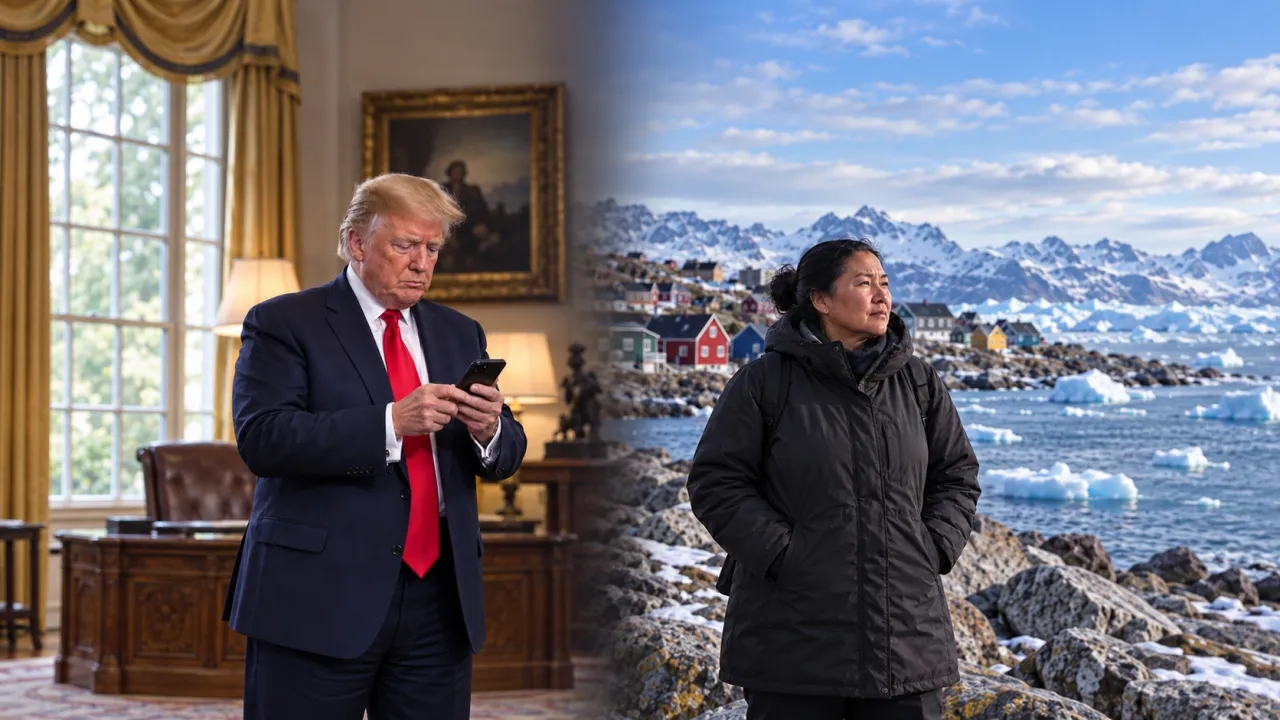

DOMINANT ANGLE
Singapore first prioritizes the security lock of the agreement: the explicit exclusion of Washington's adversaries from any base or investment in Greenland, more than its diplomatic aspect.
Dominant angle identified — does not reflect unanimity of this country’s media
KEY POINTS
- 01
Trump: "from now on, no opponent of the United States will ever be able to have a base in Greenland, a military presence in Greenland, or make sensitive investments in Greenland, without our explicit written authorization"
- 02
The agreement has no expiration date, according to the Truth Social post cited by the two titles
- 03
Washington already had almost total overflight and basing rights in Greenland under a 1951 treaty, and the island hosts a Space Force base in its far northwest
ANALYSIS
Singapour, September 19, 2026. The local press is reporting on the announcement made by Donald Trump on Truth Social on Friday: an agreement between the United States, Denmark, and Greenland, which, according to the American president, guarantees Washington "the complete and permanent ability to do what is necessary in Greenland to secure and defend the security of Greenland, and the United States of America." Channel News Asia and the Straits Times, both quoting Reuters dispatches, highlight the same phrase: Trump writes that "from now on, no adversary of the United States will ever be able to have a base in Greenland, a military presence in Greenland, or make sensitive investments in Greenland, without our express written authorization."
The Straits Times specifies that Washington already had almost total overflight and stationing rights in Greenland under a 1951 treaty, and that the island hosts a Space Force base in its far northwest. The newspaper recalls that Reuters had exclusively reported on September 18 that an agreement was being drawn up for an increased American military presence, but "well below" Trump's long-standing dream of acquiring the territory. Channel News Asia notes, on its part, that the text has "no expiration date" and that the president has promised, without elaborating, a significant military deployment on an island that currently has only one American base.
Both titles quote Trump describing the agreement as a "dream come true for the United States of America," without endorsing the phrase themselves. Neither of them develops, in the available passages, the reaction of the Greenlandic government or the parliamentary calendar in Nuuk and Copenhagen: both remain focused on the American version of the facts, as disseminated on social media and relayed by the Reuters agency.
For Singapour, a small nation accustomed to measuring the balance of power between great powers from its own strategic position, this type of agreement illustrates how a territory of 56,000 inhabitants becomes the object of regional security lockdown: explicit exclusion of rivals from any base or investment, strengthened military presence, but without formal transfer of sovereignty. The almost complete reproduction of Reuters dispatches by the local press places the focus on this security lockdown rather than on the diplomatic dimension of the case.