China — news through its media
Stories followed in this country, with their framing set against the rest of the world.
253 subjects found
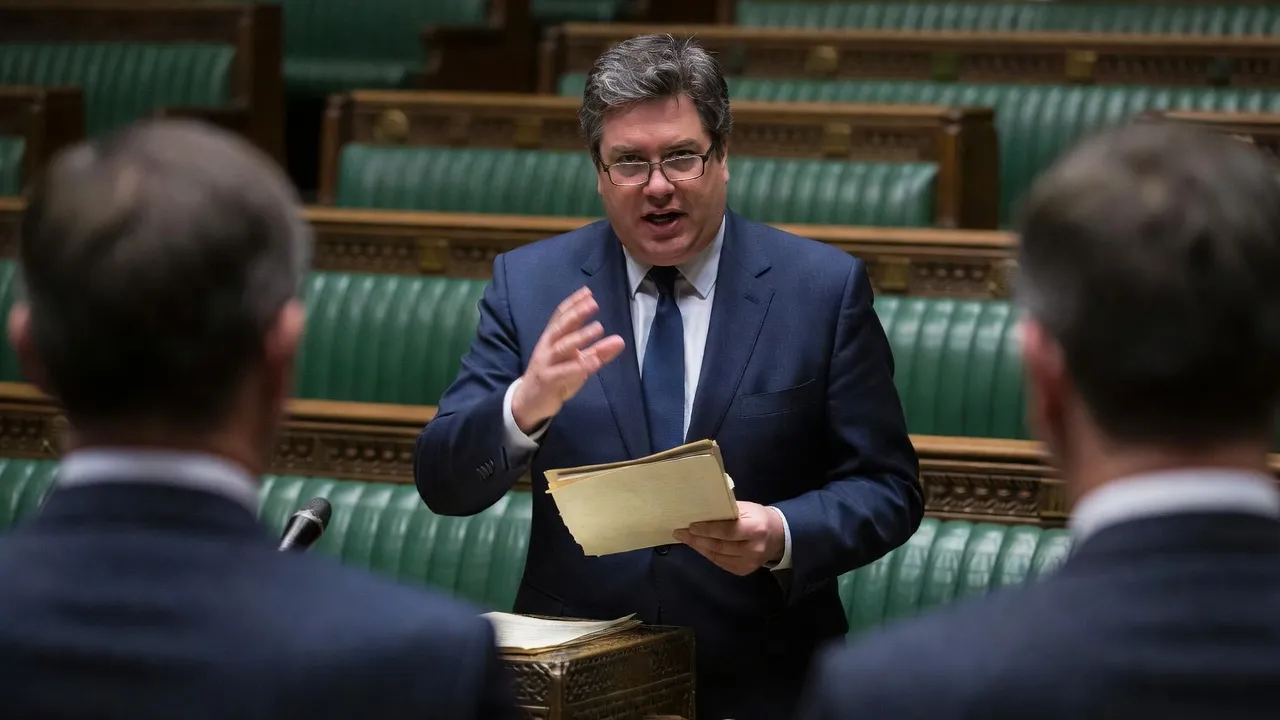
Twelve countries move to ban trade with Israeli settlements; Israel orders the British consulate closed
On Tuesday 8 September, twelve countries — the United Kingdom, France, Canada and nine European states — said they intend to ban trade with Israeli settlements in the occupied West Bank, which British Foreign Secretary Ed Miliband linked to “ethnic cleansing”. Two hours later Israel ordered the British consulate in East Jerusalem to close, told diplomats to leave and barred twelve Britons from entry. Washington said it would not follow.


 +16
+16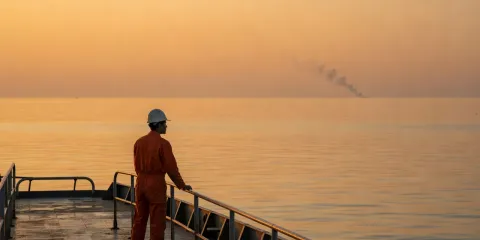
Washington destroys three Iranian tankers, Tehran says it hit three American ships
US Central Command said on Saturday 5 September that it had struck three Iranian oil tankers in response to ballistic missiles which it says the Revolutionary Guard fired at an aircraft carrier and a destroyer. Tehran calls the strikes a war crime under the United Nations Charter, and says it hit three American ships of its own. The two accounts of that night cannot be reconciled.



 +12
+12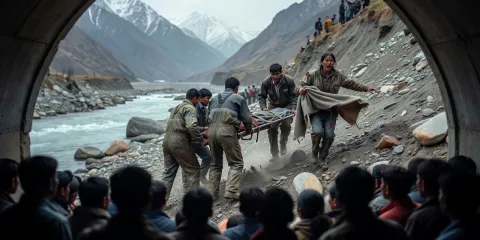
Nepal: two workers pulled alive from a tunnel nine days after the Bhote Koshi flood
Sanjay Sah and Kabir Maharjan were pulled alive on Friday 4 September from the tunnel of the Trishuli-3A hydropower site in Rasuwa, nine days after the Bhote Koshi flood. Searches continue at several Himalayan sites where hundreds of Nepali, Chinese, South Korean and Indian workers are still missing; Nepal's armed police force lost thirteen of its own at Timure.

 +5
+5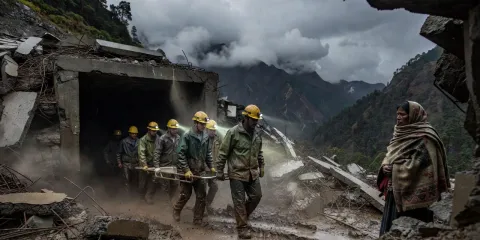
Nepal: 1,204 bodies recovered, over 4,200 missing — the race into the tunnels a week after the flood
A week after the Bhote Koshi flood, Nepal counts 1,204 bodies recovered and more than 4,200 missing. Rescuers are racing to reach survivors trapped in hydropower tunnels, 38 Australians remain unaccounted for, and China has reopened the Tibet road into the disaster zone.
 +11
+11
John Ternus takes over from Tim Cook at Apple, as the company races to catch up on AI
On 1 September 2026, John Ternus, 51, took over as chief executive of Apple, ending Tim Cook's fifteen-year tenure, during which the share price rose by roughly 2,300%. A hardware engineer by background, he arrives ahead of a major launch — including a foldable iPhone — and at a time when the company is seen as lagging on artificial intelligence. He opened a Weibo account within hours.

 +3
+3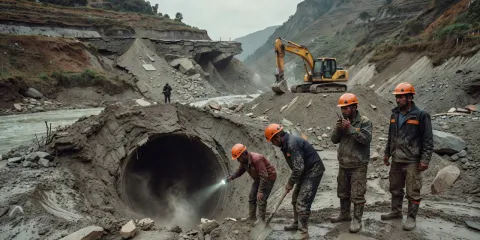
Nepal: 987 bodies recovered in Rasuwa, nearly 900 missing at eleven hydropower sites
A week after the flood triggered by a glacial collapse on the China-Nepal border, Kathmandu announced on 1 September 2026 that 987 bodies had been recovered in Rasuwa district and more than 12,000 people rescued. Nearly 900 remain missing at eleven hydropower sites, including workers trapped in buried tunnels. Prime Minister Balendra Shah attributes the flood to climate change and is seeking help from the Loss and Damage Fund. Death tolls differ, including between Nepali sources.
 +10
+10
In Bishkek, the SCO marks 25 years by casting itself as an alternative order to the West
The 25th summit of the Shanghai Cooperation Organisation was held in Bishkek on 31 August and 1 September 2026, bringing together Xi Jinping, Vladimir Putin, Narendra Modi and Masoud Pezeshkian. Xi and the Kyrgyz president signed a treaty of permanent good-neighbourliness; Putin proposed China-Russia cooperation on artificial intelligence; Modi publicly called for an end to the war in Ukraine. Pakistan takes over the chairmanship for 2026-2027.
 +3
+3
Meta settles the teen social media addiction case for $16.7 billion
On 26 August 2026 Meta reached a settlement with 29 US states, ending the Oakland trial over minors' addiction to Instagram and Facebook before its conclusion. The company will pay between $16.68 and $18 billion depending on how the total is counted, without admitting fault, and will apply a two-hour daily limit on Instagram for US teenagers. The next day, the European Commission demanded that Meta "protect our kids too".
 +8
+8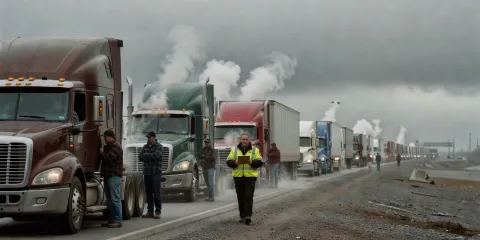
Canada retaliates against US tariffs as Trump threatens to double duties on cars
Ottawa rejected the deal proposed by Washington and announced retaliatory tariffs alongside a support plan for its industries. Donald Trump in turn threatens to double duties on Canadian cars, trucks and parts. More than 500 products already face 50 % tariffs. The value of exports affected varies: 20 billion dollars in most accounts, 28 billion according to the Canadian press.
+8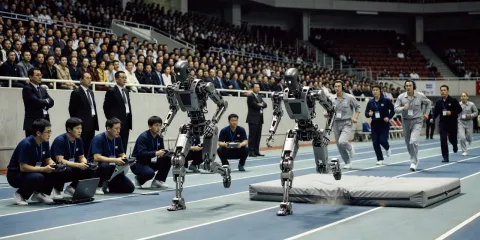
A Chinese humanoid robot runs the 100 metres faster than Usain Bolt at the Beijing World Humanoid Robot Games
At the World Humanoid Robot Games in Beijing, the robot Tiangong Ultra ran the 100 metres in 9.39 seconds, below Usain Bolt's world record of 9.58 s, while another machine cleared 2.88 m in the high jump. Western outlets treat it first as a spectacular feat; Beijing turns it into an industrial argument, highlighting an already commercialised sector. Several newsrooms report conflicting times and the absence of independent certification.
 +6
+6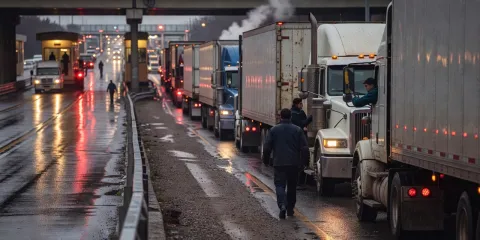
The United States imposes 50% tariffs on 20 billion dollars of Canadian goods after talks collapse
With trade talks between Washington and Ottawa having collapsed, the United States is applying 50 percent tariffs on about twenty billion dollars of Canadian goods. Prime Minister Mark Carney says Canada will respond dollar for dollar. The three-day suspension announced on 19 August expired with no agreement signed.
 +6
+6Understand global stakes from every perspective.
718 subjects · 75 countries · 8174 perspectives