South Korea — news through its media
Stories followed in this country, with their framing set against the rest of the world.
173 subjects found
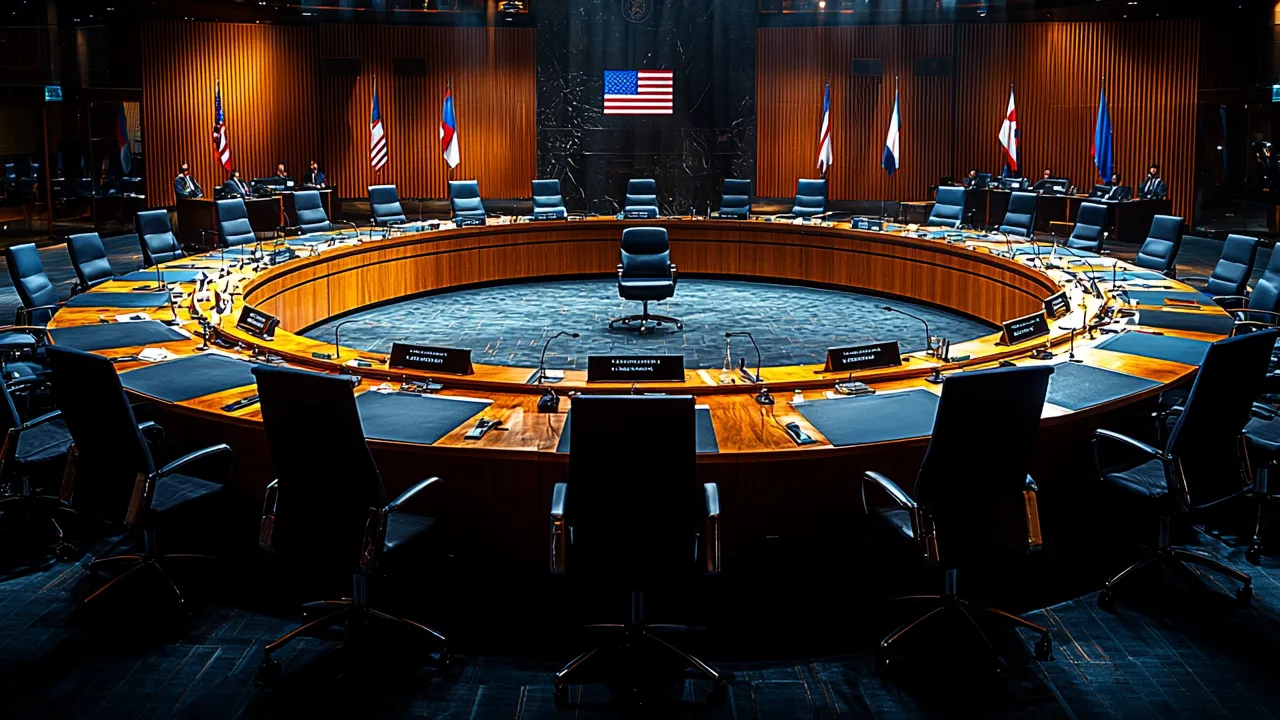
Can Europe Defend Itself Without America? The NATO Earthquake
Trump accuses NATO of failing to back the US in Iran. British MPs call for European defense without America. Canada finally hits the 2% mark. South Korea accelerates its military transformation. Five perspectives on the end of the American umbrella.


 +1

India Accelerates Semiconductor Mission: Toward Chip Self-Reliance
India consolidates its semiconductor self-reliance strategy with 10 approved plants totaling $18.3 billion in investments. The HCL-Foxconn joint venture in Uttar Pradesh, inaugurated by Modi, targets 36 million chips per month by 2028. S&P raises India's FY27 growth forecast to 7.1%, driven by the China Plus One strategy attracting global supply chains.


 +6

Zhongguancun Forum 2026: China Unveils Tech-Industry Integration Strategy
The 2026 Zhongguancun Forum brings together over 1,000 participants from 100 countries in Beijing under the theme 'Full Integration Between Technological and Industrial Innovation.' China showcases its ambitions in 6G, brain-computer interfaces, intelligent robots and AI, targeting 10 trillion yuan in AI-related industries by 2030. A strong signal in the global technology race.
 +8

Zhongguancun Forum 2026: China Accelerates Its Tech Offensive in AI and Humanoid Robots
The Zhongguancun Forum opens in Beijing from March 25-29 under the theme of integration between technological and industrial innovation. China showcases its advances in AI, humanoid robots, brain-computer interfaces and 6G, asserting its ambition to dominate tomorrow's technologies.
+6
Global AI Regulation: US Framework Redefines the Rules of Technological Competition
The Trump administration's announcement of a national legislative framework for artificial intelligence is reshaping the global regulatory landscape. Between the US deregulatory approach, the European normative model, and China's sovereignty-focused ambitions, each country is recalibrating its strategy in the face of the century's most transformative technology.
 +8

Global AI Data Center Energy Crisis: The Race for Electricity Redefines Planetary Dynamics
Electrical consumption from data centers dedicated to artificial intelligence has reached unprecedented levels, triggering an energy crisis that disrupts electrical grids, drives up household utility bills, and forces governments to reconsider their energy strategies. From French nuclear power to Brazilian renewables, each country is seeking its own response to this insatiable appetite for electricity.
 +9

International Tensions: Iran at the Center of Strategic and Diplomatic Stakes
Recent events involving Iran underscore its central position in regional conflicts and global diplomacy. From Israeli strikes to American negotiations, the country generates varied reactions that affect Middle Eastern security and beyond.


 +24

Trump faces international challenges: Iran, economy, and security
The Trump administration simultaneously confronts tensions with Iran, internal economic pressure, and border security challenges. These issues highlight the complexity of his foreign and domestic policy approach.
 +16

Rising Tensions Between Iran and the United States: Threat to the Strait of Hormuz
Military tensions are intensifying between Iran and the United States, with threats from Tehran to close the Strait of Hormuz. This situation poses a major risk to global energy security, affecting international trade and oil prices.
 +21

Middle East Conflict: Iranian Strikes on Israel and International Reactions
Iranian air strikes targeted Israel, hitting a city with a nuclear research center and the Natanz nuclear site. These actions have triggered regional tensions and diplomatic moves to stabilize the situation beyond the Strait of Hormuz.
+20
Trump Faces US-Iran Conflict: Foreign Policy Under Strain
Donald Trump's actions in the conflict between the United States and Iran have raised global concerns. His decisions affect not only regional security but also international energy markets, highlighting the diplomatic and economic challenges of his foreign policy.
 +12
Understand global stakes from every perspective.
718 subjects · 75 countries · 8174 perspectives