Pakistan — news through its media
Stories followed in this country, with their framing set against the rest of the world.
301 subjects found
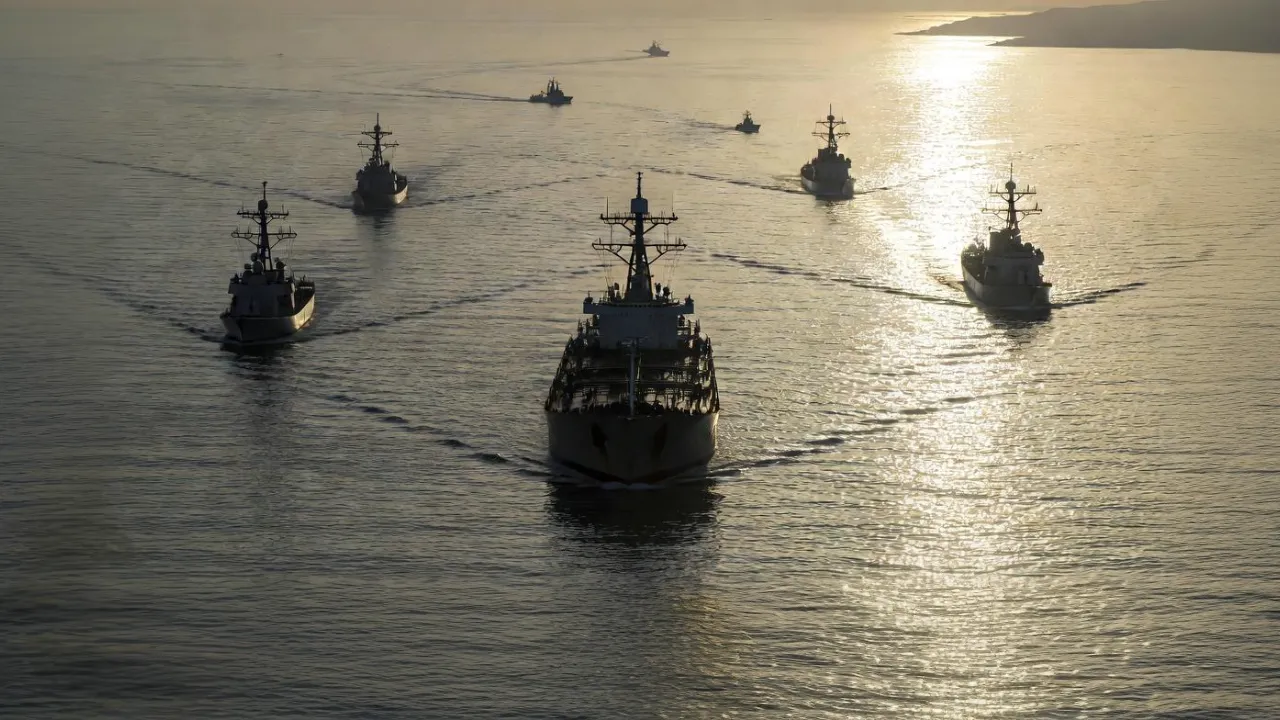
Hormuz Showdown: Trump's 'Project Freedom' vs Iran's Unyielding Grip on the Strait
As Iran doubles down on permanent control of the Strait of Hormuz — comparing it to Mossadegh's 1951 oil nationalization — Trump launches 'Project Freedom' to escort stranded neutral ships out of the Gulf starting Monday. A cargo ship was just attacked by small craft, Pakistan-mediated peace talks remain deadlocked, and OPEC+'s third production quota hike is purely symbolic as long as Hormuz stays shut.


 +11

Trump Pulls 5,000 US Troops from Germany — and Threatens 'A Lot Further': The NATO Fracture Deepens
After Merz accused Iran of 'humiliating' Washington in peace talks, Trump retaliated by announcing the withdrawal of 5,000 US soldiers from Germany — then escalated, threatening to go 'a lot further.' The cancellation of long-range Tomahawk missile deployment, promised by Biden, is also confirmed. NATO says it is 'working to understand' the decision. Republican committee chairs are 'very concerned.'


 +8

Cuba: Trump Tightens Sanctions and Threatens Military Intervention — Havana Warns of "Dangerous and Unprecedented" Escalation
On May 1, 2026, Donald Trump signed an executive order massively expanding US sanctions against Cuba, targeting foreign banks that cooperate with Havana and Cuban officials in the energy, defense and finance sectors. The next day, Trump declared at a private Florida dinner that the US could take control of Cuba 'almost immediately,' citing the Abraham Lincoln aircraft carrier 'on the way back from Iran.' Cuba's president denounces a 'dangerous and unprecedented level' of US military threats.


 +6

Pentagon Signs 7 AI Military Contracts, Blacklists Anthropic in Ethical Standards Showdown
On May 1, 2026, the Pentagon signed agreements with seven AI giants — SpaceX, OpenAI, Google, NVIDIA, Reflection, Microsoft and Amazon — to integrate their models into its classified Level 6 and 7 networks. Anthropic, which had powered most US military AI through Claude, was excluded after refusing to waive its safeguards against autonomous weapons and mass surveillance. The Pentagon labeled it a 'supply chain risk' — a designation normally reserved for foreign adversaries.
+4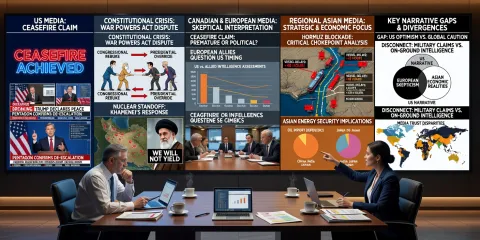
Trump's Iran War Hits Day 60: Congress Fights Back Over Nuclear Standoff
Sixty days into the US-Iran war, Donald Trump claims the conflict is 'terminated' to bypass the War Powers Act deadline. Congress rejects that reading. Supreme Leader Khamenei vows to protect Iran's nuclear and missile capabilities. The Strait of Hormuz remains partially blocked with oil above $125. Ten countries, ten sharply divergent readings.
 +11

London's Golders Green Stabbing: Two Jewish Men Attacked in Antisemitic Terror Incident as UK Raises Threat Level
A 45-year-old British-Somali man stabbed two Jewish men in London's Golders Green neighborhood on April 29, in an attack police declared a terrorist incident. The UK raised its national terror threat level to 'severe' for the first time since 2021, pledged £25 million for Jewish community security, and Prime Minister Starmer pointed the finger at Iran as the indirect orchestrator of a months-long wave of antisemitic attacks — arson at synagogues, attempted bombings near the Israeli embassy, and now a knife attack on the street.

 +9

UAE Quits OPEC: The End of Gulf Solidarity
Sixty years of petro-solidarity shatter as the UAE walks out of OPEC, leaving Riyadh alone at the head of a fractured cartel and reshaping the global energy map.

 +10

Musk versus OpenAI: the trial that judges whether artificial intelligence belongs to humanity
Elon Musk is claiming $150 billion and the soul of AI: the trial against Sam Altman will determine whether a nonprofit promise can survive the race for technological power — and who controls the artificial intelligence of tomorrow.
+4
Iran proposes reopening Hormuz strait in exchange for end to US naval blockade
Iran has submitted a formal proposal: reopen the Strait of Hormuz if Washington lifts its naval blockade — while Trump declares Iran in 'state of collapse' and Merz accuses it of waging war without strategy.
+13
King Charles III addresses U.S. Congress: transatlantic alliance 'cannot rest on past achievements'
Before a Congress in standing ovation, King Charles III reaffirmed the foundations of democracy—checks and balances, NATO, Ukraine—with the grace of a monarch and the precision of a political message directly addressed to Trump.
 +9

Iran-Strait of Hormuz: Tehran Plays Moscow Card While Trump Awaits a Phone Call
Facing military stalemate, Iran proposes reopening Hormuz in exchange for ending the U.S. blockade, while Foreign Minister Araghchi bypasses Pakistani mediation by visiting Putin. Trump responds that all Tehran needs to do is call. Europe grows impatient.

 +13
Understand global stakes from every perspective.
718 subjects · 75 countries · 8174 perspectives