Every angle on the news
Every story decoded through media worldwide, perspective by perspective.
Energy & Climate
87 subjects found
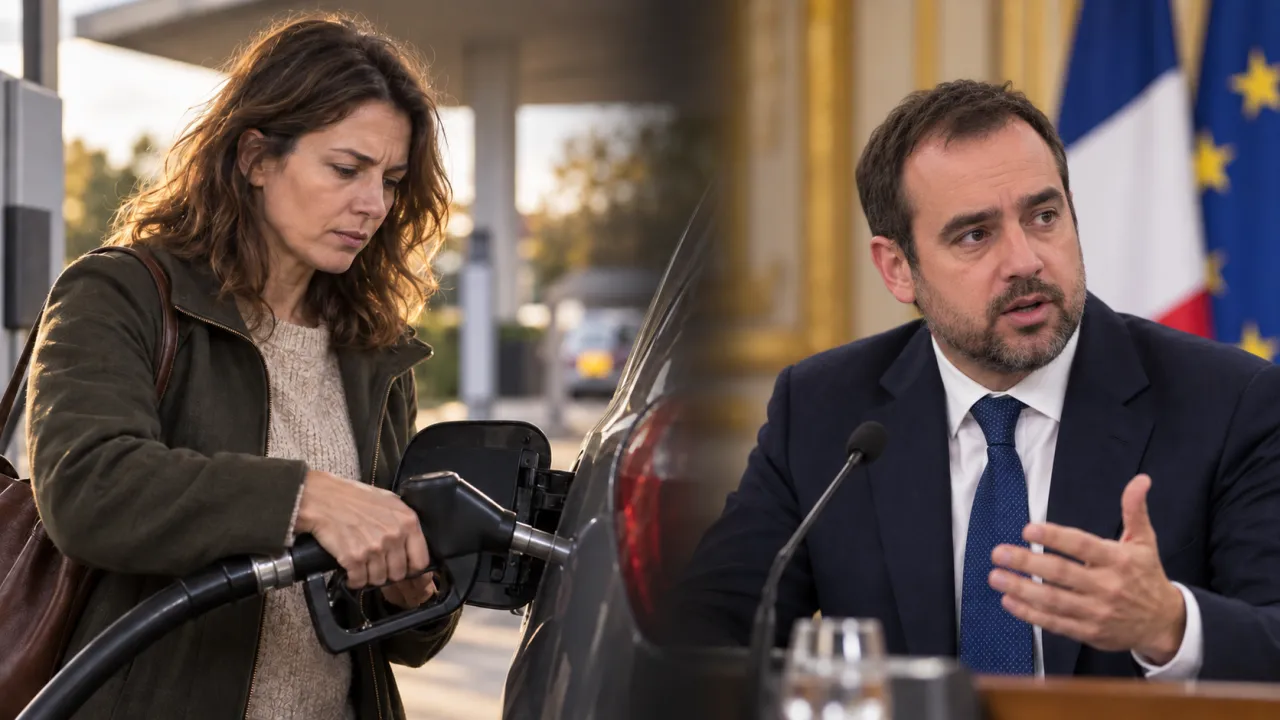
Diesel hits record highs on both sides of the Atlantic and every government improvises its own answer at the pump
Diesel hit a new record in France at close to 2.41 euros a litre, and topped 6.50 dollars a gallon in the United States for the first time. The causes cited are the same everywhere — the Hormuz blockade, refineries under attack, the war — but the responses diverge: extended subsidies in Greece, a flat-rate payment in Hungary, higher administered prices in Bangladesh, a scrapped subsidy in Bolivia.


 +6

US Congress passes a Russia sanctions law allowing 100% tariffs on countries that buy its oil and gas
The House of Representatives on Wednesday passed, by 262 votes to 159, the Russia and Iran sanctions law already approved by the Senate. It lets Donald Trump, who has not yet signed it, impose tariffs of up to 100% on countries buying Russian oil and gas, and sanctions the shadow fleet and Russian banks. India pledges to protect its trade interests; the Kremlin calls it an unfriendly move.


 +2
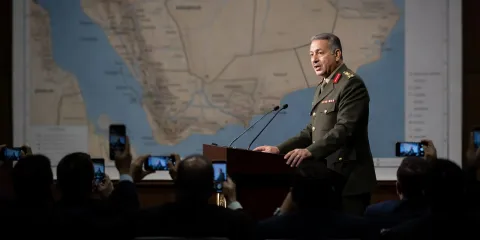
Traffic collapses in the Strait of Hormuz as the Houthis strike three Saudi cities and the Gulf meeting is postponed
The Saudi-led coalition says thirteen civilians were wounded and seven houses damaged by Houthi missile and drone fire on Khamis Mushait, Abha and Taif; its spokesman, Major General Turki Al-Malki, invokes Article 51 of the UN Charter. At the same time shipping traffic is collapsing in the Strait of Hormuz, and the meeting due between Iran and Gulf states on navigation arrangements was postponed at Riyadh's request. In Yemen, the Houthis have taken the port of Mokha and then Mayyoun island.


 +15
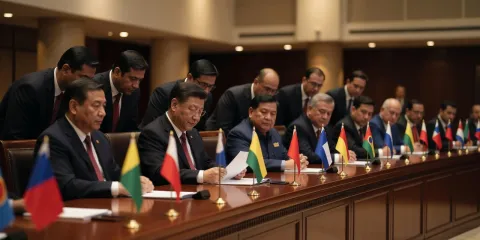
BRICS summit closes in New Delhi: supply chains, a space council and the Global South
The summit ended on Sunday. Xi Jinping calls for keeping supply chains “stable and unimpeded” despite Hormuz, Russia proposes a BRICS space council with satellite-data sharing, and a session gathers the invited countries of the Global South, where Prabowo Subianto defends national self-reliance. Seven countries, members or not, each take something different from the closing.


 +3
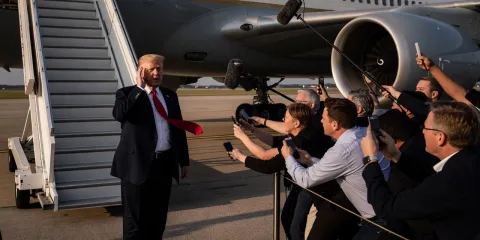
Saudi Arabia shuts its East-West pipeline after drone attacks launched from Iraq
Riyadh temporarily shut the East-West pipeline, its bypass around the Strait of Hormuz, after drone attacks on Friday night. Baghdad admits the drones came from Iraq, dismisses two officials and closes three border crossings with Iran; Donald Trump names Iran as the likely culprit. Twenty countries tell the same night, from crude above $100 to Iraqi militias.
 +16
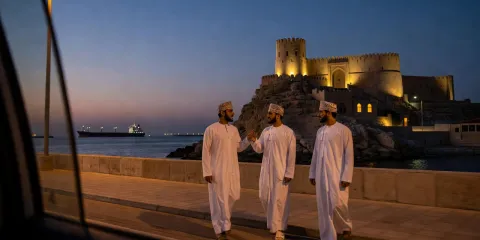
Iran announces talks on the Strait of Hormuz with Gulf states in Oman
Iran has announced it will discuss navigation in the Strait of Hormuz with Gulf states at a meeting in Oman on Monday 14 September, according to its foreign ministry. The meeting comes as the United States says it has loosened Iran's grip on the strait without the war being over, and as crude prices and tanker safety hinge on this passage.

 +6
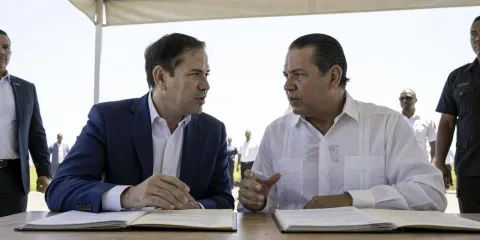
Rubio and De la Espriella seal the Barranquilla accords, and the US tour of Latin America skips Brazil
US Secretary of State Marco Rubio met Colombian President Abelardo de la Espriella in Barranquilla on 8 September, a month into his term. Two memoranda were signed, on civil nuclear energy and on lithium and copper. The tour continues to Ecuador and Peru; Brazil is not on it. Colombia's opposition alleges US interference in the election.


 +6
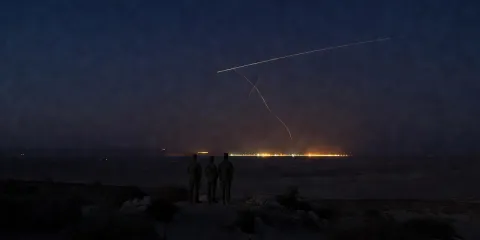
US destroys five Iranian tankers, Tehran strikes Jordan's Al-Azraq base, and Brent crude climbs back above $100
US Central Command destroyed five Iranian oil tankers on 8 September, calling it a response to two ballistic missile attempts against a Navy warship. Iran struck the Al-Azraq base in Jordan, which says it intercepted 18 of 20 missiles, then claimed attacks on shipping in the Strait of Hormuz, where one seafarer was killed and another reported missing. Brent crude passed $100 for the first time since July.

 +25
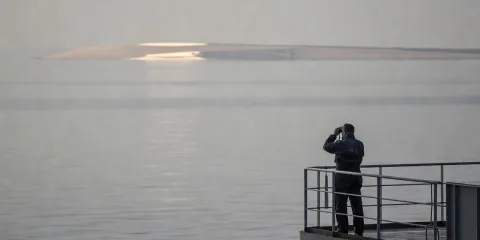
Shipping collapses in the Strait of Hormuz as Iran announces a restricted zone
Shipping through the Strait of Hormuz has fallen to its lowest level since May: a ten-day moving average of ten vessels a day, down from more than fifteen on Friday, according to Kpler cited by Reuters. Iran has announced a new restricted zone near the strait and three tankers turned back after a warning from the Revolutionary Guard. Canada has joined the US-French-British effort to reopen the passage.
+10
Hormuz: Iran strikes Kuwait and the UAE, Oman refuses its toll, Washington cuts contact
Day five of the Hormuz escalation: Iran struck US bases located in Kuwait and the UAE — Gulf states themselves — and some twenty Emirati civilian flights were disrupted. Qatar condemned the strikes, Oman quietly rejected the toll Tehran wants to levy, and Washington says it has cut contact while floating an embargo.
+9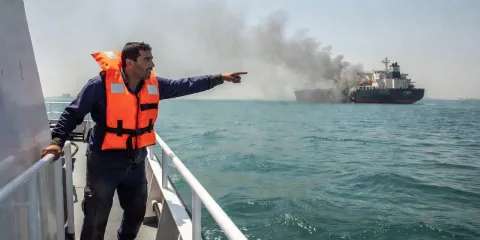
Iran strikes Saudi supertanker SIDR: two Filipino sailors killed, Gulf condemns, crude surges
The Saudi supertanker SIDR was hit in the Strait of Hormuz, killing two Filipino sailors. Riyadh blames Iran, the GCC condemns, Tehran speaks of mines striking "US-controlled" vessels. Brent climbs toward $95 and the bill is already reaching fuel pumps in Pakistan and Nigeria.
 +6
Understand global stakes from every perspective.
726 subjects · 75 countries · 8278 perspectives