
DOMINANT ANGLE
Doha sounds the alarm: losing Bab el-Mandeb would be "catastrophic for the entire world", and the emirate is framing the Saudi crisis within the broader context of global energy routes, rather than solely as a military confrontation with the Houthis.
Dominant angle identified — does not reflect unanimity of this country’s media
KEY POINTS
- 01
The ministry of foreign affairs judged the loss of Bab el-Mandeb "catastrophic for the entire world" and said it is working with partners for navigation freedom
- 02
The Houthists took Mokha on September 10, then Perim Island and the Hanish archipelago, taking control of the entire Yemeni coastline of the Red Sea
- 03
Crude remained above $100 and US diesel nearly hit a record at $6.40 per gallon, after the shutdown of the Saudi East-West oil pipeline
ANALYSIS
Doha, September 19, 2026. Early on Saturday, air alerts sounded in Riyadh and several Saudi regions, a first in the capital since the intensification of Houthi attacks; journalists heard explosions before the alert was lifted. For Doha, this episode confirms a warning issued earlier this month: the director of the Media and Communication department of the Ministry of Foreign Affairs, Ibrahim bin Sultan al-Hashmi, judged that the loss of Bab el-Mandeb would be "catastrophic for the entire world", estimating that the region could not absorb the closure of a second strait after Hormuz. He specified that Qatar was working with its regional and international partners to preserve the freedom of navigation.
The Houthi advance has been rapid: the capture of Mokha on September 10, then the entire remaining coastline and the island of Perim the next day, before the capture of the Hanish archipelago. The movement, supported by Iran, now holds the entire Yemeni coastline of the Red Sea. The International Organization for Migration reports more than 100,000 displaced people, mostly within Yemen. The energy consequences are global: crude oil, which reached its highest level since May, remained above $100 on Wednesday, and the average price of diesel in the United States nearly reached a record $6.40 per gallon. The East-West Saudi pipeline, which allowed the export of crude oil via the Red Sea, has been shut down since a strike that Riyadh attributes to Iraq.
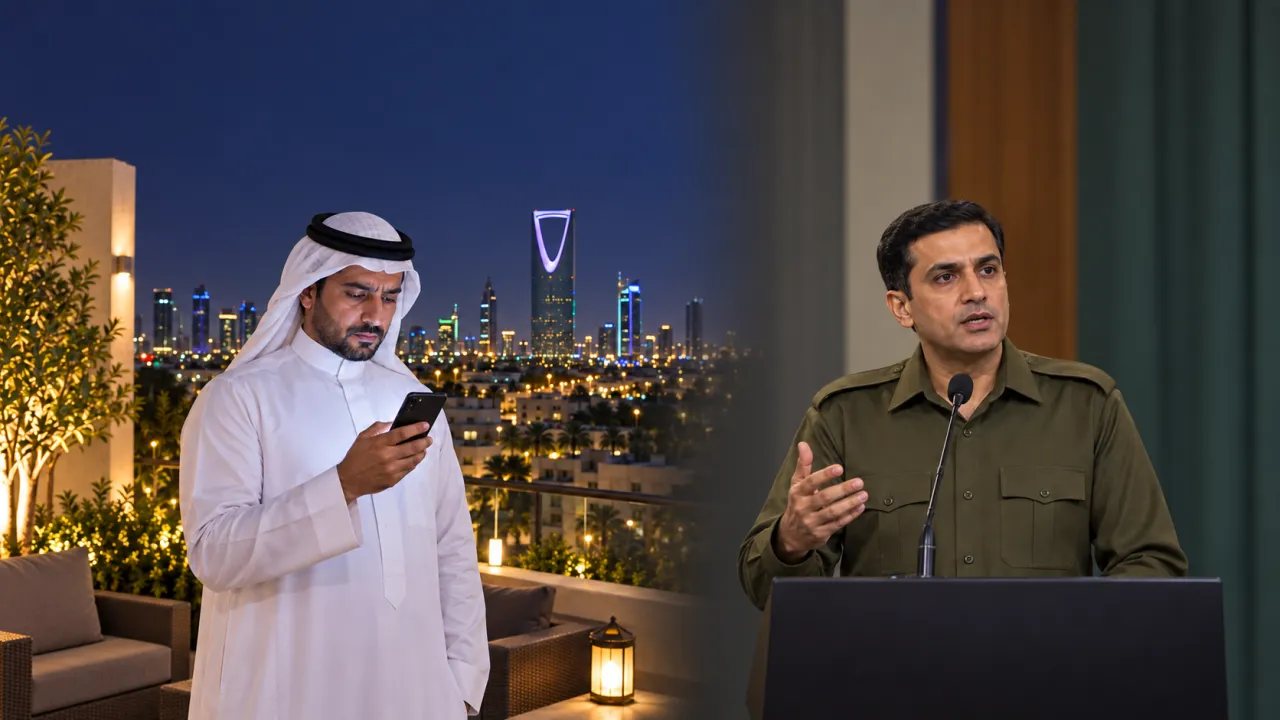
On the military front, Riyadh, short of interceptors, has requested France, Pakistan, Egypt, and the United Kingdom to reinforce its air defense, while Washington, engaged against Iran, sees its own stocks dwindling. Riyadh accused the Houthis of targeting Mecca on Wednesday, which they denied; a Yemeni was killed in Taif under the debris of an intercepted drone. Qatar, which does not claim a military role in this file, insists on diplomatic coordination rather than escalation of strikes.
The Pakistani Minister of Defense, Khawaja Mohammad Asif, judged that it was time to activate the Mecca pact in the face of the escalation of Houthi attacks, affirming that Islamabad would protect the kingdom and its holy sites even in the absence of a formal agreement, and that he had transmitted a Saudi message to Tehran expressing these concerns. Italy, on its part, announced the deployment of warships to secure its own commercial flows in the strait, without waiting for a common decision from the European Union.