
DOMINANT ANGLE
The United States government walks a fine line between verbal support for Riyadh and refusal of military engagement, relying on intelligence and discreet talks with the Houthists to preserve freedom of navigation in the Red Sea.
Dominant angle identified — does not reflect unanimity of this country’s media
KEY POINTS
- 01
American diplomats met with Houthi representatives at the US embassy in Muscat to maintain the May 2025 ceasefire (Axios).
- 02
Crown Prince Mohammed bin Salman asked Trump for military action against the Houthis; Washington offered only intelligence and targeting (CBS News).
- 03
Brent prices fell 0.94% to $103.83 a barrel on Friday despite the strikes, as Riyadh found alternative routes via Oman (CNBC).
ANALYSIS
The United States, September 19, 2026. In American newsrooms, the escalation around Riyadh is seen through the persistent refusal of the Trump administration to engage militarily against the Houthists, despite air alerts that targeted the Saudi capital and several regions on Saturday, September 19, for the first time since the intensification of the attacks. According to Axios, American diplomats met with Houthi representatives last weekend at the US embassy in Muscat, Oman, to discuss the maintenance of the May 2025 ceasefire and ensure that the Bab al-Mandab Strait remains open to navigation. Vice President JD Vance confirmed on Monday that Washington is "engaged in direct conversations with the Houthists," adding that he feels "in control of the situation." Secretary of State Marco Rubio spoke with his Omani counterpart about regional de-escalation.
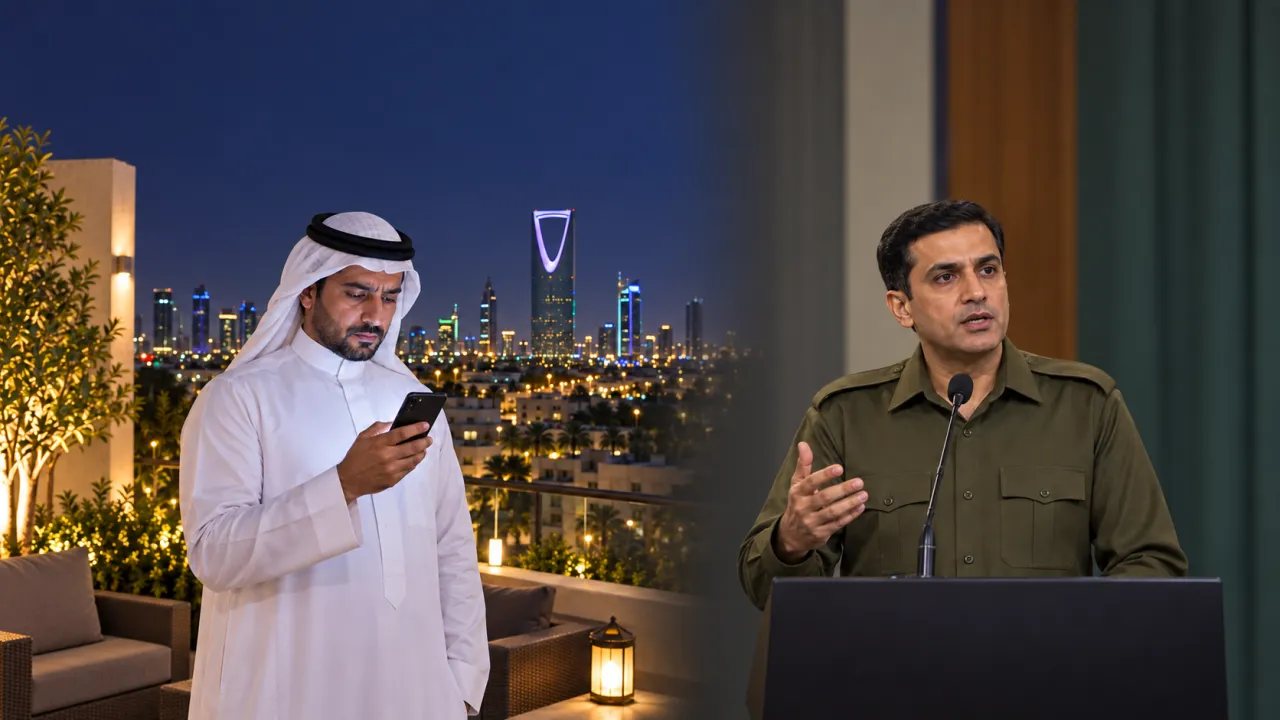
According to CBS News, Crown Prince Mohammed bin Salman requested military action against the Houthists from President Trump; the latter limited himself to offering intelligence and targeting aid. A researcher from the Foundation for Defense of Democracies, cited by Fox News, believes that Riyadh "is seeking a force to wage its war in its place" and states: "I don't think we, the United States, will get involved in this war around Bab al-Mandab." It is in this vacuum that Pakistan has promised, through the voice of General Ahmed Sharif Chaudhry, to defend Saudi Arabia "to the end, diplomatically and physically," in the name of the pact signed in September 2025 with Riyadh and Ankara.
The American press links this military withdrawal to economic effects: NPR notes that the Houthi offensive, which has taken the port of Mokha and the island of Perim, has forced around 125,000 Yemenis to flee and relaunched a civil war that has already killed more than 150,000 people, while noting that "Saudi Arabia's most important ally, the United States, seems to be staying out of it." CNBC observes that Brent crude prices nonetheless fell on Friday, to $103.83 per barrel, as Riyadh found alternative routes via Oman to continue delivering crude to its Asian customers despite the partial closure of the east-west oil pipeline. ABC News finally reports that a Yemeni was killed in Taif, hit by debris from an intercepted drone targeting, according to Riyadh, Mecca.
SOURCES (6)
- NPRMEDIUM
- CNBCMEDIUM
- AxiosMEDIUM
- CBS News WorldMEDIUM
- ABC News WorldMEDIUM