
DOMINANT ANGLE
Budapest is first taking note of the testimony of a Bangkok resident comparing the current crisis to the devastating floods of 2011, rather than an immediate numerical toll.
Dominant angle identified — does not reflect unanimity of this country’s media
KEY POINTS
- 01
Bangkok's 50 districts have been declared a disaster zone after more than 30 centimeters of rain fell in 48 hours (444.hu, Telex).
- 02
Governor Chadchart Sittipunt stated: "The areas at risk are those where people live near canals. Now, all canals are full" (444.hu).
- 03
Telex recalls that the deadliest floods in the country's recent history, which occurred last November in southern Thailand, killed 145 people.
ANALYSIS
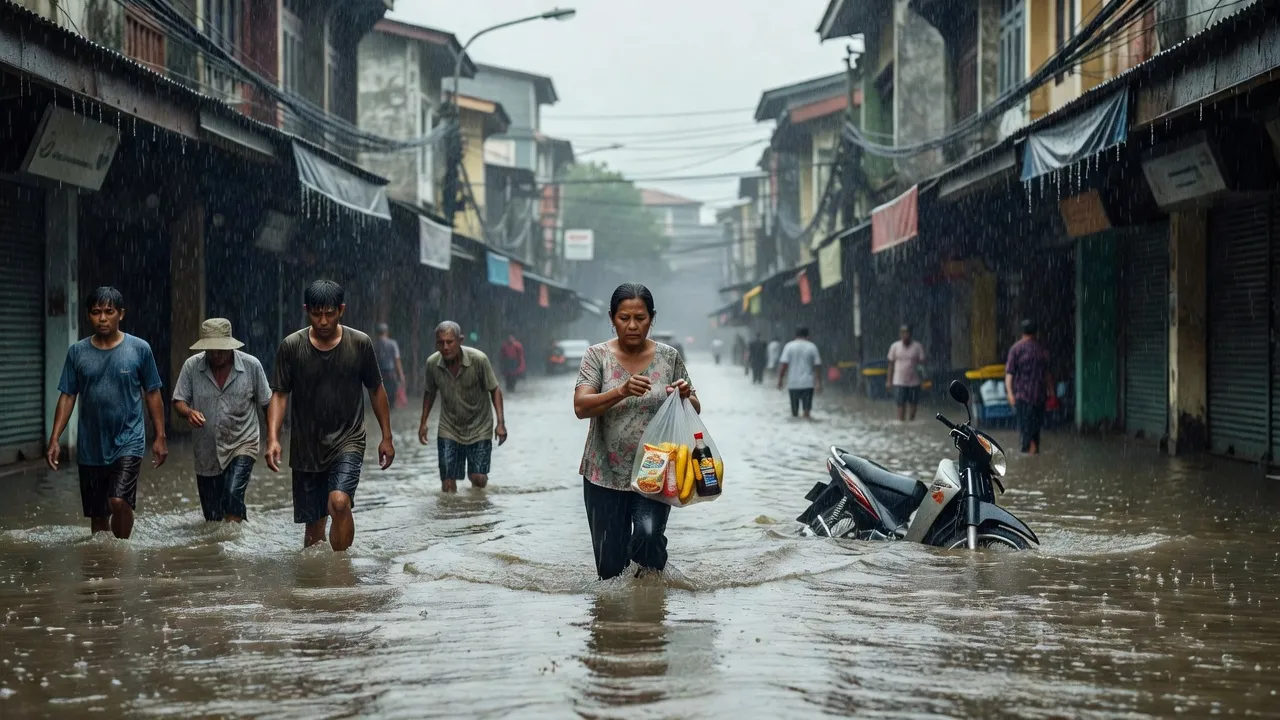
Budapest, September 27, 2026. The Hungarian press first highlights the human face of the catastrophe that is affecting Bangkok. Citing the BBC, 444.hu reports that the 50 districts of the Thai capital have been declared a disaster zone after two days of torrential rains that have saturated the city's drainage system, already notorious for its traffic jams. Governor Chadchart Sittipunt, quoted by the site, describes a situation that is worsening by the hour: "The water continues to fall, we are doing everything we can. We are trying to pump the water, but the canals are already full... The areas at risk are where people live near the canals. Now, all the canals are full." According to him, it is the east of the city that has been the most severely affected.
Telex, which relies on Reuters and the AP, specifies that more than 30 centimeters of rain have fallen in 48 hours between Thursday and Saturday, turning streets into rivers and forcing the evacuation of several thousand inhabitants. Businesses have been stormed by customers stocking up, while meteorologists announce more heavy rainfall for Saturday and beyond, including in other regions of the country. The authorities have urged residents of the canals to move to higher ground. Bangkok's airport continues to operate normally, Reuters notes, even if entry formalities for tourists may be longer.
It is, however, the testimony collected by the AFP and reproduced by 444.hu that has the most impact on the Hungarian reading: Somkid Pheuk-ngam, 67, a resident near a canal in the north of the city, recounts having water up to his waist for two days, preventing him from opening his business. He judges the situation to be worse than in 2011, when floods had affected the entire country for three months and caused several hundred deaths. Hungarian articles emphasize that at this stage, no deaths have been recorded in Bangkok itself.
Telex finally recalls that the deadliest catastrophe in the country's recent history dates back to last November, when 145 people perished in southern Thailand, with floods sweeping away several thousand homes. The Hungarian press thus constructs its narrative around a memory of past catastrophes rather than an immediate numerical toll.