
DOMINANT ANGLE
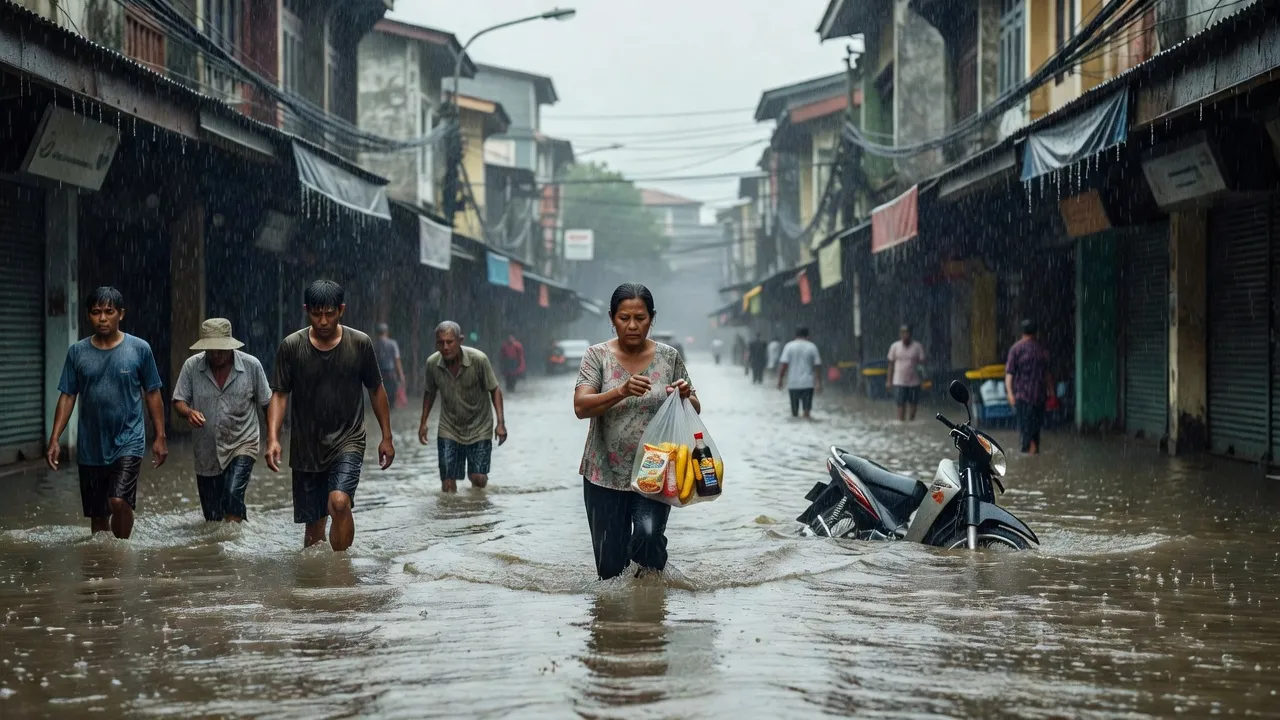
Sweden is first concerned about the fate of its citizens caught in the Bangkok floods, before gauging the extent of the disaster through the accounts of residents wading through water up to their waist.
Dominant angle identified — does not reflect unanimity of this country’s media
KEY POINTS
- 01
Nearly 300 millimetres of rain have fallen on Bangkok since Thursday, a total that meteorologist Lasse Rydqvist compares to an entire semester of precipitation in some regions of Sweden (Aftonbladet).
- 02
The 50 districts of Bangkok have been declared disaster zones by Governor Chadchart Sittipunt, and more than 84,000 people in 21 Thai provinces are affected by the severe weather (Dagens Nyheter, via AP).
- 03
More than 200 shelters have been opened in the city, accommodating between 900 and approximately 4,200 people, according to sources (Dagens Nyheter and Svenska Dagbladet).
ANALYSIS
Stockholm, Sunday, September 27, 2026. The Swedish press tells the story of the flooding that is submerging the 50 districts of Bangkok, first and foremost through the voices of its own citizens. Svenska Dagbladet interviews Olof Olsson, a Swede who has been living in Khlong Toei, in the center of the Thai capital, for nine years: "It's precisely that the rain won't stop as usual that makes the situation catastrophic." He describes a relatively spared neighborhood but cut off from car travel. Sveriges Radio collects the testimony of the same Olof Olsson, this time presented as a pastor of the Church of Sweden in Bangkok, who mentions "catastrophic consequences" and emphasizes that the slums near the river, with low-lying homes, have no escape route for the water.
The official figures, relayed by Dagens Nyheter via the AP agency, give an idea of the extent of the phenomenon: nearly 300 millimeters of rain have fallen since Thursday, the 50 districts declared disaster zones by Governor Chadchart Sittipunt, and more than 84,000 people affected in 21 provinces of the country. Svenska Dagbladet mentions more than 200 shelters opened in the city, where around 4,200 people are said to have found refuge, while Dagens Nyheter reports the figure of 900 people taking refuge in these same centers — a discrepancy that the Swedish press does not attempt to resolve.
Daily life experiences take up a large place in the accounts: vendor Somkid Pheuk-ngam, quoted by AFP and taken up by Dagens Nyheter and Aftonbladet, tells that the water reaches "up to her waist" and that she had to keep her business closed for two days. Aftonbladet adds the warning from the governor: the canals have reached "critical" levels, residents must move their vehicles, and patients dependent on medical equipment at home are invited to consider temporary hospitalization.
The meteorological dimension is developed by Aftonbladet, which quotes meteorologist Lasse Rydqvist: the rain that has fallen in two days is equivalent, in certain regions of Sweden, to an entire semester of precipitation, with an active low-pressure system combining with a strengthening of the monsoon. Sveriges Radio reports, via its correspondent on the spot, that the pumping stations are operating at full capacity and that the authorities say they are stabilizing the water levels. There is no report of casualties or comment on the Thai political response in these accounts, which focus on the ordeal experienced and the fate of Swedish citizens.
SOURCES (4)
- Dagens NyheterMEDIUM
- Svenska DagbladetMEDIUM
- Sveriges RadioMEDIUM
- AftonbladetMEDIUM