
DOMINANT ANGLE
Belgrade is taking note of flooded Bangkok's crisis management mechanism: official proclamation, reception centers and SMS alerts, rather than a still unclear human toll.
Dominant angle identified — does not reflect unanimity of this country’s media
KEY POINTS
- 01
More than 30 centimeters of rain have fallen on Bangkok since Thursday, according to the Thai meteorological service cited by Beta and N1.
- 02
More than 200 reception centers have been opened for residents of flooded areas.
- 03
Air traffic continues to operate normally for now, even if some flights may be delayed, according to the authorities.
ANALYSIS
Belgrade, September 27, 2026. Serbian reports on Bangkok are brief, largely based on the Beta-AP agency: the Thai capital has been declared an "elementary disaster zone" by local authorities, who hope to accelerate their response to the crisis. The Thai meteorological service warned that the rain, uninterrupted since Thursday, September 24, would continue to affect most of the country until Sunday, September 27.
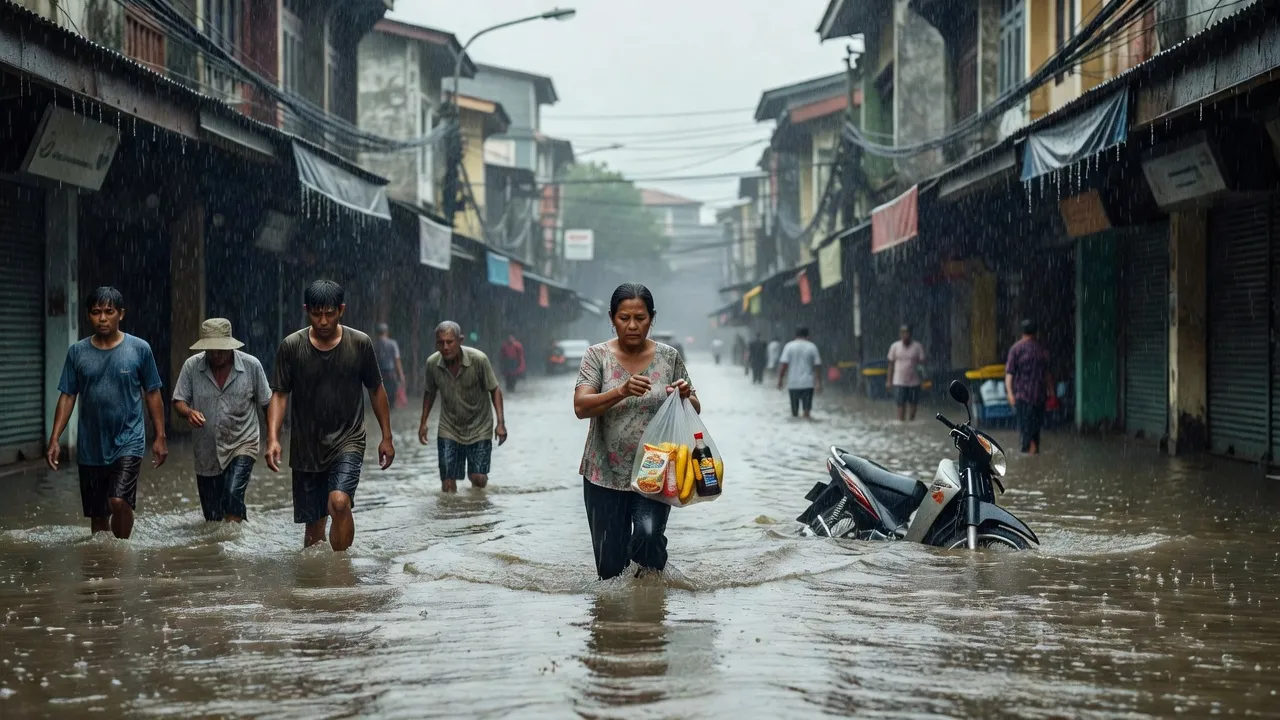
The figure retained by the Serbian press is that of precipitation: over 30 centimeters of water have fallen on Bangkok since Thursday. The immediate consequence described by the two consulted reports, from N1 and Beta, is that flooding is gaining ground, blocking roads and interrupting all traffic, while most businesses remain closed that day.
In the face of this paralysis, the Thai authorities have opened more than 200 reception centers for inhabitants of flooded areas, according to the same sources. The government has also announced that it is sending emergency alerts directly to citizens' mobile phones, a measure presented as an official communication from Bangkok rather than a last-minute improvisation.
In terms of transportation, the Serbian press notes that air traffic continues to function normally, for the time being, even if some flights may experience delays. This detail, repeated identically in the two articles, contrasts with the darker picture painted for roads and commerce: Bangkok remains connected to the world by air when it is submerged on the ground.
Neither N1 nor Beta mentions a human toll, a precise number of victims outside the capital, or a timeline for the water to recede. The emphasis is on the mechanics of the crisis — rain, blockages, reception centers, alerts — rather than its consequences for the people already affected. This reading, very close to the agency text from which it is derived, restores a catastrophe seen from the instruments of crisis management rather than from the field: official proclamation, opening of centers, sending of SMS. For the Serbian press, the event is read above all as a test of Thailand's administrative capacity to absorb a brutal meteorological shock, without any element allowing for the moment to measure the real human cost.