
DOMINANT ANGLE
Moscow is gauging the flooding of Bangkok in terms of its own tourists, between cancelled excursions and an expected decrease by the end of the week.
Dominant angle identified — does not reflect unanimity of this country’s media
KEY POINTS
- 01
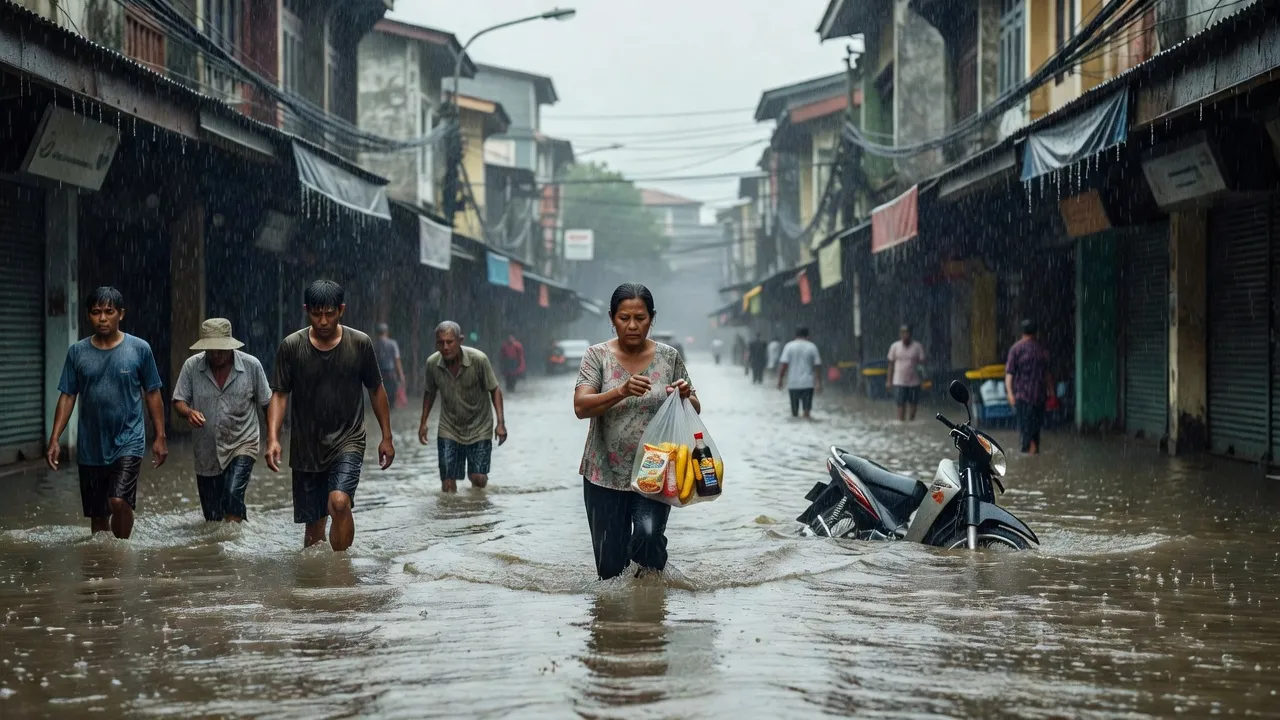
Nearly 300 mm of rain fell over Bangkok in two days, according to Governor Chadchart Sittipunt, as cited by Vedomosti, prompting a state of catastrophe in the city's 50 districts on Saturday, September 26.
- 02
Two deaths were reported in Chanthaburi province — a monk in a landslide and a person in the sinking of a fishing boat — and an additional death reported in Bangkok by the daily Matichon, according to RT.
- 03
The Russian Association of Tour Operators announced on September 26 the cancellation of some excursions to Bangkok, while Vedomosti expects the water to recede around September 28 and 29.
ANALYSIS
Moscow, September 27, 2026. The Russian press is following the catastrophe that has struck Bangkok from a practical angle. Vedomosti reports that the governor of the Thai capital, Chadchart Sittipunt, mentioned nearly 300 millimeters of rain in two days, before a state of catastrophe was declared on Saturday, September 26, in the 50 districts of the city. According to the statement cited by the newspaper, despite continuous pumping, the flooding has affected homes and roads, particularly near the Lat Phrao, Prawet, and Saen Saep canals.
RT provides details on the human toll: two deaths in the province of Chanthaburi — a monk swept away by a landslide, another person in the sinking of a fishing boat — according to the Thai department of disaster prevention, to which is added a death reported in Bangkok by the daily Matichon. The Royal Thai Army has deployed troops, set up temporary shelters, and installed field kitchens. The Thai meteorological service is still warning of heavy rainfall, with the southwest monsoon strengthening, and a risk of flash floods and landslides.
What the Russian press is highlighting is first and foremost the concrete impact on Russian citizens present on the spot. The Russian Association of Tour Operators indicated on September 26 that some planned excursions to Bangkok had been canceled due to the rains. Vedomosti specifies that the water is expected to recede on September 28 and 29, a deadline being closely followed by the tourism sector.
The newspaper broadens the scope by recalling that at the end of August, Nepal had experienced a devastating flood: a flow of water, stones, and mud had erased entire villages from the map, destroying homes, roads, bridges, and power plants, with a death toll of 1,403 according to the latest figures cited. This comparison situates Bangkok in a series of regional disasters linked to the monsoon, without an established causal link.
On a strictly Thai level, Russian coverage remains subdued: there is no analysis of the crisis management by the authorities in Bangkok, nor any criticism of the urban planning of a capital built on a delta crossed by canals that are now overflowing. The emphasis is on the figures — millimeters of rain, deaths, cubic meters pumped — and on the more immediate question for the Russian readership of when the city will become practicable for travelers again.