
DOMINANT ANGLE
Bogotá takes away from the IMF report a primarily national reading: the downward revision of Colombian growth, tempered by a regional comparison that remains favourable.
Dominant angle identified — does not reflect unanimity of this country’s media
KEY POINTS
- 01
The IMF forecasts 2.2% growth in 2026 and 2.3% in 2027, compared to 2.3% and 2.5% previously (La República).
- 02
For Latin America and the Caribbean, inflation would rise to 4.2% in 2026 and 4.1% in 2027, with growth of 2.3% and then 2.5% (Semana).
- 03
Silvana Tenreyro estimates that AI "has not been a very strong driving factor" in the region so far (Semana).
ANALYSIS
Bogotá, October 14, 2026. In the Colombian press, the global growth rate increase to 3.1% in 2026 takes a back seat to the revision of the country's figures. La República reports that the IMF "has reduced its growth projections for Colombia in 2026 and 2027": 2.2% this year and 2.3% next year, compared to 2.3% and 2.5% in the previous estimate, which represents decreases of 0.1 and 0.2 percentage points. The newspaper notes that the 2026 performance would still be lower than the 2.6% recorded in 2025, and that the 2027 recovery would only surpass that of 2026 by 0.1 percentage point. It also cites an average inflation rate of 6% and an unemployment rate of 9%.
The newspaper, however, tempers this decline by comparing it to the regional situation. With 2.2% in 2026, Colombia would perform better than Argentina (2.1%), Mexico (1.5%), Uruguay (1.3%), and Chile (0.6%), and would be on par with Brazil. The situation changes in 2027: Argentina, with 3.5%, and Peru would surpass Colombia. La República recalls that the IMF still expects Colombian growth in the two years, but at a slower pace than announced.
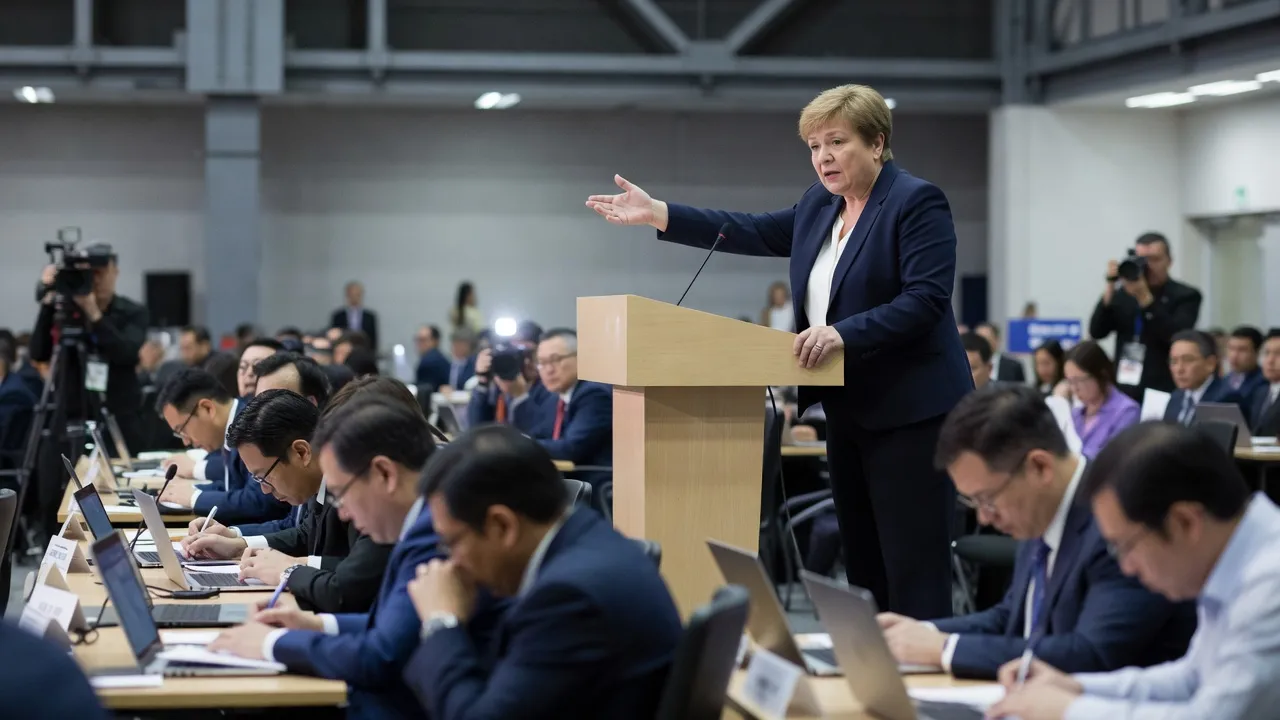
Semana focuses on the region. According to the Fund's chief economist, Silvana Tenreyro, who spoke on Tuesday at a press conference in Bangkok, inflation in Latin America and the Caribbean will rise to 4.2% this year and then to 4.1% in 2027. Regional growth is estimated at 2.3% in 2026, which is 0.1 percentage point less than in July, and then at 2.5% in 2027. "The Fund's advice is to keep an eye on inflation," Ms. Tenreyro said, asking authorities to avoid any secondary effects of the energy and raw materials shock, for both exporters and importers.
The weekly magazine reiterates the idea of a "fairly heterogeneous" impact of the war in the Middle East, according to each country's exposure to raw materials. It also notes the observation of the official: "Artificial intelligence has not been a very strong driving factor in the region so far," unlike in Asia or advanced economies. The reminder of the region's chronic inflation, from Argentina to Venezuela, frames the warning.
The two texts therefore treat the report as a barometer of the Latin American situation, where the rise in oil prices and the growth of AI, drivers of the IMF's global narrative, are read through their effect on local prices and growth.