
DOMINANT ANGLE
Paris takes away from the IMF less the growth revision than the lesson of budgetary discipline addressed to advanced economies, and to France in particular, on the eve of the 2027 budget review.
Dominant angle identified — does not reflect unanimity of this country’s media
KEY POINTS
- 01
The IMF forecasts global growth of 3.1% in 2026 (+0.1 percentage point compared to July), compared to 3.5% in 2025 and 3.4% in 2027.
- 02
Kristalina Georgieva believes it will "take time" to inspire "complete trust" in investors; the 10-year rate is approaching 5%.
- 03
The IMF is urging advanced economies to "urgently" restore their budget discipline, describing them as the "worst students".
ANALYSIS
Paris, October 14, 2026. The French press has taken note of the IMF report, presented in Bangkok at the opening of the annual assemblies, focusing less on the global map than on the budgetary warning that accompanies it. RFI details the figures: a global growth rate of 3.1% in 2026, i.e., 0.1 percentage point more than in the July forecasts, compared to 3.5% in 2025, and then 3.4% in 2027, a figure that remains unchanged. The revision comes from advanced economies, particularly Asian ones, driven by the boom in artificial intelligence investments. In contrast, emerging countries are suffering from the surge in hydrocarbons linked to the conflict in the Middle East and are trying to mitigate it with subsidies that absorb their already limited budget margins.
The Fund describes a "fragmented" economy and a "two-speed trajectory": energy importers not exposed to the rise of AI remain the most vulnerable. Silvana Tenreyro, quoted by RFI, warns that "this resilience is being put to the test, with risks oriented downwards".
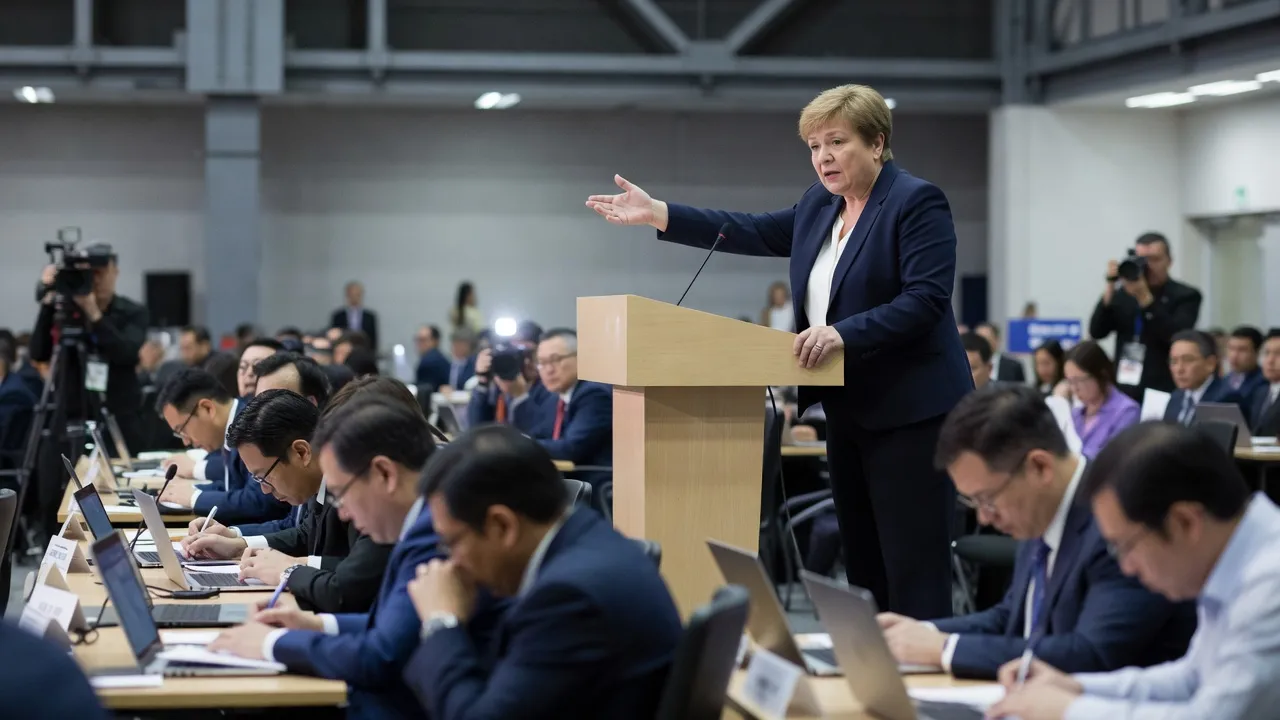
But the essence of national coverage focuses on France itself. Sud Ouest and 20 Minutes, the latter with AFP, report the comments of IMF Managing Director Kristalina Georgieva during a press conference on the sidelines of the assembly: "However, it will take time to bring them back to levels that can inspire confidence, complete confidence, both for the population and for investors". She acknowledges that France is seeking to adopt a budget that puts the deficit and debt on a downward trajectory.
The domestic context weighs on the reading. The examination of the 2027 budget in the National Assembly aims for a deficit of 5% of GDP, but its adoption remains very uncertain, due to a lack of majority and the approach of the presidential election. On the bond market, the 10-year borrowing rate is approaching 5%. 20 Minutes judges the warning to be "particularly severe for the tricolor finances".
More broadly, Ms. Georgieva calls on developed economies to restore their budgetary discipline "urgently": "Too many countries have not taken advantage of the post-pandemic recovery to rebuild their budgetary maneuvering margins". This time, it is the advanced economies that are "the worst students". She advocates for increasing revenue, rationalizing expenditure, and improving public finance management. The yields on government bonds, at their highest in over twenty years in the United States and Europe, are also weighing on the debt of developing countries.
SOURCES (3)
- 20 MinutesMEDIUM
- Sud OuestMEDIUM