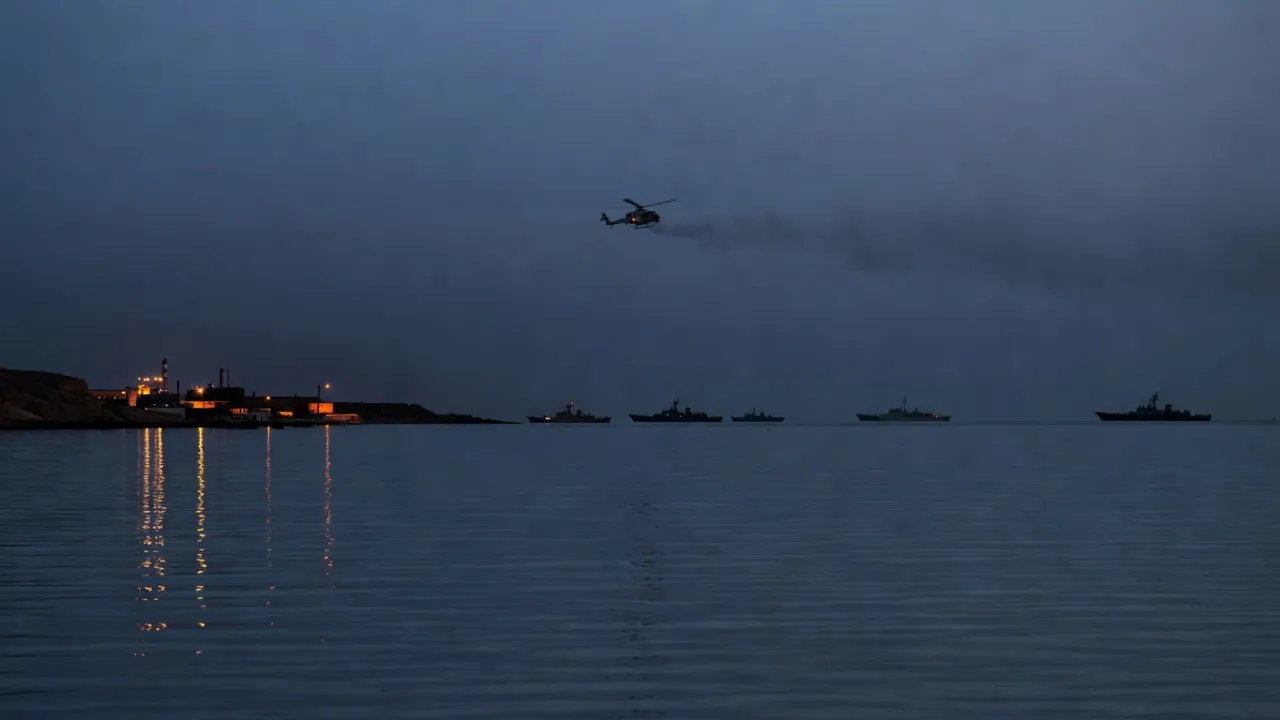
On the night of 27 to 28 May 2026, US forces shot down four Iranian drones and struck a ground control station at Bandar Abbas, in southern Iran. It was the most serious incident since the 8 April ceasefire. The Islamic Revolutionary Guard Corps (IRGC) retaliated by targeting a US air base in the Gulf region; Kuwait activated its air defences, with no casualties reported.
The escalation came as a sixty-day memorandum of understanding was being finalised between US and Iranian negotiators, though Donald Trump had not yet given his approval. He rejected any deal granting Iran a role in managing the Strait of Hormuz, stating that no one would control the passage, and threatened military action against Oman should the sultanate take part in joint Iranian-Omani management. On the markets, Brent rebounded by roughly 3.5 to 4.2 percent, erasing the previous day's gains.
The sequence extends a conflict triggered on 28 February by US-Israeli strikes on Iran's nuclear programme. The April ceasefire had halted hostilities without resolving the core points of friction: the status of Hormuz, the future of the nuclear programme, sanctions and frozen assets. Closed since the conflict began, the strait carries close to a fifth of global oil and LNG trade, exposing Asian and European economies to an energy shock.
How the events should be characterised remains disputed. Several actors describe the strikes as defensive and meant to preserve the truce, while others see them as a breach of international law and of the ceasefire. The legal status of Hormuz is likewise contested: international waters beyond any control for some, sovereign rights over territorial waters for others. The public rejection of the draft deal and the threat against Oman weakened the active mediation channels — Pakistan, Qatar, Oman — without formally severing them.