Common ground and differences in coverage across the media analysed.
The eleven reports state that Moscow informed NATO it would use 'its entire arsenal', including nuclear weapons, if the Alliance attempted to isolate the Kaliningrad enclave.
Ten out of eleven reports relay NATO's response (Mark Rutte or spokesperson Allison Hart): the Alliance claims to be defensive and calls for an end to nuclear rhetoric.
The majority of reports rely on Reuters, or on the press citing it, for the content of the Russian document submitted to NATO.
Question: what explains the rise in tensions around Kaliningrad? Russian and Iranian media point to NATO exercises and an alleged blockade; Ukrainian, Polish, American, and Lithuanian media see a Russian nuclear signal.
Question: what is the purpose of the warning? Moscow presents it as a diplomatic reminder to Europe's 'hotheads'; Kyiv, Warsaw, and a diplomat cited by the Lithuanian press see it as pressure on support for Ukraine.
This grouping describes the publications analysed, not the position of these countries’ populations or of their governments.
What the coverage of each country leaves aside, while others put it forward.
Iran
Poland
Preview: 3 of 11 media perspectives. Syntheses of the media analysed — not direct quotations. Method & limitations
Dhaka is relaying the Russian nuclear threat as a European security dispatch: the Bangladeshi press is picking up the Reuters text, highlighting the escalation of words between Moscow and NATO over Kaliningrad and making no comment.
2 sources · View sources
Brasília is deciphering the episode as an unusual diplomatic message: a Russian "non-paper" submitted to NATO and relayed by embassies, where the nuclear threat to Kaliningrad is stated with rare clarity.
2 sources · View sources
Helsinki is taking the warning about Kaliningrad for what it says it is: a nuclear threat targeting Baltic defense, which Ilta-Sanomat and Iltalehti attribute to the increase in Swedish deep strike capabilities.
2 sources · View sources
DOMINANT ANGLE
Dhaka is relaying the Russian nuclear threat as a European security dispatch: the Bangladeshi press is picking up the Reuters text, highlighting the escalation of words between Moscow and NATO over Kaliningrad and making no comment.
ANALYSIS
Dacca, 1 October 2026.
DOMINANT ANGLE
Brasília is deciphering the episode as an unusual diplomatic message: a Russian "non-paper" submitted to NATO and relayed by embassies, where the nuclear threat to Kaliningrad is stated with rare clarity.
ANALYSIS
Brasília, October 1, 2026.
DOMINANT ANGLE
Helsinki is taking the warning about Kaliningrad for what it says it is: a nuclear threat targeting Baltic defense, which Ilta-Sanomat and Iltalehti attribute to the increase in Swedish deep strike capabilities.
ANALYSIS
Helsinki, October 1, 2026.
DOMINANT ANGLE
Budapest interprets the Russian warning on Kaliningrad as a nuclear threat targeting the defense of the Baltic region, and gauges its scope in light of NATO's response and the Suwalki exercise.
ANALYSIS
Budapest, October 1, 2026.
DOMINANT ANGLE
Tehran is relaying Moscow's nuclear warning as a sign of a militarized Baltic, citing NATO's exercises as the primary source of the escalation.
ANALYSIS
Tehran, October 1, 2026.
DOMINANT ANGLE
Doha is scrutinizing the Russian nuclear warning on Kaliningrad as a risk of escalation on NATO's eastern flank, between Moscow's memorandum and Mark Rutte's firm response.
ANALYSIS
Doha, October 1, 2026.
DOMINANT ANGLE
Moscow presents the warning on Kaliningrad as a diplomatic reminder addressed to the "hotheads" of Europe: a stated nuclear doctrine, not a desired escalation.
ANALYSIS
Moscow, October 1, 2026.
DOMINANT ANGLE
Kyiv interprets the Russian note on Kaliningrad as yet another nuclear signal aimed at undermining Western support for Ukraine, and relays NATO's firm response.
ANALYSIS
Kyiv, Wednesday, September 30, 2026.
DOMINANT ANGLE
The United States decodes the Russian warning about Kaliningrad as a nuclear threat looming over NATO's eastern flank, and views it as part of the series of Moscow's intimidations aimed at Western support for Ukraine.
ANALYSIS
Washington, October 1, 2026.
DOMINANT ANGLE
Vilnius is gauging the Russian threat to Kaliningrad in light of NATO's response: the Lithuanian press is highlighting the assurances from Mark Rutte and Moscow's mention of nuclear weapons in its note.
ANALYSIS
Vilnius, October 1, 2026.
DOMINANT ANGLE
Warsaw is interpreting the Russian threat to Kaliningrad as nuclear blackmail that must be contained through NATO's firmness and continued aid to Ukraine, with the Polish press highlighting the Alliance's responses rather than Moscow's statement.
ANALYSIS
Warsaw, October 1, 2026.
Explore every perspective on this subject across 11 countries.
Compare viewpoints and see where they diverge.
published on
countries
sources
articles
gap
Beyond the text itself, coverage focuses on what Moscow reproaches the Alliance for, the status of the document, and the scope that each press outlet gives it. The eleven coverage pieces in the corpus report the threat; they differ on its origin and purpose.
NATO confirmed receipt of the written Russian message and responded to it; no measures from either side have been announced at this stage in the sources.
According to Vedomosti, which cites the Russian Embassy in Ireland, NATO exercises with "anti-Russian" scenarios were held almost without interruption from June to September 2026, in Poland, Latvia, Lithuania, Norway, Finland, and the Baltic Sea. The same newspaper reports that Finland and the Baltic countries are joining the French initiative of "advanced deterrence", which the embassy describes as placing French nuclear weapons "on the threshold" of Russia.
« Russia does not threaten European countries, but no one should have any doubts that it has all the capabilities to prevent any aggression »
Dmitry Peskov explains, according to the Russian press, that the doctrine documents provide for a nuclear response to any attempt at a blockade, and that diplomats are simply reminding people of this. Maria Zakharova, interviewed by Vedomosti, asserts that Russia is not threatening Europeans, but that no one should doubt its ability to prevent aggression.
Embassy publications also mention "information" according to which NATO is preparing an air and naval blockade of Kaliningrad. Al Jazeera presents this statement as Moscow's and cites no corroboration; Meduza notes that the source of this information is not specified.
The document is circulating in several forms. Reuters says it has consulted a note transmitted to NATO. G1, Dziennik.pl, and Ukrainska Pravda refer to it as a "non-paper", a term G1 defines as an informal document, not an official communication. The embassies in London, Dublin, and Brussels have published texts on social media or handed them over to the TASS agency.
According to the MTI agency cited by the Hungarian site 444, Mark Rutte said he will not publish the exact content of the Russian letter and will only comment on what Moscow has told the press. The details of the text, including the strikes on decision-making centers, come from Reuters and the Financial Times, not from a full publication.
The Folha de S.Paulo mentions a possible trigger: two weeks earlier, Polish Foreign Minister Radosław Sikorski had suggested that NATO conduct exercises near the enclave. The Brazilian newspaper presents this point as context, not as an established cause.
Mark Rutte downplays the scope of the text. According to 444, he states that Vladimir Putin knows he can never defeat NATO, so he does not take it very seriously, and that the Alliance must still react. According to Gazeta Prawna and Dziennik.pl, he adds that if Russia targeted Finland, a Baltic country, or Poland, the Alliance would concentrate its forces.
« Please, stop worrying so much, we are prepared »
On the purpose of the message, several interpretations are reported. According to Politico, cited by Verslo žinios, an NATO diplomat sees it as "classic Russian propaganda", intended to frighten allied opinions. Kyiv Post frames the note in a nuclear signaling and hybrid pressure, and recalls comments by Deputy Secretary General Radmila Shekerinska in August on the intensification of this rhetoric when Moscow suffers setbacks.
On the side of neighboring countries, Meduza and Interfax, summarized by Russian coverage, report that Latvian President Edgars Rinkevics recalled that no legal obstacle prohibits hosting nuclear weapons in Latvia, and that London proposed on September 29 to extend its nuclear protection to the Baltic countries.
Several reports place the incident in a series of events. Al Jazeera reports that Danish authorities say a Russian warship fired two flares near a Danish military helicopter. Iranian media, via Asr Iran, IRNA, and RIA Novosti, relay Moscow's version: the summoning of Danish Ambassador Rolf Holmboe for behavior deemed "unprofessional and provocative" towards the Soobrazitelny frigate.
At the "Future 2050" forum, Deputy Minister Alexandre Grouchko stated that the Baltic was rapidly becoming a potential point of military conflict. He attributes the rise in tensions to NATO exercises. HVG, in Hungary, describes the Gallant Boar exercise, held in June, as focusing on the defense of the Suwałki corridor and having a "reactive and non-offensive" spirit.
On the Nordic side, Iltalehti quotes Aftonbladet: the Swedish air force wants to be able to reach an attacker's bases with a Taurus missile launch from a Gripen tested in August. Colonel Carl Bergqvist assures that the goal is to make the cost of an attack too high, not to conquer territories.
A count provides the scale of coverage, not that of opinion: according to the meta-analysis, ten out of eleven reports in the corpus relay NATO's response. The two Iranian articles, on the other hand, devote only one sentence to it and do not quote any Alliance officials.
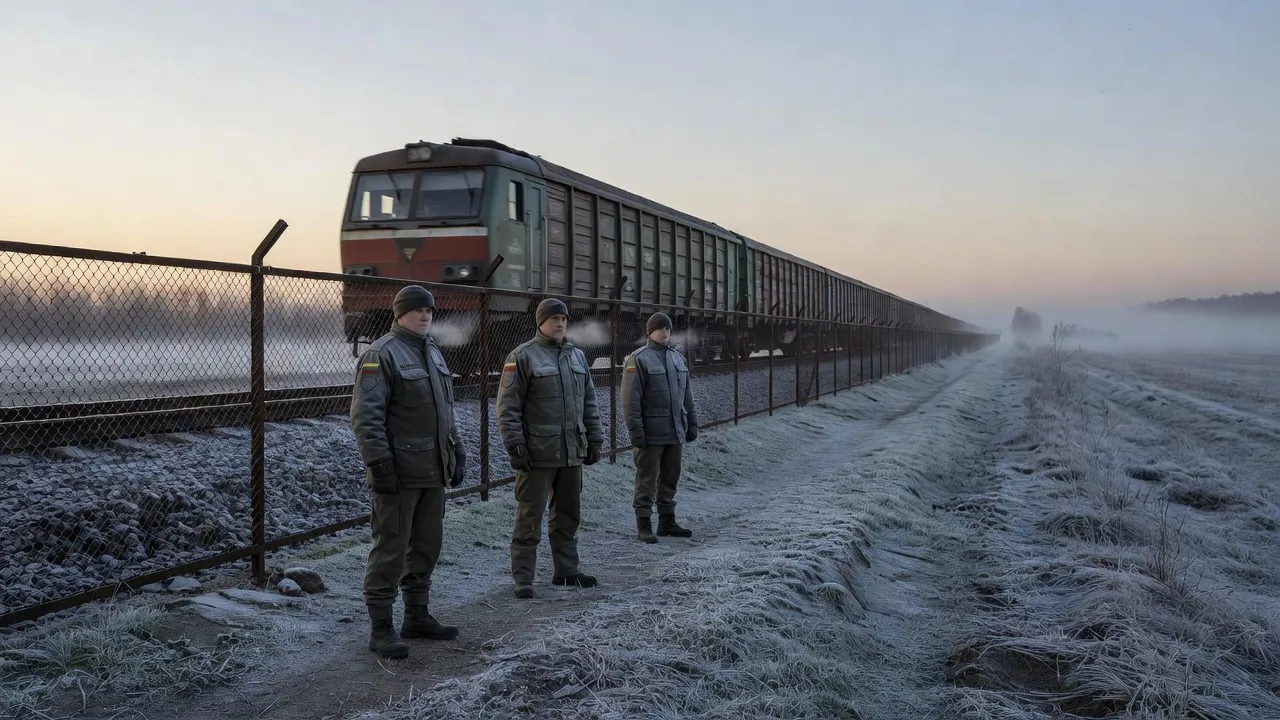
The text also mentions Russian strikes against the decision-making centers of member states from the start of a conflict.
The Russian embassy in Ireland cites nearly continuous NATO exercises from June to September 2026, including Gallant Boar 2026.
Spokeswoman Allison Hart confirmed receipt of the message and denounced "any irresponsible nuclear rhetoric".
More divergent than 17% of recent comparable stories (reference: 90 recent stories measured with the same method).