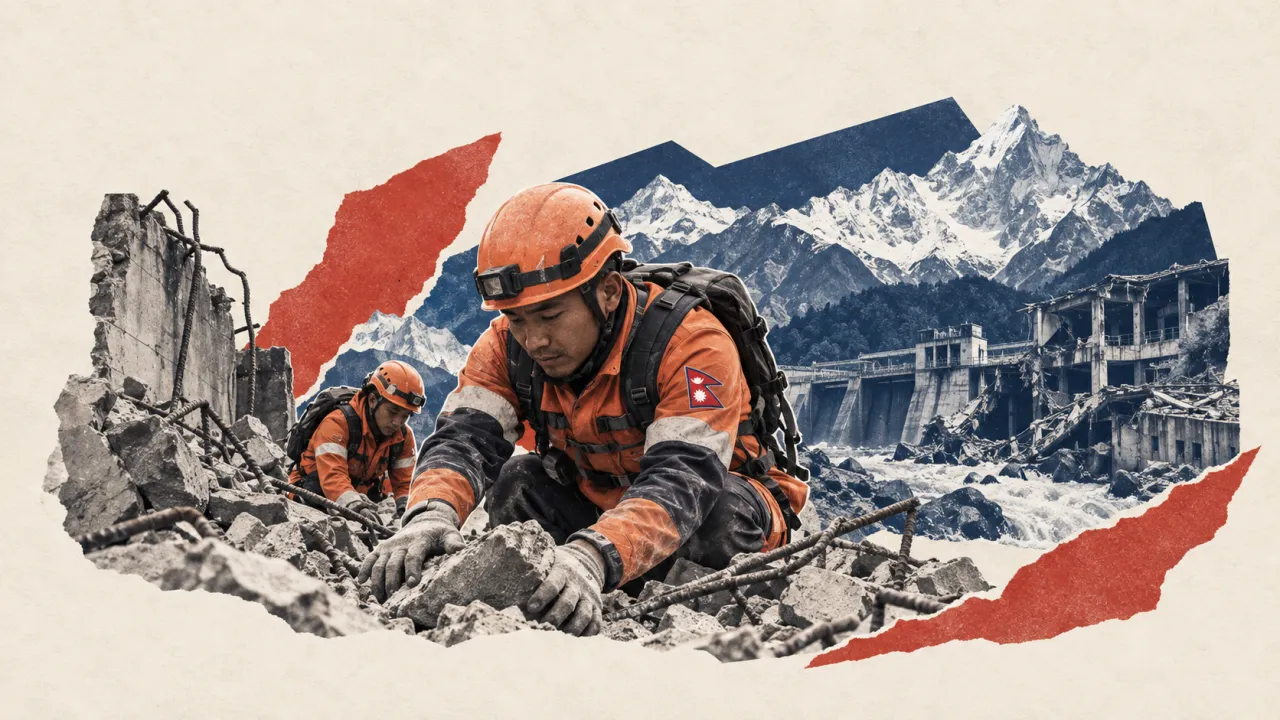

DOMINANT ANGLE
Brazil first notes the scientific validation: according to Folha de S.Paulo, the World Weather Attribution study confirms that warming exacerbated the combination of climate and geological factors that caused the collapse of Langtang Lirung, while the human toll — more than 6,000 missing, barely 7% of bodies identified — takes a back seat.
Dominant angle identified — does not reflect unanimity of this country’s media
KEY POINTS
- 01
The World Weather Attribution study, published on Thursday, September 17, by a group led by London's Imperial College, attributes the collapse of Langtang Lirung to a combination of climate and geological factors exacerbated by warming.
- 02
The number of missing people in Nepal rose from 5,179 to 6,150 between Tuesday, September 15, and Wednesday, September 16, while only 7% of the 1,403 recovered bodies have been identified despite 1,206 DNA samples.
- 03
The cumulative Nepal-China toll stands at 1,446 dead and at least 6,669 missing, including at least 636 foreigners on the Nepalese side and 519 reported missing on the Chinese side.
ANALYSIS
Brasília, Thursday, September 17, 2026. The Brazilian press is re-examining the Langtang Lirung catastrophe through two complementary prisms: the scientific evidence that has just been published and the human toll that continues to worsen, three weeks after the tragedy. Folha de S.Paulo and UOL Notícias are reporting on the study published this Thursday by the World Weather Attribution, a group led by researchers from London's Imperial College. According to their conclusions, the August 26 collapse — when part of the ice and rocks from an outcrop broke off from the summit of Langtang Lirung, flooding the Lendi River valley and sweeping away entire communities — resulted from a combination of climate and geological events, exacerbated by warming. "It's essential to emphasize that there was no single trigger event," explains Walter Immerzeel, a professor at the University of Utrecht, quoted by Folha. "The rupture occurred at an altitude of around 5,150 meters, and several processes acted together over timescales ranging from years to decades, rather than a single isolated factor. This also makes direct climate attribution particularly difficult." Friederike Otto, from Imperial College, who leads the initiative, specifies that she brought together glaciologists and mountain region specialists "to gather in one place what we know to date" and "to identify the factors behind the catastrophe and the role of climate change."
The other thread being followed by Folha Mundo is that of the human toll, revised on Wednesday, September 16, by Nepalese authorities: the number of missing people has risen to 6,150, compared to 5,179 announced on Tuesday, September 15. Spokeswoman Shanti Mahat explains to AFP that the data is collected from district offices and then revised after verification. Only 7% of the 1,403 bodies found have been identified, despite 1,206 DNA samples taken from the bodies and 1,889 from families; only 105 bodies have been returned to their loved ones. At least 636 foreigners are among the missing on the Nepalese side. On the Chinese side, the official press reports 43 deaths and 519 missing, bringing the cumulative toll from both countries to 1,446 dead and at least 6,669 missing.