DOMINANT ANGLE
Kathmandu is gauging the human scale of the disaster: Nepalese and foreign families without news, a legal vacuum preventing the registration of the dead, and climate diplomacy taken all the way to the UN.
Dominant angle identified — does not reflect unanimity of this country’s media
KEY POINTS
- 01
795 tourists remain missing according to tourist police records, including 607 foreigners and 188 nationals.
- 02
Families in Rasuwa are performing symbolic funeral rites with kusha grass, due to a lack of legal framework to register the deaths of unrecovered loved ones.
- 03
The multi-party meeting on September 16 decided to prepare the points to be raised on climate justice at the 81st session of the UN General Assembly.
ANALYSIS
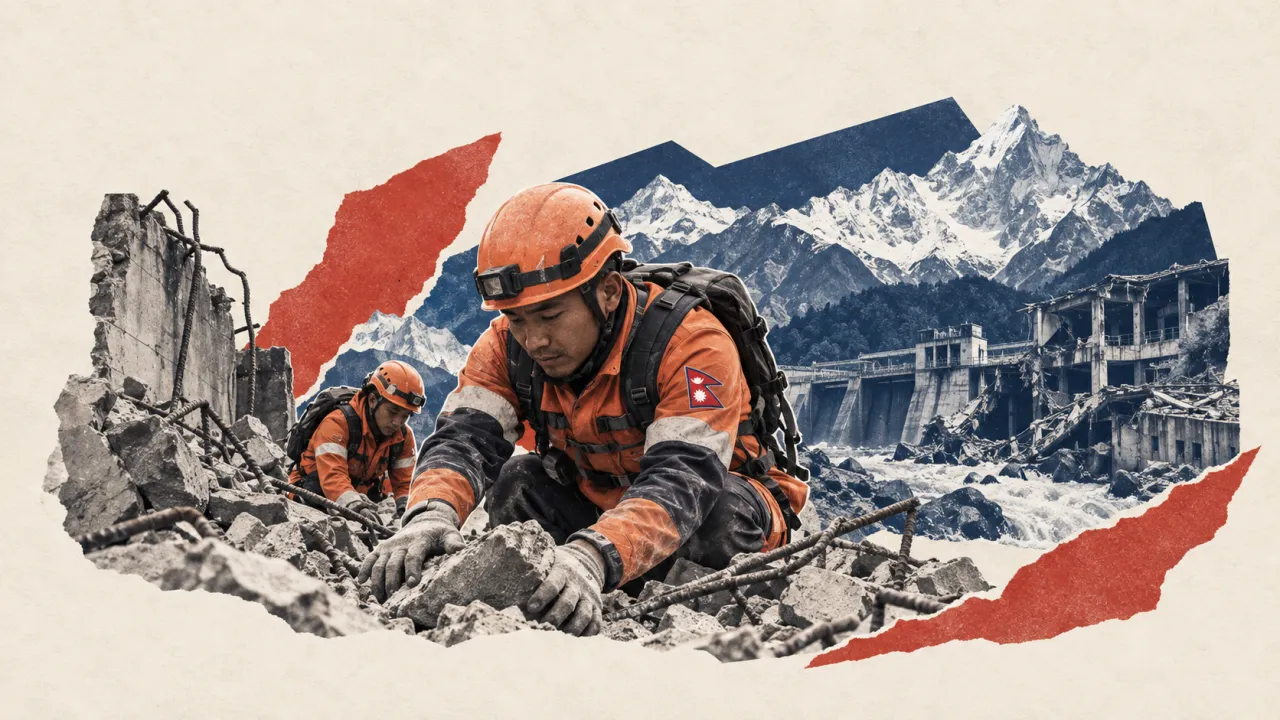
Katmandou, September 17, 2026. Three weeks after the glacial collapse of Langtang Lirung, Nepal is discovering the extent of the void it has left behind, both administratively and humanly. The records of the tourist police list 795 tourists still missing after the floods of the Bhotekoshi and Trishuli, including 607 foreigners and 188 Nepalis, reports the Kathmandu Post. In front of the Nepal Tourism Board offices in Bhrikutimandap, families from India, Russia, and Ukraine are still waiting for a response. Vichitra Jain, from India, is searching for her Russian friend Kirill Tretiakov, who has been missing since August 26: "I don't know where to go or how to search. No one has helped us," she confides.
Inside the country, another obstacle is adding to the grief: the law. In the Rasuwa district, families have begun to perform Hindu funeral rites with symbolic bodies made of kusha grass, as they are unable to legally confirm the death of loved ones who were never found. The district offices, seized by the Rasuwa risk management committee, are demanding from the Ministry of Interior an accelerated registration mechanism, essential for insurance and official recognition of deaths.
Fear is spreading beyond the affected valleys. Local officials, who met on Tuesday in Jomsom, in the Mustang region, have measured how similar their own riverbanks are: "We are currently on the riverbanks. If a flood like the one in Rasuwa occurs, we will not survive either," warned a municipal official quoted by Ratopati. A resident asked experts about the ban, in the name of the Annapurna conservation area, on removing the sediments that accumulate in the bed of the Kaligandaki.
On the political front, the multiparty meeting convened on Wednesday by Rabi Lamichhane, the leader of the ruling Rastriya Swatantra Party, decided in favor of a special parliamentary committee for reconstruction, estimated to cost around 500 billion rupees, and set the points that Kathmandu will bring to the 81st session of the United Nations General Assembly on climate justice, according to Ratopati.
A study published on Thursday by World Weather Attribution comes to support this diplomatic line: warming has probably contributed to the collapse, in a Himalayan region that is warming at about twice the global average, recalls an editorial in Online Khabar. For Kathmandu, the argument is now documented: a country that emits almost nothing is bearing the weight of a disorder it did not cause.
SOURCES (3)
- The Kathmandu PostMEDIUM
- Online KhabarMEDIUM
- RatopatiMEDIUM