
DOMINANT ANGLE
Buenos Aires relays the UN's condemnation and warnings of escalation, based on Reuters and AFP dispatches, without its own national angle.
Dominant angle identified — does not reflect unanimity of this country’s media
KEY POINTS
- 01
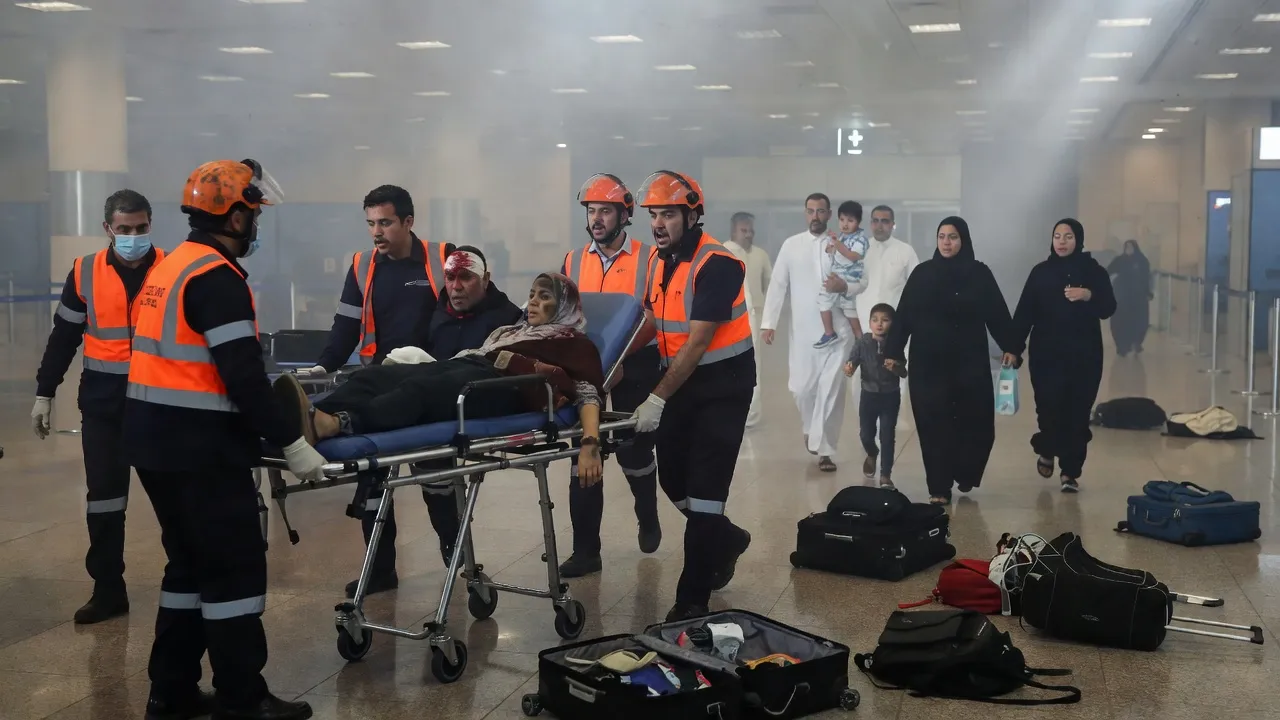
Twelve people were killed after the attack on Riyadh's King Khalid Airport, according to sources cited by Reuters and AFP, as Saudi authorities have not released an official toll (Ámbito).
- 02
Guterres said he is "profoundly shocked" and recalled that attacks on civilians violate international law (Infobae).
- 03
Hans Grundberg judged that these strikes "represent a serious escalation" and cited the airports of Riyadh and Abha (Infobae).
ANALYSIS
Buenos Aires, October 11, 2026. The Argentine press is covering the attack on Riyadh's King Khalid International Airport through the lens of international agencies and the United Nations' reaction. Ámbito headlines "12 dead" and describes an attack that occurred on Saturday, with "explosion, scenes of panic" and injured people in the terminal. The media specifies that these figures come from sources cited by Reuters and AFP, "because the Saudi authorities did not release an official report".
According to a diplomatic source cited by AFP, the site was hit by a missile launched by the Houthis at around 3 pm local time, or 9 am in Argentina. Ámbito notes that the pro-Iranian group had not claimed responsibility for this strike, but had claimed the two previous ones that week against the same airport. Its military spokesman re-released a message stating that only authorized humanitarian flights could land in Riyadh, presented as "a reminder". An injured traveler told Reuters he saw something cross the sky before a part of the roof near a boarding gate collapsed. Five injured people were in intensive care according to a hospital source cited by AFP, and Reuters indicates that the Saudi alert system had not issued any warning.
Infobae, via a news agency dispatch, emphasizes the institutional response. UN Secretary-General Antonio Guterres said he was "deeply shocked" and condemned the attack "energetically", which killed at least twelve people and injured over three hundred. He recalled that "attacks against civilians and civilian infrastructure are a violation of International Law" and demanded that they cease immediately.
The UN envoy for Yemen, Hans Grundberg, joined the condemnation from Amman. He recalled that the bombings that week had targeted the airports of the capital and Abha, with civilian casualties, and judged that these attacks "represent a serious escalation" that threatens regional security and complicates peace efforts in Yemen. He called on the Houthis to respect international humanitarian law.
The account also takes up the position of the coalition led by Saudi Arabia, which qualifies the attack as a "war crime" and announces retaliation against the rebels in Yemen. In both texts, the reading is that of a risk of regional escalation, seen from afar and without a direct Argentine angle: neither Argentine nationals nor local consequences are mentioned.