
DOMINANT ANGLE
Singapore is examining the strike on Riyadh's airport through the lens of Saudi air defense and its impact on Gulf air traffic, via AFP and Reuters dispatches.
Dominant angle identified — does not reflect unanimity of this country’s media
KEY POINTS
- 01
According to the Straits Times (Reuters), Riyadh's airport had been hit twice earlier in the week, with four dead, and the Saudi early warning system issued no alert before the October 10 incident.
- 02
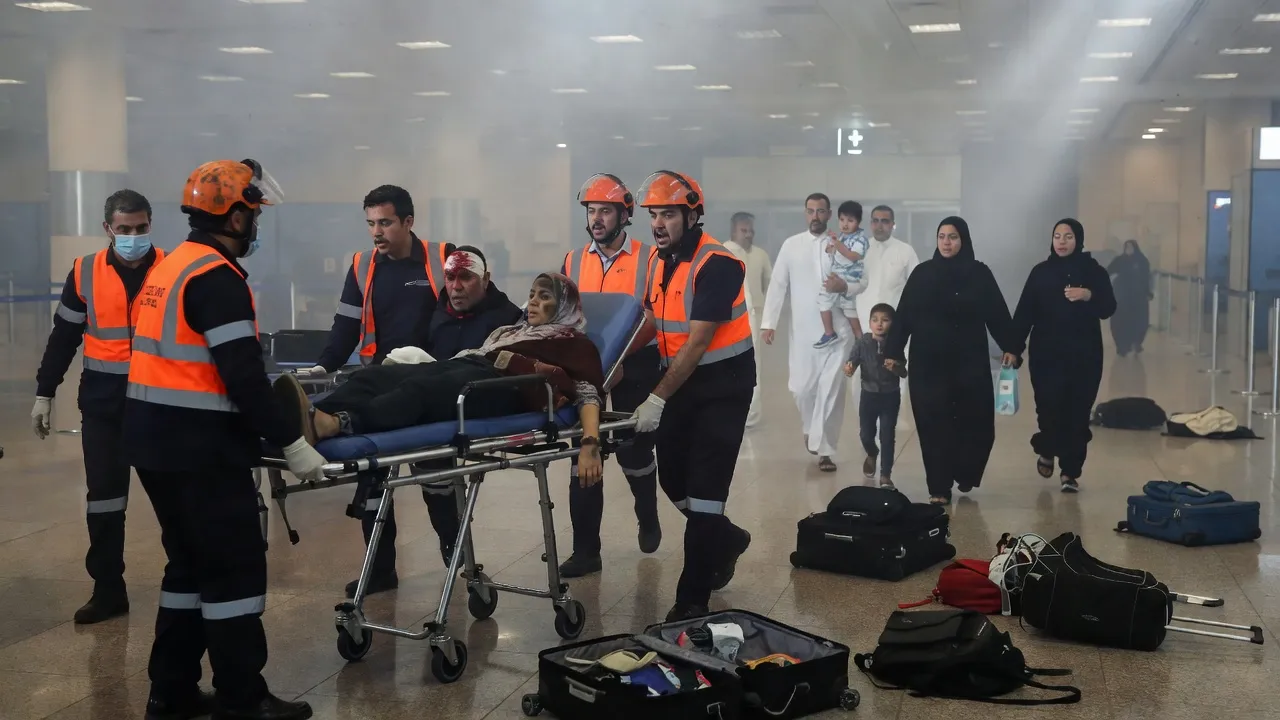
A diplomatic source attributes the October 10 strike to a Houthi missile around 3 pm (8 pm in Singapore); a witness recounts: "I saw 401 hit. I saw injured in front of my eyes. Everyone was running."
- 03
Etihad Airways and Qatar Airways cancelled several flights to Riyadh, with some cancellations extending until October 12, ahead of major energy and investment conferences in the Saudi capital.
ANALYSIS
Singapour, 11 October 2026. Singapore's Channel News Asia and the Straits Times are mainly relaying AFP and Reuters dispatches published in the hours following the strike on Saturday, 10 October, on Riyadh's King Khalid international airport. Their initial reports are partial: CNA cites a medical source stating that two people have died and dozens are injured, while the Straits Times mentions "several injured" and a hospital source counting five patients in intensive care.
The account opens with the testimony of a passenger from the domestic terminal: "I was at gate 403. I saw gate 401 hit, I saw injured people in front of me. Everyone was running." A relative of an injured person talks about glass shrapnel on their shoulders and arms. A diplomatic source attributes the strike to a Houthi missile at around 3 pm, or 8 pm in Singapore, and states: "The Houthis are attacking civilian targets." In these initial dispatches, Riyadh had not confirmed all the circumstances, and the Houthis had not announced any new attack that day.
The Straits Times emphasizes the kingdom's defense: the airport had already been hit twice in the week, with four deaths, which "exposed vulnerabilities," and the Saudi early warning system had not issued any alert before the 10 October incident. CNA puts the escalation into a broader context: the Houthis are carrying out an unprecedented wave of strikes against Saudi airports, oil facilities, and tankers since the collapse, in July, of the truce with the Yemeni government backed by Riyadh. The strikes claimed on Thursday, 8 October, had killed three people according to CNA, and damaged a plane.
The air and economic dimension is constant. Etihad and Qatar Airways have cancelled several flights to Riyadh, with some cancellations extending until 12 October, and several airlines are suspending their services as the capital is set to host major conferences on energy and investment. Foreign embassies are advising against using the airport, and CNA reports an exceptional call to mobilize doctors. The Straits Times also notes that the United States might "look into" participating in Saudi actions against the Houthis.
These dispatches do not contain the later report of twelve deaths and 309 injuries released by the Saudi authorities. They show an ongoing situation, presented mainly as a risk to the security of air transport and the Gulf's business hub.
SOURCES (2)
- Straits TimesMEDIUM