
DOMINANT ANGLE
Canberra is gauging the attack on Riyadh in terms of the traveler and air transport: advisories against traveling to the Saudi capital, hundreds of flights canceled, business conferences maintained.
Dominant angle identified — does not reflect unanimity of this country’s media
KEY POINTS
- 01
Three attacks in one week at Riyadh's airport have killed twelve people and injured over 300, according to ABC News Australia.
- 02
The government advises against traveling to Riyadh and the embassy recommends avoiding King Khalid Airport (ABC, SBS).
- 03
Etihad and Qatar Airways have canceled several flights to Riyadh, while energy and investment conferences are being maintained (PerthNow).
ANALYSIS
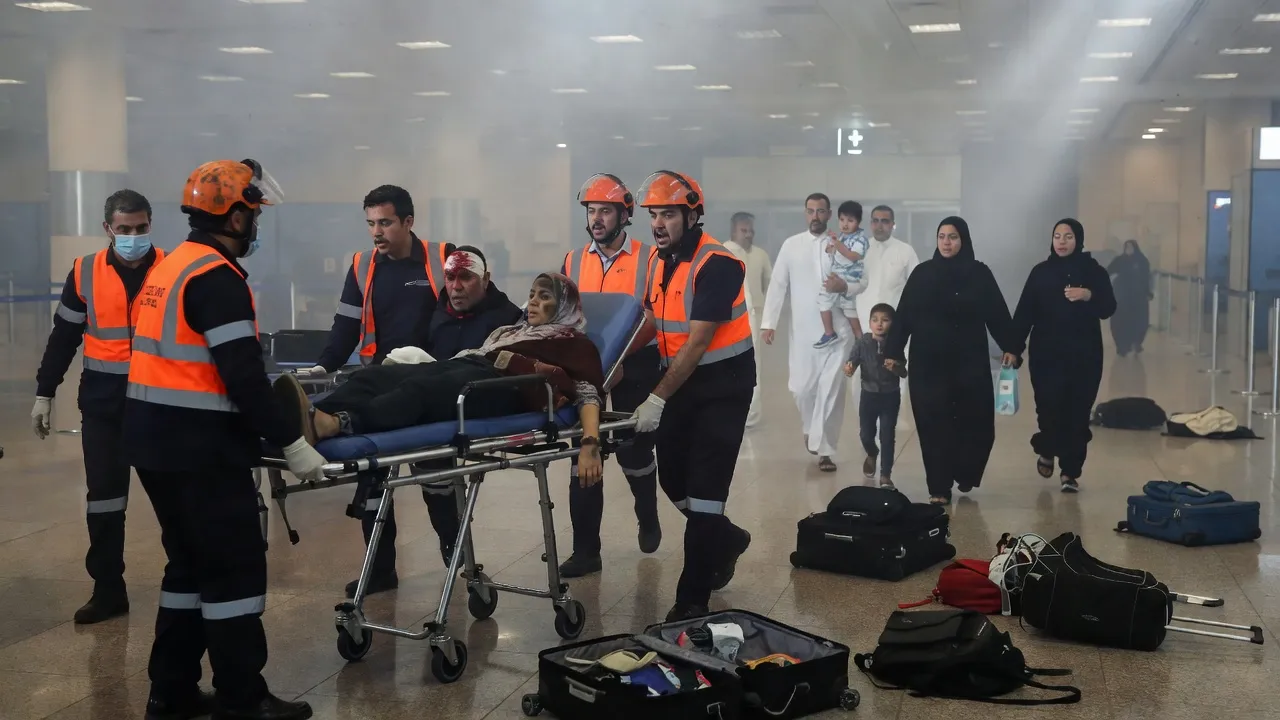
Canberra, October 11, 2026. For ABC News Australia, the first lesson is in an instruction: the Australian government "tells travelers not to go" to Riyadh after three attacks on airports, which have killed twelve people and injured over 300 in one week. The media recalls that King Khalid Airport and other infrastructure have been targeted by drones and missiles since the Saudi-led coalition launched an offensive against the Houthis in Yemen. Operations are suspended "for security reasons," and hundreds of flights are canceled.
The account follows the chronology. On Wednesday, the Houthis, backed by Iran, said they had struck King Khalid and Abha airports with ballistic missiles and drones in retaliation for strikes on Sanaa Airport. A Sudanese national died in Riyadh, two foreigners in Abha. On Thursday, the Saudi civil aviation authority reported three Saudis killed, including a pilot, and a plane hit on the tarmac. On Saturday, the third attack killed four Saudis, one Palestinian, two Bangladeshis, and one national from the United States, Jordan, Syria, Sudan, and Egypt.
SBS News relays the Australian embassy, which invites people to "reconsider" any travel and avoid the airport and its surroundings. The channel also cites AFP: a wave of strikes "of unprecedented scale" has targeted airports, oil facilities, and tankers since the collapse of the truce in Yemen in July. It reports an exceptional call to mobilize doctors in the face of a "grave emergency".
PerthNow, which picks up an agency dispatch, emphasizes the economic and logistical effects. More than a dozen ambulances converge on the airport, travelers are evacuated, and Flightradar24 shows flights diverted or canceled. Etihad and Qatar Airways cancel several connections to Riyadh, some until Monday. The organizers of major energy and investment conferences, scheduled in the Saudi capital, assure that they will take place and seek to reassure participants about their safety. The Houthis, for their part, have declared Saudi airspace a "military operations zone" and asked companies to avoid it.
The three media outlets present Houthi responsibility as established or probable, without relaying the political reactions of foreign capitals. None of them dwell on the promised response from the coalition: attention remains on what the attack costs passengers, companies, and business events in the region.