
DOMINANT ANGLE
Canberra is gauging this Gulf escalation by the barrel price: the Houthi strikes against Saudi cities are pushing oil above $100 American, a surge that Australian media immediately convert into a cost for the national motorist.
Dominant angle identified — does not reflect unanimity of this country’s media
KEY POINTS
- 01
The barrel has exceeded $100 US (around $140 Australian) after Houthi attacks on Saudi oil infrastructure, reports SBS News.
- 02
Thirteen civilians were injured by Houthi ballistic missile and drone fire on Khamis Mushait, Abha, and Taif, confirmed Tuesday by the Arab coalition.
- 03
The coalition intercepted a drone targeting Mecca on Tuesday before it entered the restricted airspace, the first emergency alert for the site since the start of the war, according to ABC News.
ANALYSIS
Canberra, September 16, 2026. Australia is first measuring this new episode of the Middle East conflict by its impact on fuel prices: SBS News notes that the Houthi attacks on Saudi oil infrastructure have driven the barrel above the $100 threshold, or about 140 Australian dollars. For an economy that imports most of its refined fuel, this shift is not a distant detail.
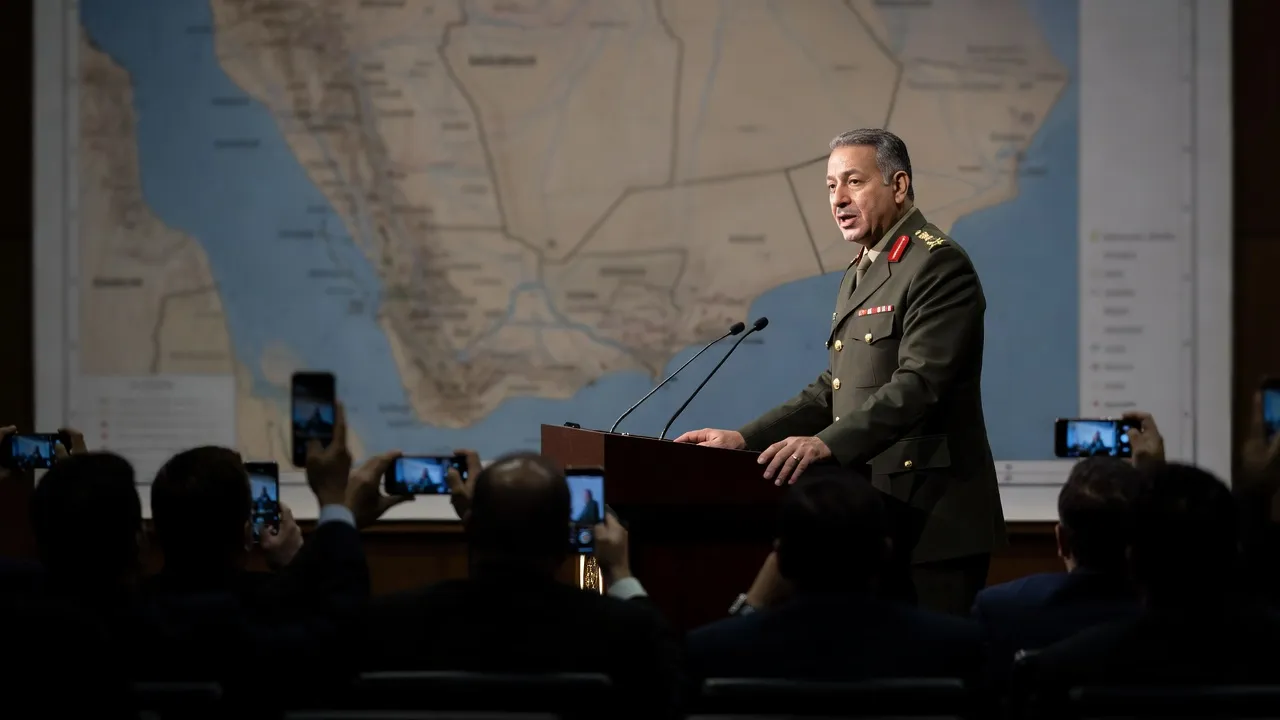
On the ground, the Arab coalition led by Riyadh promised on Tuesday to react "firmly" after a series of ballistic missile and drone strikes that injured thirteen civilians in the south of the kingdom. The Houthis claimed a "large-scale" attack, carried out with "dozens of ballistic missiles and drones", against King Khaled Air Base in Khamis Mushait; the coalition confirmed strikes the day before on Khamis Mushait, Abha, and Taif. A resident of Khamis Mushait told AFP that he heard "intense explosions" that caused fires "for a long time": "Honestly, we couldn't sleep at all."
ABC News reports that the coalition intercepted a drone targeting Mecca on Tuesday before it entered the restricted airspace surrounding the holy sites — the first emergency alert for the site since the start of the regional war. Spokesman Turki al-Malki described the security of the two holy cities as a "red line" on Wednesday and promised deterrent measures. Security alerts were triggered on Tuesday in Mecca, Jeddah, and Taif.
The Australian narrative links these strikes to the capture, last week, of the Yemeni Red Sea coast and the Bab el-Mandeb Strait by the Houthis, described as a severe blow to already weakened government forces, even as the Strait of Hormuz further north is choking under the broader war between Washington and Tehran. A Houthi raid on Monday in western Yemen killed eight government soldiers, according to two military sources. Riyadh is also seeking continued support from Egypt in the face of the escalation in the Red Sea.
For Canberra, dependent on maritime routes and global crude prices, the convergence between the Houthi offensive, the Saudi response, and the oil surge directly affects household budgets, long before any diplomatic calculations about Hormuz.