
DOMINANT ANGLE
Islamabad is questioning the exact scope of the Makkah defence pact signed with Riyadh and Ankara, as the Houthi advance towards the Bab-el-Mandeb Strait raises the question of a potential Pakistani intervention obligation under Article 51.
Dominant angle identified — does not reflect unanimity of this country’s media
KEY POINTS
- 01
The joint defense pact of Makkah, signed on August 7, 2026, by Pakistan, Saudi Arabia, and Turkey, stipulates that an armed attack against one of the signatories will be regarded as an attack against all, with reference to Article 51 of the United Nations Charter.
- 02
The DG of ISPR, Lieutenant General Ahmed Sharif Chaudhry, told Al-Arabiya English that the pact is "defensive" and has "no regional ambition", and that its operational modalities remain classified.
- 03
Pakistan's Ambassador to the UN, Asim Iftikhar Ahmad, condemned the Houthi attacks on Tuesday before the Security Council, and Prime Minister Shahbaz Sharif expressed the same condemnation during a call with Crown Prince Mohammed bin Salman.
ANALYSIS
Islamabad, September 16, 2026. In Islamabad as in Karachi, the press is focusing less on the origins of the new Houthi salvo against Saudi Arabia than on its implications for Pakistan itself. The Makkah joint defense pact, signed on August 7 by Islamabad, Riyadh, and Ankara, provides that an armed attack against one of the three countries will be regarded as an attack against all, in explicit echo of Article 51 of the United Nations Charter on legitimate defense.
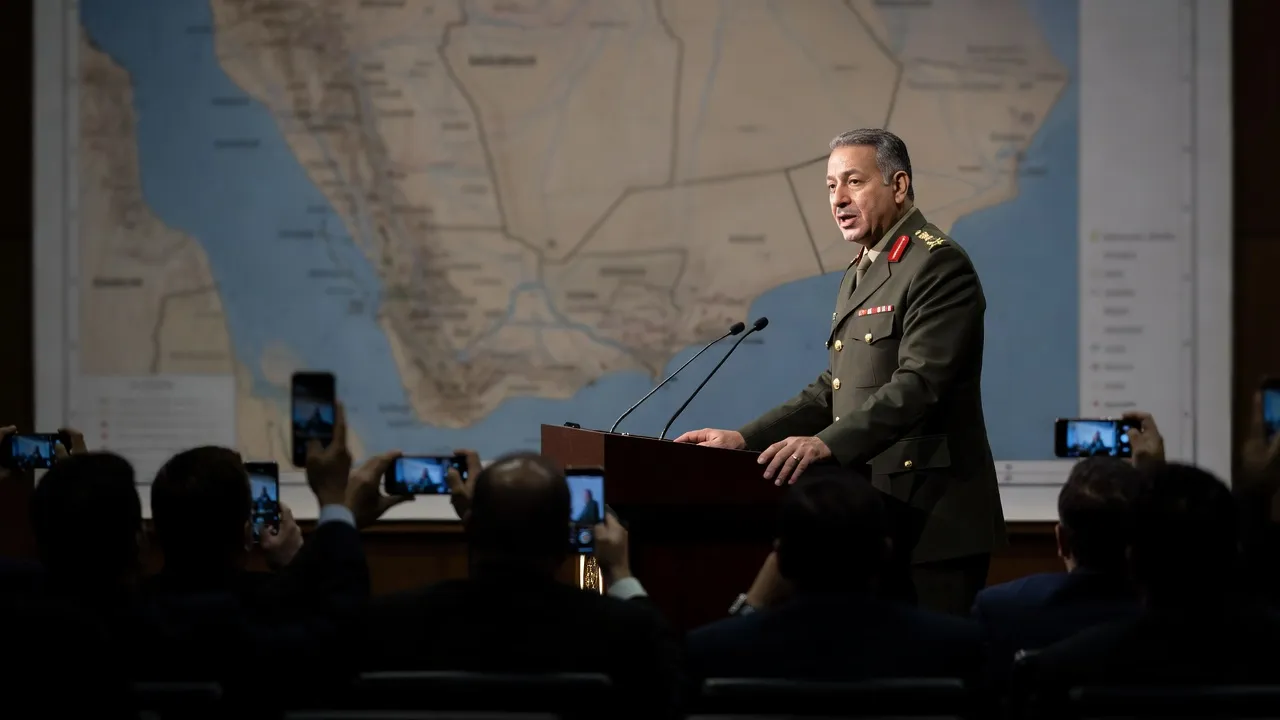
The chief spokesperson for the army, Lieutenant General Ahmed Sharif Chaudhry, director general of inter-services public relations (ISPR), sought to circumscribe the scope of the text in an interview granted Wednesday to Al-Arabiya English. "It's defensive, as the word indicates. There's nothing aggressive. There's no regional ambition. It's collective deterrence," he stated, adding that the operational modalities remain classified and are never made public.
The question arises as the Houthi rebels, after seizing the port of Moka and then the island of Mayyoun in the Bab-el-Mandeb strait, announced their intention to keep the route open to international traffic, except for Saudi ships. A Pakistani newspaper wonders: if this selective blockade is equivalent to an armed attack against the kingdom, what would be expected of Islamabad as a signatory to the Makkah pact?
On the diplomatic level, Pakistan condemned on Tuesday, through the voice of its ambassador to the UN, Asim Iftikhar Ahmad, before the Security Council, "in the strongest terms, all Houthi attacks against the Kingdom of Saudi Arabia". Prime Minister Shahbaz Sharif himself expressed his condemnation during a telephone exchange with Crown Prince Mohammed bin Salman, emphasizing that these attacks threaten regional stability and global energy security.
The three Saudi cities targeted on Monday, Khamis Mushait, Abha, and Taif, resulted in thirteen civilian casualties and seven damaged houses, according to the coalition led by Riyadh, whose spokesperson Turki Al-Malki promised deterrent measures. Islamabad finally emphasizes the complementary nature of the Makkah pact with its other alliances, notably its historical relationship with Beijing, dismissing any idea of competition between partners.
SOURCES (2)
- The Express TribuneMEDIUM