
DOMINANT ANGLE
Doha is defending a strictly diplomatic reading of the crisis: saving the dialogue on the Strait of Hormuz before Bab-el-Mandeb also tips over, while recalling that Saudi security directly affects that of the Gulf.
Dominant angle identified — does not reflect unanimity of this country’s media
KEY POINTS
- 01
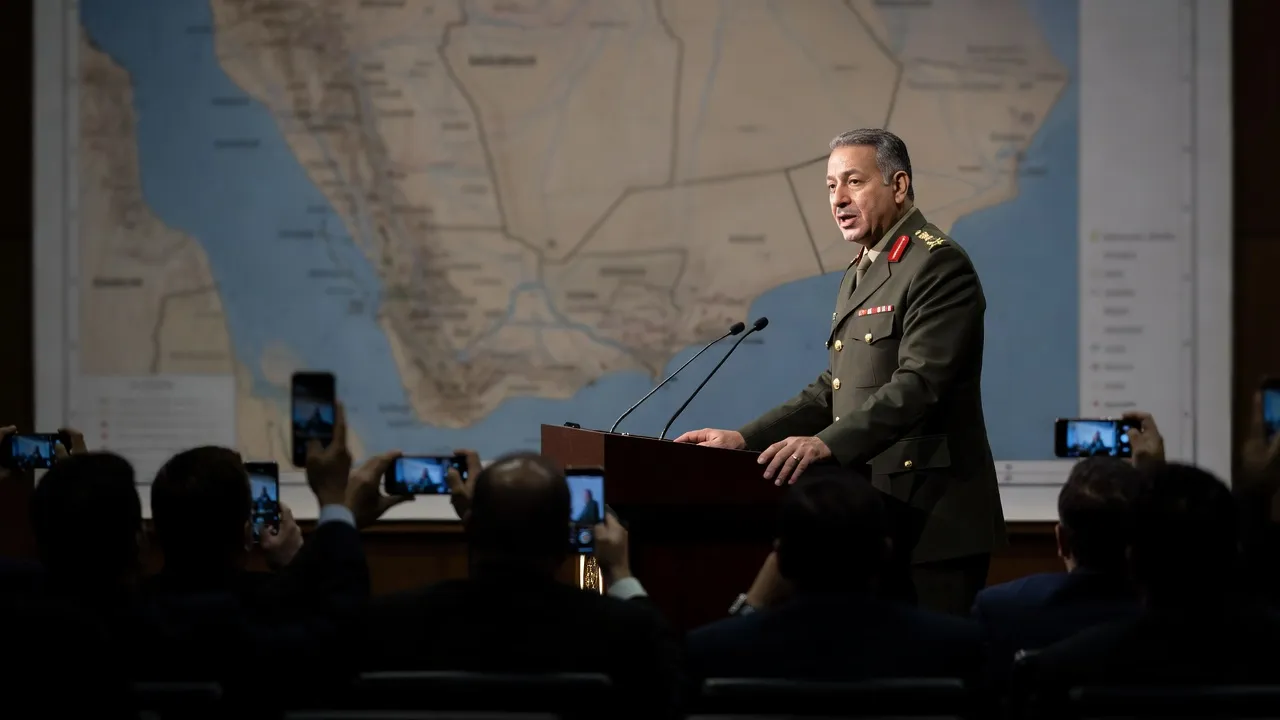
The Qatari Ministry of Foreign Affairs spokesperson, Ibrahim bin Sultan al-Hashmi, stated on Tuesday, September 15, that the world "cannot bear the cost of the closure of the Bab-el-Mandeb Strait" after that of Hormuz
- 02
According to maritime tracking data relayed by Al Jazeera, only three ships crossed the Strait of Hormuz on Tuesday, September 15, 2026, compared to five the day before
- 03
The Qatari Ministry of Foreign Affairs condemned on Tuesday the Houthi strikes on Khamis Mushait, Abha, and Taif as "despicable acts of aggression", affirming that Saudi security is an integral part of Qatar's and the GCC's security
ANALYSIS
Doha, September 16, 2026. For Qatar, the priority remains diplomatic: saving what remains of the dialogue on the Strait of Ormuz before the crisis spreads to the neighboring Bab-el-Mandeb Strait. During the weekly press briefing of the Ministry of Foreign Affairs on Tuesday, September 15, 2026, its spokesperson Ibrahim bin Sultan al-Hashmi reaffirmed Doha's support for "diplomatic efforts to preserve maritime navigation freedom and reach a comprehensive agreement guaranteeing lasting peace in the region". He emphasized the urgency of bringing positions closer, judging that "the immediate priority for all parties is to reach a consensus on a solution to the current crisis".
On the same day, the ministry warned against any normalization of the closure of maritime routes, warning that the world "has already suffered enough from the closure of the Strait of Ormuz and cannot bear the cost of the closure of the Bab-el-Mandeb Strait". A phrase that reflects Qatar's concern over the measured collapse of traffic: according to maritime tracking data relayed by Al Jazeera, only three ships crossed Ormuz on Tuesday, September 15, compared to five the day before, while a ship was hit by an unidentified projectile on Monday evening, with no reported damage.
On the Yemeni front, Doha condemned, in a separate statement dated the same Tuesday, the ballistic missile and drone strikes by Houthi rebels on Khamis Mushait, Abha, and Taif, described as "dishonorable acts of aggression" and "flagrant violations of Saudi sovereignty". The text states that "the security of the Kingdom of Saudi Arabia is an integral part of the security of the State of Qatar and the collective security system" of the Gulf Cooperation Council - a way of framing the attack in a logic of alliance rather than a simple bilateral confrontation between Riyadh and the Houthi rebels.
This double emphasis, on mediation on the one hand and Gulf solidarity on the other, explains the relative silence of the Qatari press on the postponement of the Iran-Gulf meeting, presented as a technical setback rather than a sign of rupture. For Qatar, whose economy directly depends on the stability of regional maritime routes, each day of blockade in Ormuz reminds that Gulf diplomacy remains, in its eyes, the only barrier to a generalized escalation.
SOURCES (3)
- Al Jazeera ArabicMEDIUM