Common ground and differences in coverage across the media analysed.
Between September 14 and 16, 2026, maritime traffic collapses in the Strait of Hormuz and oil and fuel prices reach unprecedented levels since the start of the conflict, with a barrel exceeding $100 and record prices at the pump in several countries.
During the same week, Houthi forces intensify their military actions: ballistic missile and drone strikes against Saudi territory, and new positions taken on the Yemeni Red Sea coast, near the Bab-el-Mandeb Strait.
The Iranian Revolutionary Guard's navy attributes the damage to the supertanker to naval mines hit south of the Strait of Hormuz, while the American CENTCOM, whose version is taken up by the Saudi and British press, attributes it to an Iranian missile followed by a drone.
Coverage that diverges
The Arab coalition claims to have intercepted a Houthi drone targeting Mecca on Tuesday, a second attempt of this kind since 2017 according to its spokesperson, while the Houthi political office denies any such attempt the next day.
Coverage aligned with this reading
Coverage that diverges
Some regional media describe the Houthi strikes as terrorist acts and condemn them as an aggression against Saudi Arabia, while the Iranian press presents the Strait of Hormuz crisis as the consequence of American-Israeli aggression, without mentioning any Houthi role.
Coverage aligned with this reading
Coverage that diverges
This grouping describes the publications analysed, not the position of these countries’ populations or of their governments.
What the coverage of each country leaves aside, while others put it forward.
Russia
China
Saudi Arabia
Preview: 3 of 19 media perspectives. Syntheses of the media analysed — not direct quotations. Method & limitations
Canberra is gauging this Gulf escalation by the barrel price: the Houthi strikes against Saudi cities are pushing oil above $100 American, a surge that Australian media immediately convert into a cost for the national motorist.
2 sources · View sources
Dhaka is alarmed by the growing risk to Mecca and the major maritime routes of the Gulf, two vital arteries for Bangladeshi pilgrims and expatriate workers.
2 sources · View sources
Brasília is first measuring the oil bill: the postponement of the Gulf meeting and the Houthi escalation are driving up American crude and diesel, a direct signal for a country that depends on maritime freight for its agricultural trade.
3 sources · View sources
DOMINANT ANGLE
Canberra is gauging this Gulf escalation by the barrel price: the Houthi strikes against Saudi cities are pushing oil above $100 American, a surge that Australian media immediately convert into a cost for the national motorist.
ANALYSIS
Canberra, September 16, 2026.
DOMINANT ANGLE
Dhaka is alarmed by the growing risk to Mecca and the major maritime routes of the Gulf, two vital arteries for Bangladeshi pilgrims and expatriate workers.
ANALYSIS
Dhaka, September 16, 2026.
DOMINANT ANGLE
Brasília is first measuring the oil bill: the postponement of the Gulf meeting and the Houthi escalation are driving up American crude and diesel, a direct signal for a country that depends on maritime freight for its agricultural trade.
ANALYSIS
Brasília, September 16, 2026.
DOMINANT ANGLE
Bern measures the Strait crisis by its own benchmarks: Swiss experts cited by the local press translate the Ormuz oil spill into familiar units — the surface of Lake Geneva — and document a Saudi Arabia caught in a vice between three military fronts.
ANALYSIS
Berne, September 16, 2026.
DOMINANT ANGLE
Beijing measures the Gulf crisis in barrels and tonnes of grain, highlighting the collapse of traffic at Hormuz and its impact on fertilizers and global food rather than diplomatic maneuvers.
ANALYSIS
Beijing, September 16, 2026.
DOMINANT ANGLE
Berlin is gauging the Gulf crisis in terms of cents at the pump: tensions in the Strait of Hormuz and Bab-el-Mandeb are driving gasoline prices to historic records, forcing Chancellor Merz to promise a response to motorists.
ANALYSIS
Berlin, September 16, 2026.
DOMINANT ANGLE
Paris is gauging the double failure of the oil corridors: the closure of the Strait of Hormuz is now compounded by that of the Bab el-Mandeb, with a barrel already above $100 and the threat of a peak at $130 or $140.
ANALYSIS
Paris, September 16, 2026.
DOMINANT ANGLE
Jakarta is deciphering a front that is closing in on two seas at once: the Houthists are locking down Bab el-Mandeb while Hormuz remains closed, and the war is spreading to the outskirts of Mecca.
ANALYSIS
Jakarta, September 16, 2026.
DOMINANT ANGLE
Israel is gauging the risk of a US-Iranian compromise that would leave Riyadh exposed to the Houthis, and is already passing on military intelligence to the Saudis through Washington.
ANALYSIS
Jérusalem, September 16, 2026.
DOMINANT ANGLE
Tehran denounces the postponement of the Gulf meeting as American pressure, claims its bilateral agreement with Oman on navigation, and prepares talks with Beijing, while ruling out its own responsibility in the collapse of traffic in the Strait of Hormuz.
ANALYSIS
Tehran, Wednesday, September 16, 2026.
DOMINANT ANGLE
Abuja is particularly focused on the religious dimension of the escalation: as a heavyweight member of the Organisation of Islamic Cooperation (OIC), Nigeria sees the drone attack on Mecca as a turning point condemned by the pan-Islamic organization, while the local press simultaneously details the cross-strikes in Yemen.
ANALYSIS
Abuja, September 16, 2026.
DOMINANT ANGLE
Kathmandu is measuring the Gulf crisis almost exclusively in terms of the barrel: the Nepalese press, which reprints Reuters dispatches, first retains the threat to 4% of the world's oil supply, more than the battle for the Bab el-Mandeb islands or diplomatic negotiations.
ANALYSIS
Katmandou, 16 September 2026.
DOMINANT ANGLE
Islamabad is questioning the exact scope of the Makkah defence pact signed with Riyadh and Ankara, as the Houthi advance towards the Bab-el-Mandeb Strait raises the question of a potential Pakistani intervention obligation under Article 51.
ANALYSIS
Islamabad, September 16, 2026.
DOMINANT ANGLE
Doha is defending a strictly diplomatic reading of the crisis: saving the dialogue on the Strait of Hormuz before Bab-el-Mandeb also tips over, while recalling that Saudi security directly affects that of the Gulf.
ANALYSIS
Doha, September 16, 2026.
DOMINANT ANGLE
Moscow interprets the escalation as the formation of a unique pressure lever on Iran, where the blockade of the Strait of Hormuz and the Houthi advance towards Bab el-Mandeb converge under American supervision, rather than as two separate crises.
ANALYSIS
Moscow, Wednesday, September 16, 2026.
DOMINANT ANGLE
Riyadhh is escalating tensions and invoking Article 51 of the United Nations Charter to justify deterrent measures against the Houthists, following strikes on three cities and a foiled attempt to target Mecca.
ANALYSIS
Riyadh, September 16, 2026.
DOMINANT ANGLE
Singapore notes the oil shift towards Asia, as Aramco redirects cargoes meant for Asian refiners to the Omani port of Sohar after the strikes on its east-west pipeline.
ANALYSIS
Singapour, 16 September 2026.
DOMINANT ANGLE
London is deciphering the escalation off the coast of Ormuz through its own maritime surveillance centre, the UK Maritime Trade Operations, more attentive to the count of tankers hit than to the diplomatic negotiations in the Gulf.
ANALYSIS
London, 16 September 2026.
DOMINANT ANGLE
The United States is factoring in the cost at the pump of its own campaign against Iran, between record diesel and a Saudi pipeline out of service.
ANALYSIS
The United States, September 16, 2026.
Explore every perspective on this subject across 19 countries.
Compare viewpoints and see where they diverge.
published on
countries
sources
articles
gap
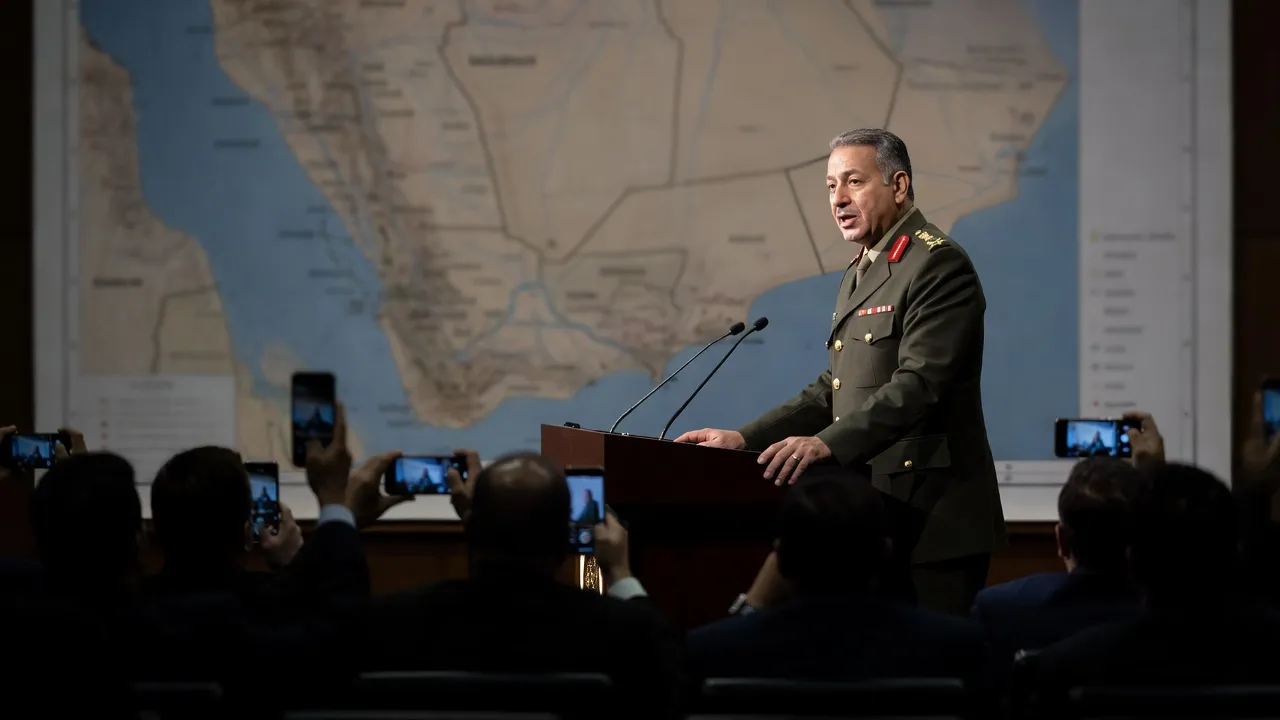
The Arab coalition led by Saudi Arabia announced on Tuesday, September 15, 2026, that thirteen civilians were injured and seven houses were damaged by Houthi missile and drone strikes on Monday, in three cities in the kingdom: Khamis Mushait, Abha, and Taif. Its spokesperson, General Turki Al-Malki, cited Article 51 of the United Nations Charter and announced deterrent measures. Maritime traffic has collapsed in the Strait of Hormuz, and a meeting scheduled for Monday between Iran and several Gulf states on navigation modalities in the strait has been postponed at Riyadh's request. In Yemen, the Houthi rebels have taken the port of Mokha and then the island of Mayyoun, in the Bab el-Mandeb Strait, facing divided government forces.
Regional mediation on Hormuz remains suspended without a new date announced, while Tehran opens a separate channel with Beijing on navigation modalities.
Damaged by a drone, it transported up to 4 million barrels/day; closure estimated at three to five weeks.
Signed on August 7, 2026, by Riyadh, Islamabad, and Ankara, it also invokes Article 51 of the UN Charter.
Israel is transmitting military intelligence to Riyadh via Washington in the face of the Houthi threat.
The UN migration agency reports 93,864 displaced people since the resumption of fighting in July.
More divergent than 63% of recent comparable stories (reference: 91 recent stories measured with the same method).