
DOMINANT ANGLE
Rome downplays the Oleshky ceasefire and instead focuses on Melania Trump's prominent role, opposing the president's deadlock in the Ukraine war.
Dominant angle identified — does not reflect unanimity of this country’s media
KEY POINTS
- 01
The White House announces that Melania Trump has obtained a localized ceasefire in Oleshky, which is set to begin on October 29 (ANSA).
- 02
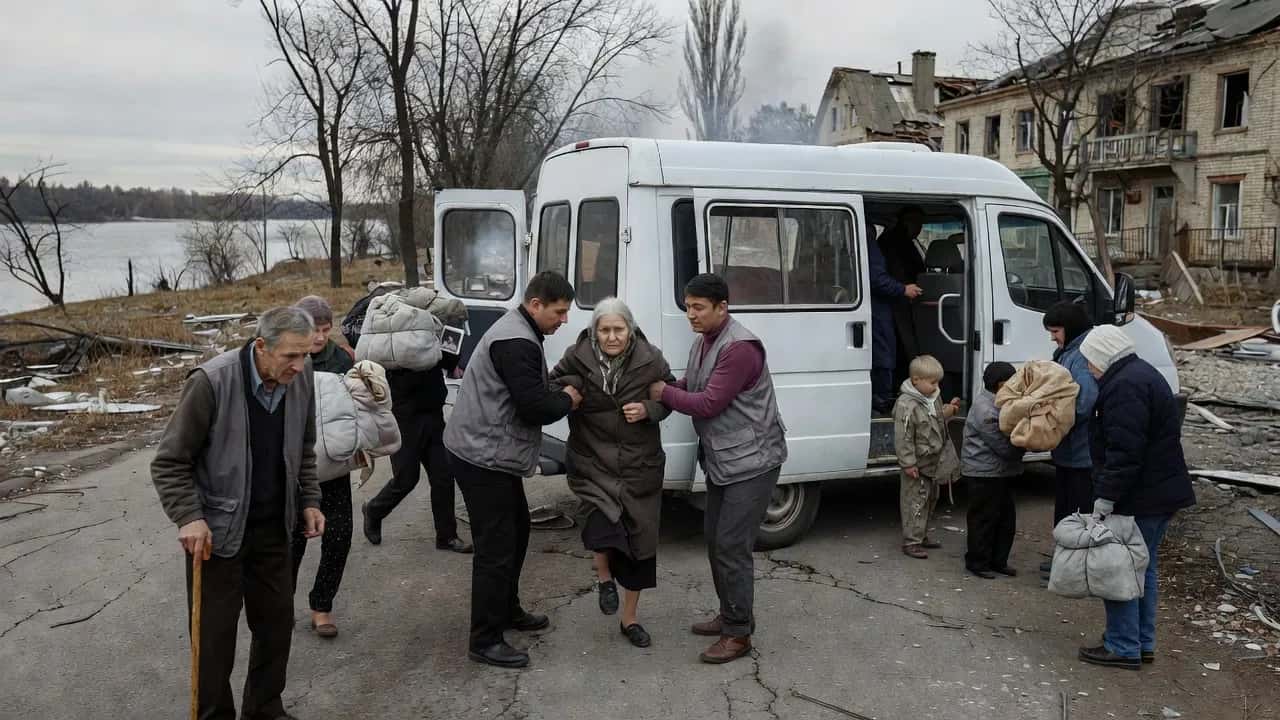
According to the note, the remaining population is mostly elderly, with limited electricity, mined roads, and constant attacks.
- 03
La Repubblica recalls that Pope Leo XIV had phoned the Russian and Ukrainian presidents a few days before the announcement.
ANALYSIS
Rome, October 24, 2026. The Italian press is responding to the White House announcement with a mix of factual reporting and ironic distance. The ANSA agency relayed the statement published on Friday, October 23: First Lady Melania Trump has obtained a localized ceasefire between Russia and Ukraine in Oleshky, which is set to begin on October 29. According to the note, the two countries have agreed to "temporarily halt military actions" to allow humanitarian aid to enter and prepare for the evacuation of civilians through established passages.
ANSA extensively reiterates the White House description: a city on the front line, "on the brink of disaster", whose remaining population is mostly composed of elderly people in urgent need of care, medication, food, and drinking water. The inhabitants have limited access to electricity, live surrounded by mined roads, and are subject to constant attacks. The agency also quotes Melania Trump's statement, according to which, without her intervention, it would have been impossible to deliver aid and evacuate the elderly.
The agency details the claimed method: the First Lady says she worked directly with Russian and Ukrainian leaders to set the objectives of the agreement, the technical procedures, the schedule, and the conditions. She claims to have associated an "impartial" American media organization, which will accompany Russian and Ukrainian teams on the ground and document the process to ensure that the will of each family is respected.
La Repubblica adopts a more incisive tone from its title: "War in Ukraine, humanitarian truce in Oleshky. Melania Trump: 'It's my merit'". The newspaper contrasts the President, who "can't find a way out" of the conflict, with his wife, who has obtained "a small truce", that of the Ukrainian city of Oleshky, caught in the crossfire of the two armies. It links this breakthrough to the diplomatic context, recalling that Pope Léon XIV had phoned the Russian and Ukrainian presidents a few days earlier in an attempt to unlock the situation.
In the provided Italian texts, the duration of the truce and its effective control remain poorly documented; the focus is on the person announcing the agreement and the comparison with Donald Trump's impasse, rather than on the military modalities of the evacuation corridor.


