
DOMINANT ANGLE
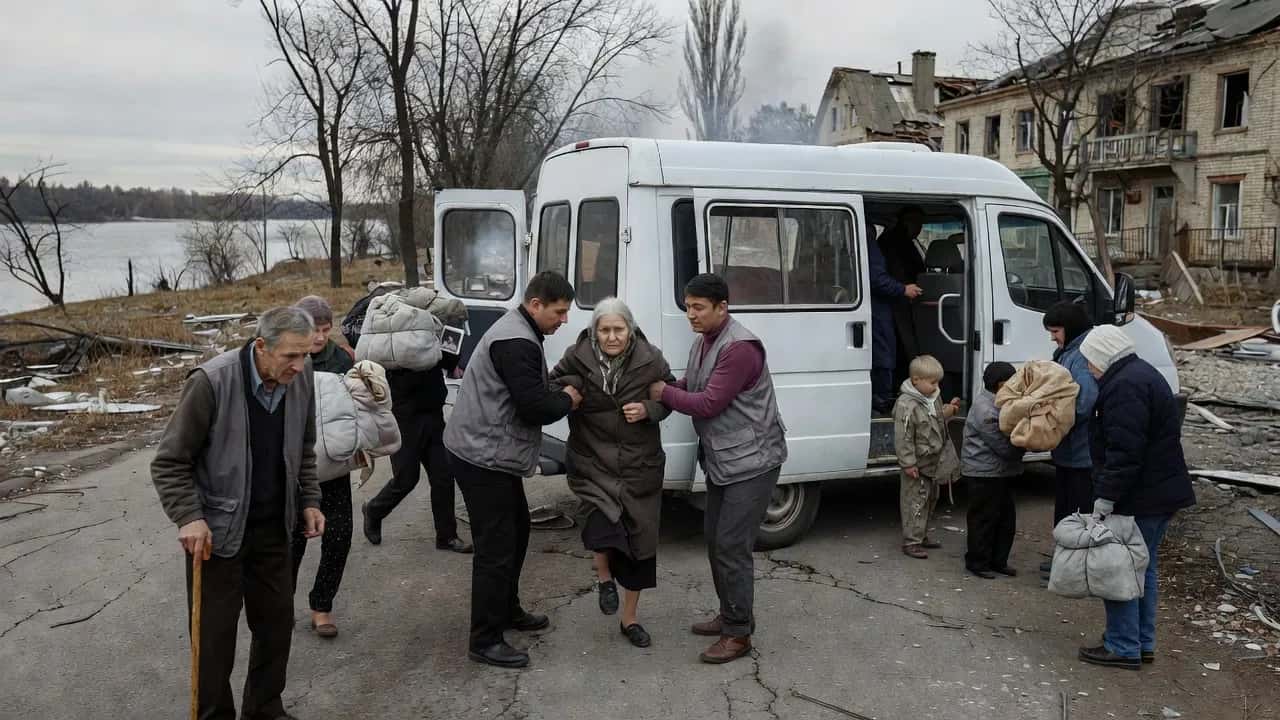
Moscow presents the Olechky truce as a humanitarian operation led by its institutions, from the General Staff to the mediator, and thanks Melania Trump.
Dominant angle identified — does not reflect unanimity of this country’s media
KEY POINTS
- 01
The White House announces a local ceasefire in Olechky starting October 29, with an evacuation corridor.
- 02
Valeri Gerasimov announces a Russian "silence regime" starting at 4 am (Moscow time) on October 27 to allow for humanitarian aid.
- 03
Dmitry Peskov welcomes the "significant" contribution of Melania Trump; Dmytro Lubinets confirms the agreement on the Ukrainian side.
ANALYSIS
Moscow, October 24, 2026. The Russian press presents the Olechky agreement as a humanitarian operation that Russian institutions are leading and setting the schedule for. On Friday, October 23, the White House announced that Melania Trump had obtained a local ceasefire starting from October 29, to allow aid in and prepare for the evacuation of civilians through a secure corridor. Interfax relays the statement: the two countries have agreed to temporarily halt all military operations, and non-military civilian officials will visit residents at home to assess their needs.
On the same day, the Russian side sets its own deadline. According to Vedomosti, which cites the Telegram channel of the Ministry of Defense, Chief of Staff Valeri Gerasimov announced a "regime of silence" starting from 4 am, Moscow time, on October 27, with recognition of engineering and safe passage of a humanitarian convoy. Meduza notes that the Ukrainian General Staff sets the same date and that Ukrainian mediator Dmytro Loubinets confirms the agreement, an operation that will take place "gradually" and will be "extremely complex". No article explains the discrepancy between October 27 and October 29.
Dmitri Peskov welcomes the "significant" contribution of Melania Trump and specifies that Russian mediator Iana Lantratova participated in the preparation with her Ukrainian counterpart. Lantratova, who met with Loubinets on the same day at the Belarusian border, during a prisoner exchange "270 for 270", thanks the First Lady and makes aid to residents a priority. Kirill Dmitriev, from the RDIF fund, praises the "important humanitarian work" of his team.
The accounts of the causes diverge. RT describes a city cut off from supplies for months "under Ukrainian siege", with drones and mines laid remotely, and 1,500 to 2,000 civilians trapped. The Moscow Times recalls that Moscow and Kiev mutually accuse each other of blocking convoys. Meduza mentions an "extremely difficult" situation in autumn 2026, the appeal of Pope Leon XIV to Vladimir Putin, and the hunger strike of European Parliament Vice-President Pina Picierno.
The figures vary: around 1,300 residents according to diplomat Rodion Mirochnik on September 30, up to 2,000 according to the White House, including about fifty children. The statement provides that an independent American media outlet will accompany the Russian and Ukrainian teams and document the operation.
SOURCES (6)
- Moscow TimesMEDIUM
- InterfaxMEDIUM
- VedomostiMEDIUM
- RIA NovostiMEDIUM


