Argentina — news through its media
Stories followed in this country, with their framing set against the rest of the world.
154 subjects found
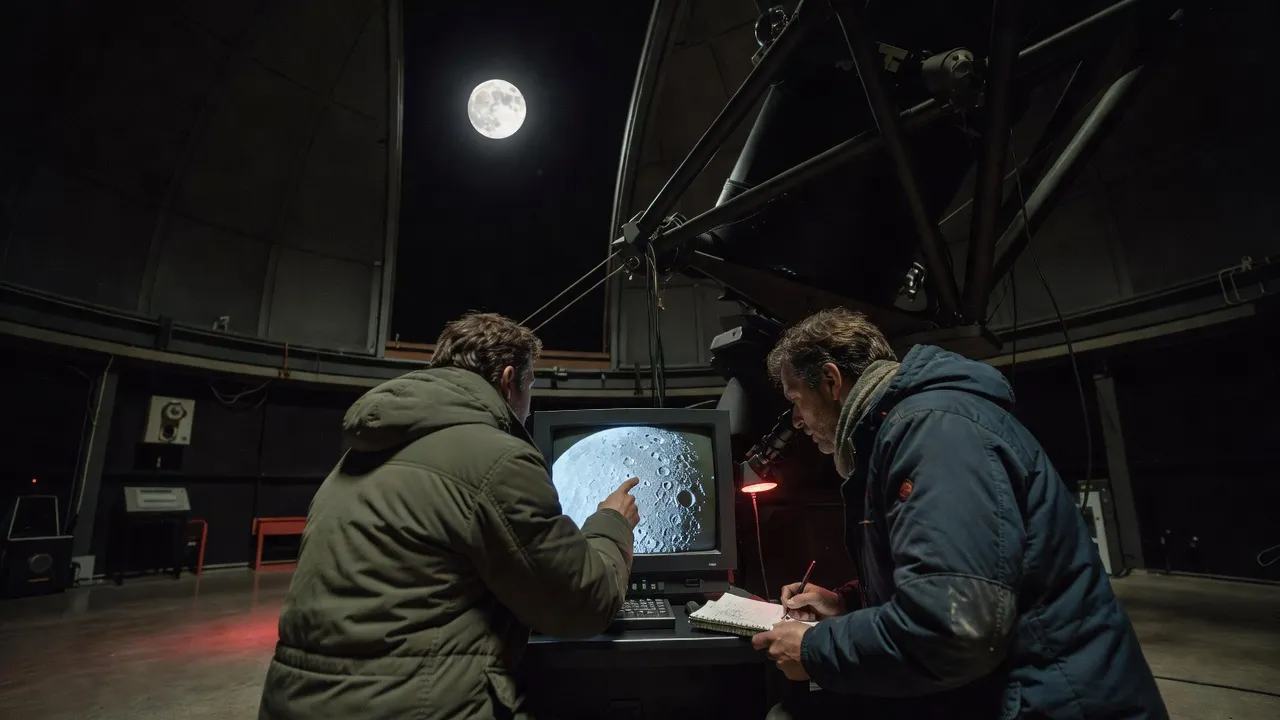
A SpaceX rocket stage crashes into the Moon and leaves a crater
On 5 August 2026 at 06:35 GMT, the upper stage of a Falcon 9 launched in January 2025 struck the Moon at 8,690 km/h after eighteen months adrift. The object is the same everywhere; its meaning is not. Twelve countries read it in turn as a scientific windfall, a space-debris problem, or a chance to prove their own capabilities — and the United States, where the rocket came from, is absent from the account.


 +8
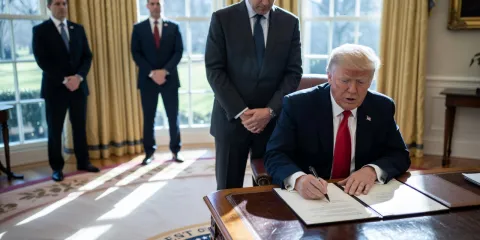
Trump narrows birthright citizenship and bans 'birth tourism'
Five weeks after the Supreme Court struck down his first executive order, Donald Trump signed two more on 6 August 2026: one denies automatic citizenship to children of four categories of non-citizen parents, the other bans 'birth tourism'. Fourteen countries read it from very different vantage points — a constitutional precedent for some, a direct threat to their nationals for others.


 +10

Leo XIV Announces His First Latin American Trip: Uruguay, Argentina and Peru — but Not Brazil
The Vatican confirmed on Wednesday that Leo XIV will travel to Uruguay, Argentina and Peru from 6 to 17 November. The pope will return to Chiclayo, where he was bishop, and Argentina will receive a pope for the first time in nearly forty years — something Francis, an Argentine, never did. Brazil is not on the itinerary. Five countries read the announcement by what they get.

 +1

A Night of Mirrored Civilian Deaths: Russian Strikes on the Kyiv Region, a Ukrainian Drone on a Gelendzhik Beach
Russia launched its third mass attack of the week on Kyiv and its region — ballistic missiles and drones, fifteen to seventeen dead depending on the hour of publication, fires across logistics hubs. The same day, a Ukrainian drone struck a crowded beach in Gelendzhik on the Black Sea: seven dead including three children, according to Moscow. Fifteen countries had the same three events in front of them; almost none kept all three.


 +11
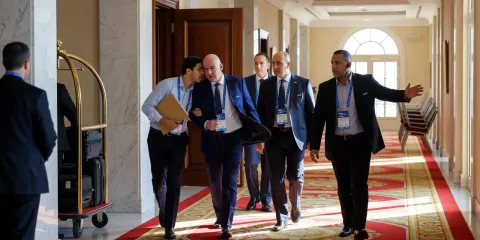
Gianni Infantino Abandoned by European Football, Backed by Africa, Facing UEFA Legal Threats
After pulling his plan to sell World Cup stakes to private investors, Gianni Infantino's re-election has gone from settled to uncertain: Wales, England, Serbia and Jordan have withdrawn their backing, UEFA is threatening FIFA with legal action, and both Arsène Wenger and the secretary general have distanced themselves. Twenty-one countries read the same crisis — Europe a fall, Africa a position to hold.

 +17
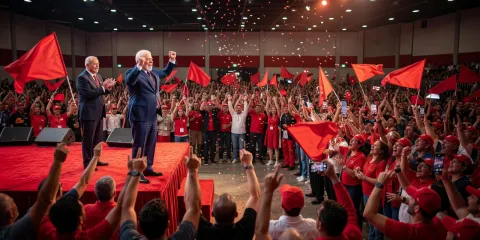
Lula, 80, Runs for a Fourth Term in Brazil
On August 2 the Workers' Party formally nominated Lula, 80, for a fourth term against Flavio Bolsonaro. "I have the energy I had at 30," he said. From Buenos Aires, Milei calls him "a thief"; from Santiago, the same bid reads as a bulwark against the far right. Ten countries treat one candidacy as a test of longevity, of sovereignty, or of democracy itself.
 +6
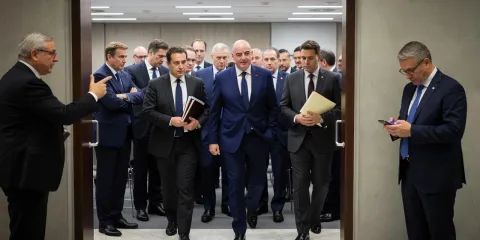
FIFA Drops Plan to Sell World Cup Stakes to Private Investors
Gianni Infantino has dropped the plan to sell private investors a share of World Cup revenues, after a revolt by the confederations and boycott threats. His senior adviser resigned, calling the plan "bad," while FIFA rejects the criticism and says it will continue consulting. Nine countries tell this retreat as a win for sporting governance, or as a tactical postponement.

 +5
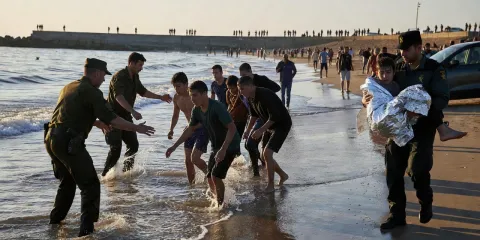
Thousands of Migrants Cross from Morocco into Spain's Ceuta Enclave
Several thousand migrants crossed from Morocco into the Spanish enclave of Ceuta, many of them swimming, in a surge officials described as "absolute chaos." Madrid deployed the army, a diving unit and a navy vessel, and recorded at least nine deaths. Nine countries tell the same episode as humanitarian emergency, border control, or a test of leverage between Rabat, Madrid and Brussels.

 +5
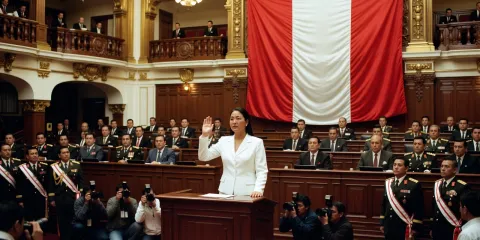
Keiko Fujimori sworn in as Peru's president, vows the army against crime
Keiko Fujimori was sworn in on July 28 as president of Peru for 2026-2031, the first woman elected to the post. Before several Latin American heads of state, she announced deploying the armed forces against crime and a minimum-wage increase, in a deeply divided country.
 +5
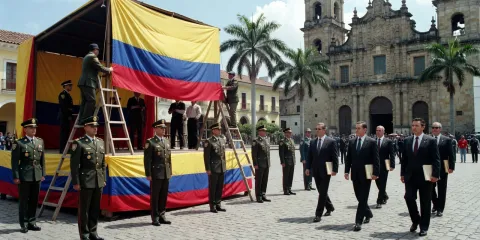
Colombia: president-elect De La Espriella breaks with Cuba and closes 14 embassies
Far-right president-elect Abelardo De La Espriella announces closing 14 embassies and severing ties with Cuba and Nicaragua, aligning Bogota with the Trump-Milei axis. His August 7 inauguration, moved to Cali, divides opinion, while Western coverage of the story remains nearly absent.
 +2

New York Mayor Zohran Mamdani weighs arresting Netanyahu if he attends the UN
Zohran Mamdani, New York's new mayor, says he is weighing whether to have Israeli Prime Minister Benjamin Netanyahu arrested if he attends the UN General Assembly, citing the ICC warrant. Netanyahu's office calls it a deflection; he vows to travel anyway.
 +5
Understand global stakes from every perspective.
718 subjects · 75 countries · 8174 perspectives