Pakistan — news through its media
Stories followed in this country, with their framing set against the rest of the world.
301 subjects found
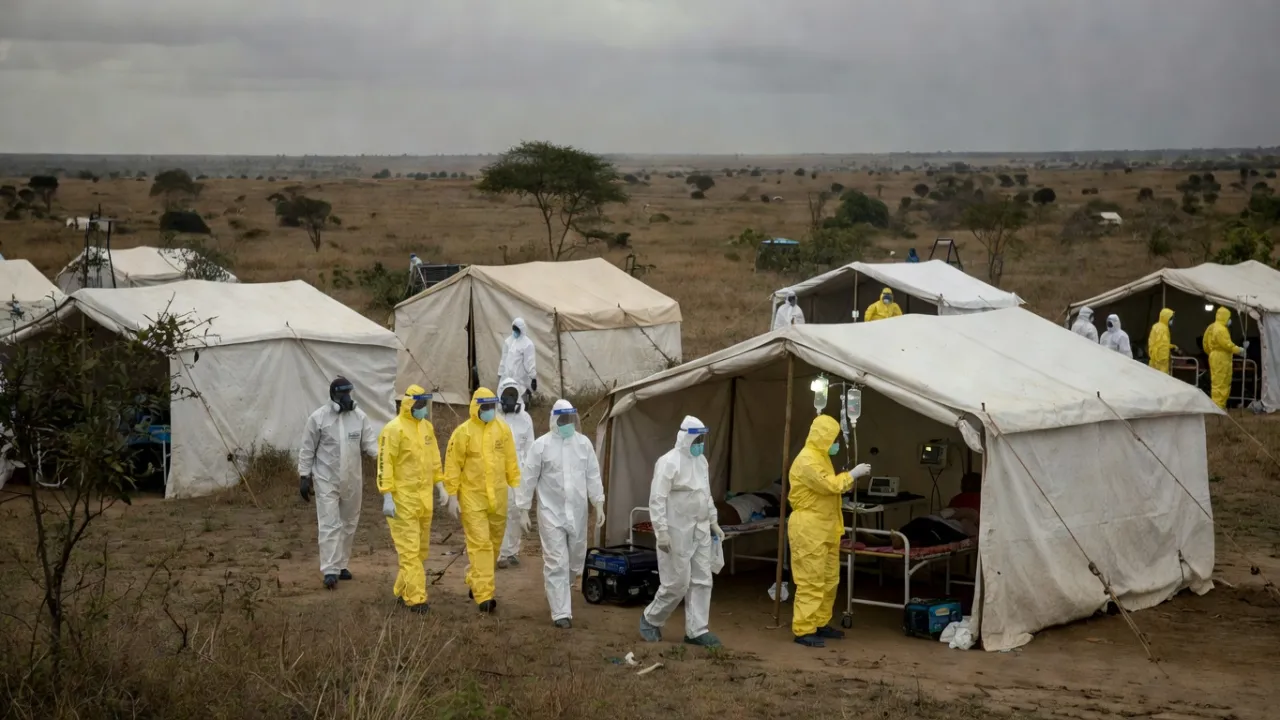
WHO declares global health emergency over Ebola outbreak in DRC and Uganda
WHO classifies the Ebola outbreak as a Public Health Emergency of International Concern. Nearly 90 deaths in DRC, first cases confirmed in Uganda, Bundibugyo strain with no available vaccine.


 +16

Putin visits Beijing after Trump's China trip
Vladimir Putin will visit Beijing on May 19-20 to deepen the Russia-China strategic partnership, days after Donald Trump's trip and the Xi-Trump summit.


 +4

Trump in Beijing: Xi Sets Red Lines, the World Holds Its Breath
Donald Trump's historic visit to Beijing — the first by a US president in nearly a decade — unfolded under the shadow of the Iran war, Taiwan tensions, and a rare-earths standoff. With Trump arriving as a relative supplicant and Xi holding firm on four non-negotiable red lines, the summit tested the limits of transactional diplomacy between the world's two superpowers.


 +19

Special military tribunal and death penalty for October 7 attackers, EU sanctions on settlers: a dual legal and diplomatic shock
Israel's Knesset passed a law establishing a special military tribunal empowered to impose the death penalty on those responsible for the October 7, 2023 attacks, while the European Union reached a long-blocked agreement to sanction extremist Israeli settlers responsible for violence in the West Bank. These two simultaneous decisions are sparking a global debate on legal standards, Israeli sovereignty, and Western diplomatic pressure.


 +3
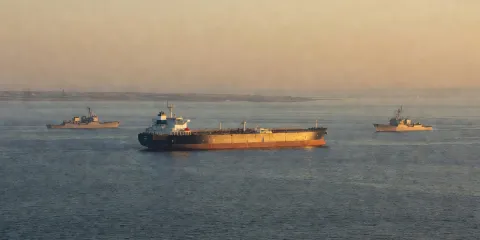
Iran-US ceasefire on life support: Hormuz sealed, global oil shock deepens
With Donald Trump describing the ceasefire with Tehran as being 'on massive life support', the Strait of Hormuz has been sealed for 28 days, pushing US inflation to 3.8% and threatening Asian economies with a second energy shock. Iran rejects the US proposal as illegitimate, Beijing presses Islamabad to intensify its mediation, and the world holds its breath ahead of the Trump-Xi summit.

 +9

MV Hondius evacuated at Tenerife — 42-day quarantine for Filipino crew, French evacuee showing symptoms
The international evacuation operation for the MV Hondius, hit by a hantavirus outbreak, concluded at the Canary Islands. Passengers were repatriated by nationality, but one French evacuee is showing symptoms. The Filipino crew of 150 faces a 42-day quarantine in the Netherlands. British paratroopers were dropped on Tristan da Cunha for a suspected case.
 +8
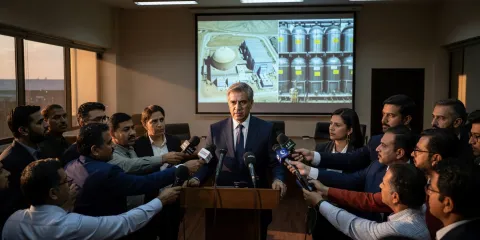
Tehran refuses to dismantle nuclear sites — Trump calls response 'totally unacceptable'
Iran has sent its response to the US peace proposal via Pakistan: it agrees to transfer its enriched uranium stockpile but flatly refuses to dismantle its nuclear facilities. Trump declared the response 'totally unacceptable.' The nuclear red line is now the sole public sticking point.
+11
Israel Kills Hezbollah Commander in Beirut: First Strike Since Ceasefire Shatters the Calm
Israel struck Beirut's southern suburbs for the first time since the April 17 ceasefire, killing Malek Ballout, operations commander of Hezbollah's Radwan force — an act Netanyahu frames as self-defense, but one that endangers the truce underpinning the Iran-US negotiations.
+11
One year after Operation Sindoor: Islamabad warns, New Delhi celebrates, Kashmir waits
The first anniversary of Operation Sindoor (India's strike into Pakistan) pits two antagonistic narratives against each other: 'India Forgives Nothing' from New Delhi, 'the next confrontation will be more dangerous' from Islamabad. The US consulate in Peshawar closes. The bilateral tension is settling in for the long haul.
 +2

Iran Strikes Fujairah and ADNOC: First Direct Attack on UAE Since Ceasefire
Iran launched drones and missiles at ships in the Strait of Hormuz and the ADNOC oil facility in Fujairah, UAE, injuring three Indian nationals—the first direct attack on Emirati soil since the ceasefire took effect in early April. This marks a significant escalation following the announcement of the U.S.-led 'Project Freedom' naval escort operation. Trump responded with threats of obliteration, while the incident raises questions about the trigger for Iran's response and whether American military operations provoked the escalation.
+5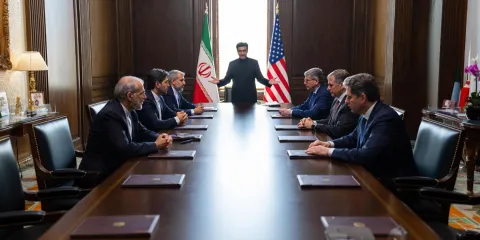
Iran's 14-Point Peace Plan vs Trump's 'Not Acceptable': The Impossible Peace
Iran transmitted a 14-point peace plan via Pakistan proposing to end the war in 30 days, progressively reopen Hormuz, but deliberately omitting the nuclear program. Trump declared he 'cannot imagine' the plan being acceptable, saying Iran hasn't 'paid a big enough price.' Iran's Revolutionary Guards warned the US faces a choice between an 'impossible' military operation and a 'bad deal.' The first round of direct talks in Islamabad failed last month; no second round is scheduled.
+8Understand global stakes from every perspective.
718 subjects · 75 countries · 8174 perspectives