United States — news through its media
Stories followed in this country, with their framing set against the rest of the world.
508 subjects found
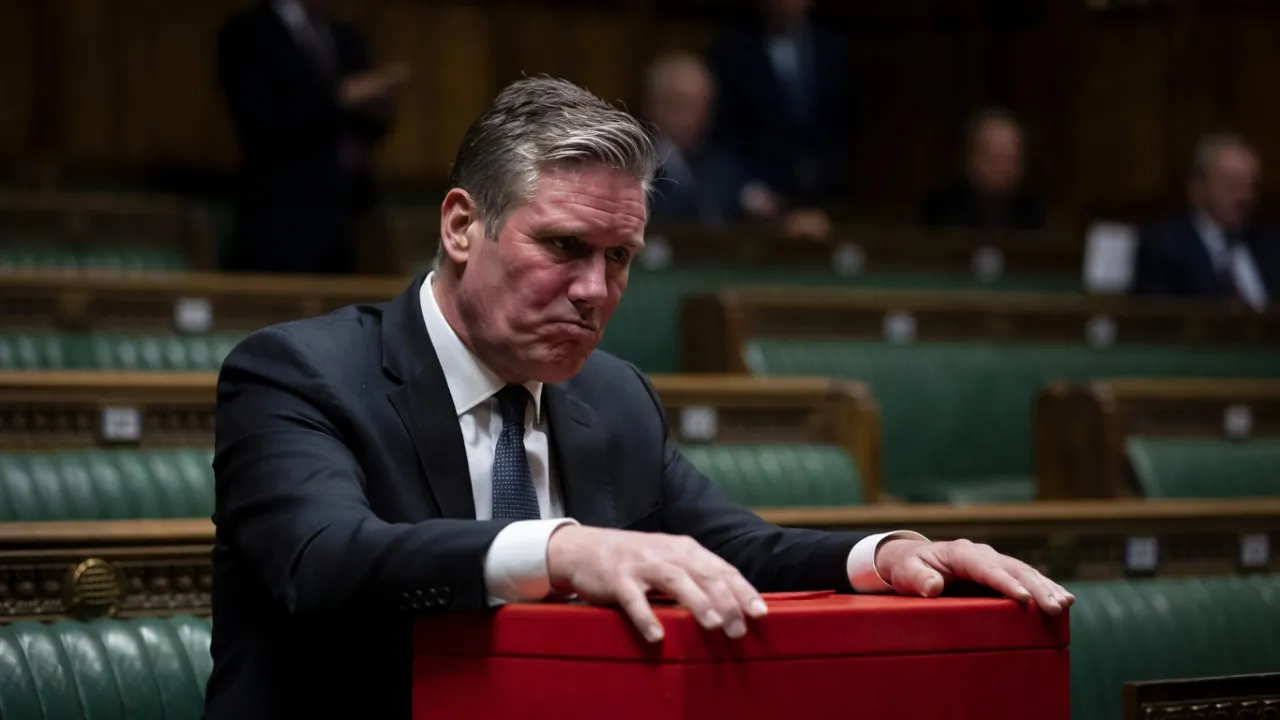
Starmer refuses to quit as Labour revolt deepens: Britain's make-or-break week
More than 70 Labour MPs are demanding Keir Starmer's resignation after the party's worst local election results in decades. Starmer is fighting back with a promise to bring Britain closer to the EU and nationalise British Steel — but the internal rebellion is intensifying.


 +4
Tehran refuses to dismantle nuclear sites — Trump calls response 'totally unacceptable'
Iran has sent its response to the US peace proposal via Pakistan: it agrees to transfer its enriched uranium stockpile but flatly refuses to dismantle its nuclear facilities. Trump declared the response 'totally unacceptable.' The nuclear red line is now the sole public sticking point.

 +11

Trump's 72-hour ceasefire takes effect on May 9 — Russia launches 51 attacks on the first day
Donald Trump announced on May 8 a 72-hour ceasefire between Russia and Ukraine, coinciding with Victory Day. On the first day alone, Ukraine reported 51 Russian attacks. Both sides accuse each other of violations. Trump hopes the ceasefire "could last longer" and represents the "beginning of the end."

 +6

Moscow celebrates May 9 without tanks or planes: Putin's reduced parade reveals a Russia at war
For the 81st anniversary of Soviet victory, Moscow organized its May 9 parade without heavy equipment, internet cut in the city center, and for the first time with North Korean soldiers in the ranks. Putin denounced NATO and presented the Ukraine war as a continuation of the antifascist struggle.
 +7

Israel Kills Hezbollah Commander in Beirut: First Strike Since Ceasefire Shatters the Calm
Israel struck Beirut's southern suburbs for the first time since the April 17 ceasefire, killing Malek Ballout, operations commander of Hezbollah's Radwan force — an act Netanyahu frames as self-defense, but one that endangers the truce underpinning the Iran-US negotiations.

 +11

G7 Paris under pressure: Europe pushes back against Trump's car tariffs
G7 trade ministers meeting in Paris cannot paper over the transatlantic tariff rift. Trump threatens to raise duties on European cars to 25%. The EU demands the existing deal be honoured; India plays its own bilateral card.
 +3

Zelensky's ceasefire sabotaged: 1,820 Russian violations and a kindergarten in Sumy
Zelensky declares a unilateral ceasefire for Victory Day on May 9. Russia violates it 1,820 times, strikes a kindergarten in Sumy killing two, and Kyiv threatens a mirror response during Moscow's parade.
+7
Project Freedom Buried in 48 Hours: Trump Suspends Operation Hormuz and Announces 'Great Progress' Toward Iran Deal
Launched Sunday, suspended Tuesday evening: the American naval escort operation in the Strait of Hormuz lasted only 48 hours. Trump invokes 'considerable progress' in negotiations with Tehran, but the American naval blockade remains in place — and Iranian missiles continue to strike the United Arab Emirates.
+5
Rubio Visits Pope Leo XIV: Trump Sends His Catholic Envoy to the Vatican to 'Thaw' a Geopolitical Feud
After Donald Trump's public attacks on Pope Leo XIV — who had condemned the Iran war as 'unjust' — Secretary of State Marco Rubio is dispatched to Rome for a Thursday meeting with the pontiff. The first face-to-face meeting between a senior US official and Pope Leo since his election. Rubio, a Catholic, will also meet Meloni, whom Trump attacked after she defended the pope.
 +6

Iran Strikes Fujairah and ADNOC: First Direct Attack on UAE Since Ceasefire
Iran launched drones and missiles at ships in the Strait of Hormuz and the ADNOC oil facility in Fujairah, UAE, injuring three Indian nationals—the first direct attack on Emirati soil since the ceasefire took effect in early April. This marks a significant escalation following the announcement of the U.S.-led 'Project Freedom' naval escort operation. Trump responded with threats of obliteration, while the incident raises questions about the trigger for Iran's response and whether American military operations provoked the escalation.
 +5

Hantavirus on the MV Hondius: Three Dead, 150 Passengers Stranded in the Atlantic
The cruise ship MV Hondius, which departed Ushuaia for Cape Verde, is stranded at sea after a WHO-confirmed hantavirus outbreak: three passengers dead, a British national in intensive care, 150 people trapped in the Atlantic. Cape Verde has refused docking. The Canary Islands are under consideration. The WHO declares a 'low risk' to the public, but concern is mounting across 19 countries from which passengers and crew originate.
+7Understand global stakes from every perspective.
725 subjects · 75 countries · 8262 perspectives