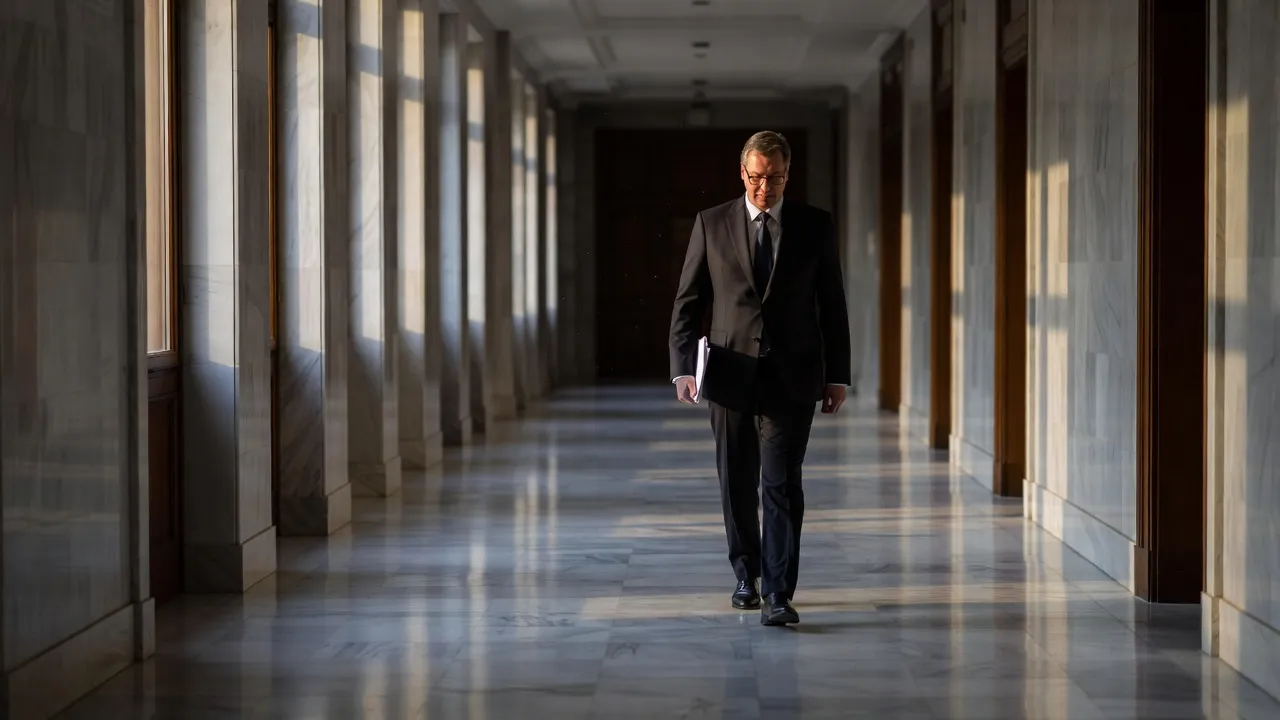
Aleksandar Vučić resigns as Serbia's president to run for prime minister in the snap election of 25 October
published on
countries
sources
articles
In front of the presidential palace in Belgrade, supporters of Aleksandar Vučić chanted his name on Sunday evening. His own explanation for the protests that led to his departure, which he linked to Serbia's refusal to sanction Russia, differs from the one retained by some of the European press. In Serbia, the government and opposition are already debating the meaning of his departure.
The winner of the sequence is not yet known: Vučić must win the October 25 legislative elections before being able to run for the position of Prime Minister.
The departure scene
On Sunday, September 27, in the evening, supporters gathered in front of the presidential palace in Belgrade waved flags and chanted the name of Aleksandar Vučić, according to Swiss and Lithuanian media. The president told them: "this is my last evening in this building".
« Tomorrow morning, I will hand over my mandate to the president of the National Assembly »
He added that he had "faithfully served my people and my homeland, Serbia", saying he was proud of the record of his terms, according to Lithuanian media. He announced that he wanted to transfer his powers to the President of the Parliament as early as the next day, according to Swiss media.
In front of his supporters, he also justified his choice by the fairness of the campaign: he wants to present himself "as an ordinary man, as a member of the people", a phrase also picked up by Qatari and Hungarian media.
Two explanations for the protest
Regarding what has fueled the protests over the past two years, coverage differs depending on the source. On Sunday, on public television RTS, Vučić himself attributed the movement to more than 70% to Serbia's refusal to impose sanctions on Russia since the decision of the Serbian National Security Council in March 2022, according to RIA Novosti.
« more than 70% the real reason »
He recalled having supported four of the thirteen points of a UN resolution condemning Russian actions in Ukraine, without adopting sanctions or seizures of Russian companies' assets, according to the same agency. On Saturday, September 26, he spoke by phone with Vladimir Putin, thanking him for "fourteen years of cooperation," RIA Novosti and Vedomosti report.
The German, Hungarian, and Lithuanian press retains a different explanation: the 2024 railway disaster and the subsequent corruption allegations. Le Temps and Gulf Times see this as the most significant protests in Serbia since the fall of Slobodan Milošević in 2000, having gathered up to several hundred thousand people.
A country responding to itself
In Serbia itself, the press presents two opposing interpretations of the resignation. According to Blic, Ana Brnabić becomes, by ensuring the interim, the first Serbian personality to have held the three highest functions of the country: prime minister, president of the Parliament, and then interim president.
Within the SNS, Vice President Marko Đurić praises, according to Politika, "the deepest political trace" of Vučić: a Serbia that he says is now "strong enough to decide its own destiny alone". The Serbian List, which represents the Serbs of Kosovo, mentions schools, dispensaries, and jobs financed thanks to him.
In the opposing camp, candidate Marinika Tepić qualifies the resignation as "capitulation" and demands, according to Politika and N1, "criminal responsibility, seizure of assets, and lustration", calling for an anti-Vučić front before October 25. Ana Brnabić rejects the term, accusing the opposition of holding contradictory statements from one day to the next.
The "Studenti pobeđuju" Student List has declined the RTS's invitation to a television debate three times, demanding to know the theme, format, and other participants in advance, according to Beta. It insists on not being built "around the name of a single man".
The gamble between Brussels and Moscow
Vučić says Serbia should pursue its European integration "without breaking" ties with its "traditional Eastern partners", a phrase picked up by the Hungarian press (Index, HVG, Telex).
Serbia has been a candidate for EU membership since 2012, and has not joined Western sanctions against Russia, while maintaining economic and diplomatic ties with Moscow, according to a comparative analysis of coverage on this issue.
The outcome of the October 25 vote, followed by the presidential election, will impact this balance between Belgrade's Western partners and its Russian partner, according to the same analysis.
Minister under Milošević (1998-2000), then Prime Minister from 2014 to 2017 before the presidency.
Cardiologist Ilija Srdanović is leading the "Student List" coalition against him.
The resignation was signed under Article 116, paragraph 5, of the Serbian Constitution.
The election, initially scheduled for December 2027, was moved up to early September 2026.
How each country reads it
11 perspectives, each in the voice of that country's press.
 Belgium
Brussels is deciphering the move: a president who is trading in his seat for a more powerful position, on the eve of an anticipated legislative election marked by student protests.
2 sources
 Switzerland
Berne sees Aleksandar Vučić's resignation as less of a withdrawal and more of a maneuver to consolidate his power in the face of student protests, by seeking a prime minister post deemed more powerful than the presidency.
2 sources
 Germany
Berlin sees Aleksandar Vučić's resignation as a clever circumvention of the constitutional limit of two presidential terms, rather than a withdrawal from power.
3 sources
 France
Paris sees Aleksandar Vučić's resignation as a maneuver to circumvent the limit of a third presidential term by seeking a more powerful Prime Minister position, amid student protests.
4 sources
 Hungary
Budapest sees the resignation of Aleksandar Vučić as a tactical repositioning rather than a withdrawal: the Hungarian press mainly retains the promise to continue Serbian European integration without breaking with Eastern partners.
4 sources
 Lithuania
Vilnius sees Aleksandar Vučić's resignation as a calculated transfer of power from the presidency to a constitutionally stronger post of Prime Minister, amidst student protests.
2 sources
 Qatar
QatarDoha sees Aleksandar Vučić's resignation as a maneuver to prolong his grip on Serbian power, by changing seats rather than leaving the scene.
2 sources
 Romania
Bucharest sees Aleksandar Vučić's resignation as a tactical maneuver: stepping down as president to bounce back to the more powerful position of Prime Minister, without ever relinquishing control of Serbia.
2 sources
 Serbia
Belgrade is split between two irreconcilable views of Aleksandar Vučić's resignation: for the government, a strategist who is changing seats without giving up the game; for the opposition, a "capitulation" that finally exposes him as an ordinary candidate.
4 sources
 Russia
Moscow takes from Vučić's resignation confirmation that Serbia's refusal to sanction Russia has fueled internal opposition, more than just a simple institutional reshuffle in Belgrade.
7 sources
 Ukraine
Kyiv sees Aleksandar Vučić's departure from the presidency as an institutional maneuver: constrained by the two-term limit, he is aiming for the post of Prime Minister, which is deemed more powerful than the presidency he is leaving.
2 sources
What the comparison reveals
Common ground and differences in coverage across the media analysed.
What the media report in common
Aleksandar Vučić resigned from the presidency on Sunday, September 27, 2026, to lead the Serbian Progressive Party (SNS) list in the early legislative elections on October 25 and run for the post of Prime Minister.
Ana Brnabić, Speaker of the Parliament, is ensuring the interim presidency until a presidential election is held.
Where media coverage diverges
Cause of the protests
On what fueled the preceding political protests and the resignation, some coverage relays Vučić's explanation attributing the movement to Serbia's refusal to join the sanctions against Russia, while another part links the mobilization to accusations of corruption and the Novi Sad tragedy.
Characterization of Vučić's power
On how to characterize Vučić's term, some coverage directly qualifies him as a partly autocratic leader, while another part focuses on the economic and infrastructure record he claims, without using this qualification.
Coverage aligned with this reading
Serbia's European trajectory
On the consequences of the election for Serbia's diplomatic trajectory, some coverage retains Vučić's promise to pursue European integration alongside Eastern partners, while another part places the episode in the context of a distance from the Western sanctions targeting Russia.
This grouping describes the publications analysed, not the position of these countries’ populations or of their governments.
The full text, country by country
Belgium
DOMINANT ANGLE
Brussels is deciphering the move: a president who is trading in his seat for a more powerful position, on the eve of an anticipated legislative election marked by student protests.
KEY POINTS
- Aleksandar Vučić, 56, announced his resignation on Sunday, September 27, in front of the presidential palace: "I resign from my duties as president".
- Ana Brnabić, Speaker of the Parliament, takes over as interim starting this Monday; a new presidential election must be held within a maximum of three months.
- Just before his departure, Vučić pardoned 49 people, including 23 students and supporters of his party prosecuted for actions related to the protests.
ANALYSIS
Brussels, 28 September 2026. The resignation of Aleksandar Vučić, announced on Sunday, 27 September, in front of the presidential palace in Belgrade, is seen in Brussels as a power move rather than a withdrawal. "I resign from my duties as president," the Serbian head of state declared to his supporters, before adding: "Tomorrow morning, I will hand over my mandate to the president of the National Assembly." At 56, and after two presidential terms that the Serbian Constitution prohibited him from renewing, Vučić is not leaving the scene: he is taking the lead of the list of his Serbian Progressive Party (SNS) for the early legislative elections on 25 October, with the stated goal of becoming Prime Minister again, a position considered formally more powerful than the presidency.
The interim will fall to Ana Brnabić, President of the Parliament and close ally of Vučić, as of this Monday, pending the organisation of a presidential election within a maximum period of three months. A few minutes before announcing his departure, the outgoing president again used his constitutional prerogatives to pardon 49 people, including 23 students and sympathisers of his party prosecuted for facts related to the demonstrations that have been shaking the country for nearly two years.
The 25 October election is taking place in a climate of unprecedented protest for Vučić, president and now candidate for Prime Minister, who has been in a dominant position since 2014. The movement, mainly carried by students, was born after the collapse of a canopy at the Novi Sad train station in 2024, which had killed 16 people and since then has fueled accusations of corruption and mismanagement of institutions. The SNS will face two distinct blocks: a movement directly born from the student mobilisations against corruption, and a coalition of pro-European opposition parties that hopes to benefit from the wear and tear of the current power.
For the Belgian press, the issue is less about the institutional form of power than its continuity: by changing chairs, Vučić is seeking to preserve his political influence without facing the constitutional limit of the two presidential terms he has already exhausted. The European candidacy of Serbia, mentioned at the end of the article but not developed by Belgian sources, remains in the background of a narrative focused primarily on the internal electoral mechanism and the showdown with the street.
Switzerland
DOMINANT ANGLE
Berne sees Aleksandar Vučić's resignation as less of a withdrawal and more of a maneuver to consolidate his power in the face of student protests, by seeking a prime minister post deemed more powerful than the presidency.
KEY POINTS
- Aleksandar Vučić announced his resignation on Sunday, September 27, 2026, to lead the SNS list in the early legislative elections on October 25 and run for the post of prime minister.
- Before stepping down, he pardoned 49 people or dropped their prosecutions, including 23 targeted in the context of the student protests (SRF).
- Parliament President Ana Brnabić is ensuring the interim presidency; the student movement was born out of the collapse of the canopy at Novi Sad railway station in November 2024, which killed 16 people.
ANALYSIS
Berne, September 28, 2026. The Swiss press sees the resignation of Aleksandar Vučić, announced on Sunday, September 27, 2026, as less of a withdrawal than a maneuver to prolong his grip on Serbia. The president's words were reported in front of the presidential palace, where his supporters were chanting his name: "I am resigning from my duties as president," followed by "Tomorrow morning, I will hand over my mandate to the president of the National Assembly." Elected in 2017 and re-elected in May 2022, Vučić, 56, has cut short a five-year term that the law did not require him to leave, in order to run at the head of the Serbian Progressive Party (SNS) list in the early legislative elections on October 25, with the ambition of becoming prime minister - a function considered more powerful than the presidency. The Constitution would have prevented him from running for a third term as head of state anyway. "I want to present myself as an ordinary man, as one of the people," he assured.
The German-language radio and television SRF describes Vučić as a "partly autocratic" leader and sees his resignation as a power consolidation maneuver. It recalls his career: Minister of Information under Slobodan Milošević from 1998 to 2000, Minister of Defense from 2012 to 2013, Prime Minister from 2014 to 2017, before two consecutive presidential terms. Milošević, SRF recalls, was indicted for genocide by the International Criminal Tribunal in The Hague and died in detention before any verdict. The President of the Parliament, Ana Brnabić, a political ally of the outgoing president, is now ensuring the interim.
The two newspapers link the maneuver to the student protests that emerged after the collapse, in November 2024, of the canopy of the Novi Sad train station, which killed 16 people and was largely attributed to corruption. The Temps sees this as the largest protests since the fall of Milošević in 2000, with the holding of early elections being one of the central demands of the movement, which had been requested for a long time without a date being set until early September. SRF notes that Vučić, before leaving office, pardoned 49 people or dropped their prosecutions, including 23 targeted in the context of student mobilizations - a final gesture of a president under strong internal pressure.
Germany
DOMINANT ANGLE
Berlin sees Aleksandar Vučić's resignation as a clever circumvention of the constitutional limit of two presidential terms, rather than a withdrawal from power.
KEY POINTS
- Vučić resigned on Sunday, September 27, six months before the end of his term, to run for the post of Prime Minister as the SNS's top candidate in the early legislative elections on October 25 (Tagesschau, Handelsblatt)
- Ana Brnabić, Parliament Speaker and SNS member, is serving as interim president; an election must be held within a constitutional deadline of three months, with a possible first round before the end of December according to Vučić (ZEIT Online, Handelsblatt)
- The opposition accuses Vučić and his allies of violence against opponents, widespread corruption, ties to organized crime, and press repression; human rights groups denounce an increasingly authoritarian style of government (ZEIT Online, Handelsblatt)
ANALYSIS
Berlin, September 28, 2026. The German press views Aleksandar Vučić's resignation as a power maneuver rather than a withdrawal. According to Tagesschau, the Serbian president resigned on Sunday, six months before the end of his term, to run as the head of his Progressive Party (SNS) in the early legislative elections on October 25, with the goal of becoming Prime Minister again, a post he previously held between 2014 and 2017. The Constitution prohibited him from serving a third consecutive presidential term; his second term would have ended next year.
ZEIT Online notes that Vučić announced his resignation on state television RTS, stating: "Heute ist der Tag, an dem ich zurücktrete" ("Today is the day I resign"), before addressing his supporters in front of the presidential palace in Belgrade: "Dies ist mein letzter Abend in diesem Gebäude" ("This is my last evening in this building"). The newspaper describes Vučić as a "partly autocratic" politician and recalls that the opposition accuses him and his allies of violence against political opponents, widespread corruption, ties to organized crime, and repression of press freedom — accusations that Vučić rejects.
The interim presidency falls to Ana Brnabić, President of the Parliament and a member of the SNS, former Prime Minister under Vučić. A presidential election must be held within a constitutional deadline of three months; Handelsblatt indicates that the first round could take place before the end of December, according to Vučić himself.
The three newspapers link the resignation to the pressure from the student movement that emerged after the collapse, on November 1, 2024, of the canopy of the Novi Sad train station, which killed 16 people. Handelsblatt mentions "human rights groups" accusing Vučić of an "increasingly authoritarian style of government", which the government rejects. Tagesschau notes that the student movement's list, which denounces government corruption and administrative negligence, could constitute the main competitor to the SNS in the election.
The German press finally emphasizes Serbia's ambiguous international position: a candidate for EU membership, but also maintaining close relations with Russia and China.
France
DOMINANT ANGLE
Paris sees Aleksandar Vučić's resignation as a maneuver to circumvent the limit of a third presidential term by seeking a more powerful Prime Minister position, amid student protests.
KEY POINTS
- "I resign from my duties as president," Aleksandar Vučić said Sunday, September 27, in front of the presidential palace in Belgrade (RFI, France 24).
- The early legislative election, set for October 25, was initially scheduled to take place in December 2027 before being moved up in early September (RFI, France 24).
- Vučić says he has pardoned 49 people, including 23 convicted in connection with the protests, among his last acts as president.
ANALYSIS
Paris, September 28, 2026. The French press sees Aleksandar Vučić's resignation as a tactical move rather than a withdrawal. On Sunday, September 27, in front of the presidential palace in Belgrade, where his supporters were chanting his name, the Serbian head of state announced: "I am resigning from my duties as president. Tomorrow morning, I will hand over my mandate to the president of the National Assembly." The stated goal is to lead the list of his Serbian Progressive Party (SNS) in the early legislative elections on October 25, and then run for the post of Prime Minister — a position formally considered more powerful than the presidency.
French editorial offices recall that the Serbian Constitution prohibited Vučić, president since 2017 and re-elected in May 2022, from serving a third term, which was anyway due to end in May next year. The press notes that "the law did not require him to resign": the move is presented as a strategic choice, not a legal constraint. Having been in office, as president or prime minister, since 2014, the strongman of the SNS intends to remain in control by changing his title.
The articles emphasize the origin of the early election: a demand carried by the student movement born after the collapse of the Novi Sad train station canopy, which killed 16 people on November 1, 2024, and was largely attributed to corruption. The press recalls that these protests are among the largest in Serbia since the fall of Slobodan Milošević in 2000, having gathered up to several hundred thousand people. The election, initially scheduled for December 2027, was brought forward in early September, Vučić citing "significant turmoil on the domestic political scene" at the time.
In substance, the articles note that the outgoing president has pardoned 49 people, including 23 convicted in connection with the protests, one of his last acts before leaving office. He says he wants to present himself "as an ordinary man, as one of the people". The presidency will temporarily fall to the president of the Parliament, Ana Brnabić, pending a presidential election. For the French press, this sequence outlines less of an alternation of power than a reorganization of Vučić's personal power, now pending the verdict of the October 25 polls, facing an still-mobilized student opposition.
Hungary
DOMINANT ANGLE
Budapest sees the resignation of Aleksandar Vučić as a tactical repositioning rather than a withdrawal: the Hungarian press mainly retains the promise to continue Serbian European integration without breaking with Eastern partners.
KEY POINTS
- Vučić resigned on Sunday, September 27, in Belgrade to run as the SNS's lead candidate and candidate for prime minister in the early legislative elections on October 25 (Index HU, HVG, 444, Telex).
- According to HVG and 444, Vučić claims to have created half a million additional declared jobs since 2012 and built 686 km of highways and expressways in thirteen years.
- Ana Brnabić, Parliament Speaker, will serve as interim president for up to 90 days, according to 444.
ANALYSIS
Budapest, September 28, 2026. The resignation of Aleksandar Vučić, announced on Sunday, September 27, in Belgrade, is being covered by the Hungarian press from a specific angle: less that of a departure than that of an institutional repositioning. Index, HVG, 444, and Telex all report that the Serbian president has stepped down to run as the head of the list of the Serbian Progressive Party (SNS) and its allies, under the banner "Aleksandar Vučić – United Serbia", in the early legislative elections on October 25, with the stated goal of becoming Prime Minister again.
According to HVG and 444, Vučić justified his resignation by citing the fairness of the electoral competition: "As a simple man, as a member of the people, I want to compete", he said, adding that he could have stayed in office during the campaign but considered it "more honest" to leave first. He signed his resignation letter in public and is set to hand over presidential duties on Monday morning to Ana Brnabić, the Speaker of the Parliament, who will serve as interim president for a maximum of ninety days, according to 444.
The Hungarian press extensively relays the assessment Vučić made of his term: unprecedented GDP growth, half a million additional jobs since 2012, and 686 kilometers of highways and expressways built in thirteen years, figures cited by HVG and 444. He set as priorities peace, stability, national interests, and the protection of Serbs in Kosovo, while also stating that Serbia must continue its European integration "without breaking" its ties with its "traditional Eastern partners" – a phrase reported by Index, HVG, and Telex.
Telex recalls the context of protests: since the collapse of the Novi Sad train station canopy, which killed sixteen people in 2024, anti-Vučić demonstrations have continued, with protesters denouncing widespread corruption. The media outlet also notes that Vučić had announced as early as June his intention to resign "in a few weeks". The Serbian Constitution limiting the number of presidential terms to two, his second term would have expired in 2027 anyway.
The Hungarian account reports little judgment of its own on Vučić: it restates his words, including his accusations against an opposition that "refuses dialogue" while spreading falsehoods about him, according to him.
Lithuania
DOMINANT ANGLE
Vilnius sees Aleksandar Vučić's resignation as a calculated transfer of power from the presidency to a constitutionally stronger post of Prime Minister, amidst student protests.
KEY POINTS
- Vučić resigned on Sunday, September 27, to lead the SNS list in the early legislative elections on October 25 and run for the post of Prime Minister, which is more powerful than the presidency he has held since 2022.
- Parliament Speaker Ana Brnabić is ensuring the interim; the presidential election must be held within 90 days, with a first round hoped for by Vučić "by the end of December".
- The "Students Win" movement, born after the collapse of the Novi Sad train station canopy (16 dead, November 2024), and the "European Serbia" coalition are challenging the SNS in the legislative elections.
ANALYSIS
Vilnius, September 28, 2026. On Sunday, September 27, Serbian President Aleksandar Vučić announced his resignation from the presidential palace in Belgrade, in front of hundreds of supporters waving flags. "This is my last evening in this building," he told them a few minutes before stepping down, adding: "I have faithfully served my people and my homeland, Serbia. I am proud of what we have achieved together."
The Lithuanian press, which has been following the case from Belgrade, emphasizes that the move has a specific goal: to lead the Serbian Progressive Party (SNS) list to the early legislative elections on October 25, and then to run for the post of Prime Minister - a position that is constitutionally more powerful than the presidency he has held since his re-election in May 2022. The Constitution would have prevented him from running for a third presidential term anyway.
Until the election of a new head of state, the interim presidency falls to the Speaker of the Parliament, Ana Brnabić: Vučić specified that he would transfer his powers to her "tomorrow morning". The presidential election must be held within 90 days, with a campaign lasting 30 to 60 days; he mentioned a possible first round "by the end of December". He had announced his intention to resign as early as summer, before setting the election date at the beginning of the month, citing "great turmoil on the country's political scene".
According to Lithuanian accounts, the October schedule meets one of the main demands of the movement that emerged after the collapse of the Novi Sad train station canopy in November 2024, which killed 16 people and triggered, according to the same newspapers, the largest protests in Serbia since the fall of Slobodan Milošević in 2000 - sometimes hundreds of thousands of people in the streets. Facing the SNS and its allies, the "Students Win" movement and the opposition coalition "European Serbia" still have to designate their presidential candidates.
Vučić, elected president in 2017 and re-elected in 2022, justifies his choice by saying he wants to "fight like an ordinary man, like a member of the people". A few minutes before his resignation, he also used his constitutional powers to grant pardons, a move that the Lithuanian press directly links to the prosecutions resulting from the student protests.
Qatar
DOMINANT ANGLE
Doha sees Aleksandar Vučić's resignation as a maneuver to prolong his grip on Serbian power, by changing seats rather than leaving the scene.
KEY POINTS
- Aleksandar Vučić resigned on Sunday, September 27, to run as a candidate for Prime Minister at the head of the SNS list in the early legislative elections on October 25.
- He pardoned 49 people just before leaving office, including 23 convicted in connection with the student protests.
- Ana Brnabić, Parliament President and close Vučić ally, is assuming the interim presidency until an election.
ANALYSIS
Doha, September 28, 2026. Qatari media is closely following the institutional shift in Serbia: on Sunday, September 27, Aleksandar Vučić announced his resignation from the presidency to lead the list of his Serbian Progressive Party (SNS) in the early legislative elections on October 25 and run for the post of Prime Minister. Al Jazeera notes that the Constitution prohibited him from serving a third presidential term — his second term was due to end next May — and points out that he is now "seeking to extend his hold on power through the parliamentary vote". The channel recalls that he has dominated Serbian political life, as president or prime minister, since 2014.
According to Gulf Times, Vučić delivered his resignation speech from the presidential palace in Belgrade, where gathered supporters outside chanted his name. "I resign from the presidency," he said. "Tomorrow morning, I will hand over my duties to the Speaker of the Parliament." Ana Brnabić, a close ally, will ensure the interim presidency until an election is held. The newspaper specifies that nothing in the law required him to resign, and quotes his phrase: "I want to compete as an ordinary man, as one of the people."
Both newspapers link this shift to the student movement that emerged after the collapse, on November 1, 2024, of the canopy of the Novi Sad train station, which killed 16 people. Al Jazeera mentions some of the largest protests in the country's history, mobilizing hundreds of thousands of people around accusations of corruption, lack of transparency, and political interference in institutions — accusations that Vučić and his allies reject. Gulf Times adds that the tragedy triggered the largest protests since the fall of Slobodan Milošević in 2000, with the president eventually giving in to the demand for early elections, citing "major turbulence on the domestic political scene".
Minutes before officially announcing his departure, Vučić used his constitutional powers to pardon 49 people, including students and party loyalists suspected of offenses related to the protests. "I have decided to pardon 49 people, including 23 related to the terrible events we have experienced over the past year and a half," he specified. For Qatari media, this calculated resignation illustrates a strategy of preserving power rather than a political withdrawal.
Romania
DOMINANT ANGLE
Bucharest sees Aleksandar Vučić's resignation as a tactical maneuver: stepping down as president to bounce back to the more powerful position of Prime Minister, without ever relinquishing control of Serbia.
KEY POINTS
- Vučić resigned on Sunday, September 27, seven months before the end of his second presidential term, according to Digi24 (Reuters/Euractiv).
- Serbian law requires a presidential election to be held within three months of the resignation; Vučić mentioned a possible first round before the end of December.
- Ana Brnabić, speaker of the dissolved Parliament and a SNS official, is serving as interim head of state ahead of the early presidential election.
ANALYSIS
Bucharest, September 28, 2026.
Romanian media closely followed the resignation of Aleksandar Vučić, announced on Sunday, September 27, seven months before the end of his second presidential term, according to Digi24, which cites Reuters and Euractiv. The Serbian Constitution prohibits him from serving a third consecutive term, so the outgoing head of state has chosen to resign to run, as the leader of the Serbian Progressive Party (SNS), in the early legislative elections on October 25 — with the goal, emphasized by Mediafax, of becoming Prime Minister, a position considered "formally more powerful" than the one he is leaving. For Mediafax, the resignation does not mean a withdrawal from politics, but rather Vučić's entry into the race to lead the future government.
According to Digi24, Serbian law requires the organization of a presidential election within three months of the president's resignation; Vučić himself indicated that the first round could take place before the end of December. Serbian voters will therefore have to go to the polls twice this year: for the legislative elections on October 25, and then for the early presidential election. In the meantime, it is Ana Brnabić, President of the dissolved Parliament and a SNS official, who is ensuring the interim at the head of state, specify the two Romanian articles.
Mediafax recalls that Vučić, who has been Prime Minister and then President for twelve years, has been facing a vast anti-corruption protest movement for nearly two years, born after the collapse of the Novi Sad train station canopy in November 2024, which killed 16 people. Before the official announcement, hundreds of supporters had gathered in front of the presidential palace in Belgrade; Vučić told them it was his last evening in the building, saying he was proud of his record as head of state.
On the public channel RTS, before submitting his resignation, he had called for absolute focus on winning the legislative elections, stating that they would determine the path Serbia will follow. He had announced his intention to leave the presidency at a meeting held in Belgrade at the end of June, but waited three months before making his departure official, according to Digi24. The two Romanian media outlets attribute most of their information to foreign agencies and media, Reuters, Euractiv, TVP World, and News.ro, rather than to correspondents on the ground in Belgrade.
Serbia
DOMINANT ANGLE
Belgrade is split between two irreconcilable views of Aleksandar Vučić's resignation: for the government, a strategist who is changing seats without giving up the game; for the opposition, a "capitulation" that finally exposes him as an ordinary candidate.
KEY POINTS
- Vučić resigned on Sunday, September 27, 2026, to lead the "Aleksandar Vučić – United Serbia" list in the early legislative elections on October 25, aiming for the post of Prime Minister
- He pardoned 49 people, including 23 related to the protests, featuring 12 members of the "Novi Sad group" despite the advice of the security services and 11 people involved in incidents against protesters
- Ana Brnabić is handling the interim presidency; according to Blic, she becomes the first person to have held the three highest functions of the state (Prime Minister, President of the Assembly, interim President)
ANALYSIS
Belgrade, September 28, 2026. On Sunday evening, at the Presidency headquarters, Aleksandar Vučić announced his resignation, explaining that he wants to participate "without a function" in the campaign for the early legislative elections on October 25, which he is leading at the head of the "Aleksandar Vučić – United Serbia" list. He said he wants to travel the country "like a simple citizen", before running, in the event of a victory, for the post of Prime Minister, which is constitutionally more extensive than the one he is leaving.
The President of the Assembly, Ana Brnabić, is ensuring the interim; the Constitution requires a presidential election within three months. Blic notes that she becomes the first Serbian personality to have held the three highest functions in the country: interim president, Prime Minister, and President of the Parliament.
Before leaving, Vučić announced that he had pardoned 49 people, including 23 related to the demonstrations of the last two years: twelve members of the "Novi Sad group", despite the contrary opinion of the security services, and eleven people involved in incidents against the "blockers". He described this gesture as an "act of clemency", while acknowledging that the decision would disappoint a part of his own supporters.
At the SNS, Vice-President Marko Đurić praises Vučić's "deepest political mark": a Serbia "strong enough to decide its own destiny alone", built, according to him, on fifteen years of priority given to GDP, investments, and employment. The Serbian List, which represents the Serbs of Kosovo, adds its own gratitude, evoking schools, dispensaries, and jobs financed "in the name of the survival of the Serbian people" on their ancestral lands.
The opposition reads the episode in reverse. Candidate Marinika Tepić qualifies the resignation as "capitulation" and demands "criminal responsibility, seizure of assets, and lustration", calling for an anti-Vučić front before October 25. Brnabić rejects the term, accusing the opposition of saying the opposite of what they said yesterday and refusing any televised debate with Vučić for fear of having to respond to his arguments.
The Student List "Studenti pobeđuju" declined the RTS's invitation to a face-to-face three times, demanding to know the theme, format, and participants in advance; it insists on the fact that it is not built "around the name of a single man", unlike Vučić's list. On N1, a candidate from this same list summarized the shift: now a simple candidate, Vučić would be "equalized" with his electoral opponents.
Russia
DOMINANT ANGLE
Moscow takes from Vučić's resignation confirmation that Serbia's refusal to sanction Russia has fueled internal opposition, more than just a simple institutional reshuffle in Belgrade.
KEY POINTS
- Vučić signed his resignation on Sunday, September 27, under Article 116, paragraph 5, of the Serbian Constitution, transferring his powers on Monday to Parliament Speaker Ana Brnabić (Sputnik, TASS).
- He attributes over 70% to the Serbian refusal of anti-Russian sanctions as the cause of the attempted "color revolution", statements made on Sunday on public television RTS (RIA Novosti).
- Vučić will lead the Serbian Progressive Party (SNS) list in the early legislative elections on October 25 to become prime minister, facing cardiologist Ilija Srdanović, head of the "Student List" coalition (TASS).
ANALYSIS
Moscow, September 28, 2026. The resignation of Aleksandar Vučić, announced on Sunday, September 27, from the presidential palace in Belgrade, is being deciphered by the Russian press through the prism of Western sanctions against Russia. Under Article 116, paragraph 5, of the Serbian Constitution, Vučić signed his resignation live on television, specifying that he would transfer his powers on Monday to the Speaker of the Parliament, Ana Brnabić, who will ensure the interim until a presidential election is held before December 27, according to TASS and Interfax.
But it is above all the explanation that Vučić himself gives for the protests that is holding attention in Moscow. On Sunday, on public television RTS, he stated that Belgrade's refusal to impose sanctions on Russia since the decision of the Serbian National Security Council in March 2022 was, in his words, "more than 70% the real reason" for the attempts at "color revolution" that have been shaking the country for nearly two years, reports RIA Novosti. He recalled that Belgrade had supported four of the thirteen points of the UN resolution condemning Russian actions in Ukraine, without adopting any sanctions or seizures of Russian companies' assets.
Vučić also reported, on Saturday, a telephone conversation with Vladimir Putin, thanking him for "fourteen years of cooperation" and hoping that future Serbian presidents will maintain a balance "between all factors on the international scene", according to RIA Novosti and Vedomosti.
In electoral terms, Vučić, president since 2017 and re-elected in 2022, will lead the list of the Serbian Progressive Party in the early legislative elections on October 25 to run for the post of prime minister, against the cardiologist from Novi Sad Ilija Srdanović, head of the "Student List" coalition, according to TASS. RT describes supporters gathered in front of the presidential palace, chanting thanks and hailing him as a "political genius".
The Serbian channel N1, cited by Interfax, confirms Vučić's effective departure on Sunday. Meduza puts the decision into the context of nearly two years of mobilization following the collapse of the canopy of the Novi Sad train station, which killed 16 people on November 1, 2024, and recalls that the Serbs will have to vote twice: in the legislative elections on October 25, and then in a possible presidential election as early as November 1.
Ukraine
DOMINANT ANGLE
Kyiv sees Aleksandar Vučić's departure from the presidency as an institutional maneuver: constrained by the two-term limit, he is aiming for the post of Prime Minister, which is deemed more powerful than the presidency he is leaving.
KEY POINTS
- Vučić announced his resignation on Sunday, September 27, 2026, before the end of his second presidential term (scheduled for mid-2027), to run for the post of Prime Minister in the early legislative elections on October 25.
- After his resignation, power returns to Ana Brnabić, Speaker of the Parliament, who is holding the interim position as head of state until a presidential election.
- Vučić, president since May 31, 2017 and reelected in April 2022, will lead the "Serbia United" list of the SNS, confirmed by the party's main committee.
ANALYSIS
Kyiv, September 28, 2026. The Ukrainian press is reporting on the announcement made by Aleksandar Vučić on Sunday, September 27, 2026: the Serbian president is stepping down after nine years at the helm of the state to run for the post of Prime Minister in the early legislative elections on October 25. TSN, citing Deutsche Welle, recalls that Vučić became president on May 31, 2017, and was re-elected in April 2022 for a second term that was set to end in mid-2027 — the Serbian Constitution prohibits the same person from holding the presidency for more than two consecutive terms.
According to the Ukrainian account, Vučić first mentioned the possibility of leaving office in August 2025, without linking it to a candidacy for the post of head of government at the time. The shift became clearer at the beginning of September, when he announced the dissolution of the Narodna skupština, the Serbian unicameral parliament, and called for early elections on October 25. The main committee of the Serbian Progressive Party (SNS) confirmed that it would lead the "Serbia United" list; in the event of a victory, Vučić would seek the position of Prime Minister, which Ukrainian media present as formally more powerful than the presidency.
The succession mechanism is of particular interest in Kyiv: after his resignation, Vučić will transfer his powers to Ana Brnabić, the Speaker of the Parliament, who will ensure the interim at the head of state until the organization of a presidential election made necessary by this early departure. NV Ukraine, quoting France 24, summarizes the operation in one sentence: after giving up the presidency he had held since 2017, Vučić is preparing his campaign for the legislative elections and is aiming for the post of head of government.
Kyiv interprets this sequence as an institutional maneuver rather than a political withdrawal: constrained by the constitutional limit of two terms, Vučić is changing seats without leaving power, betting on the post of Prime Minister, which the Ukrainian press emphasizes concentrates more prerogatives than the presidency he is abandoning. The coverage, built from Western dispatches, focuses on the electoral calendar and the game of parties more than on the roots of the protest that has been shaking Serbia for two years.
Explore every perspective on this subject across 11 countries.
Compare viewpoints and see where they diverge.