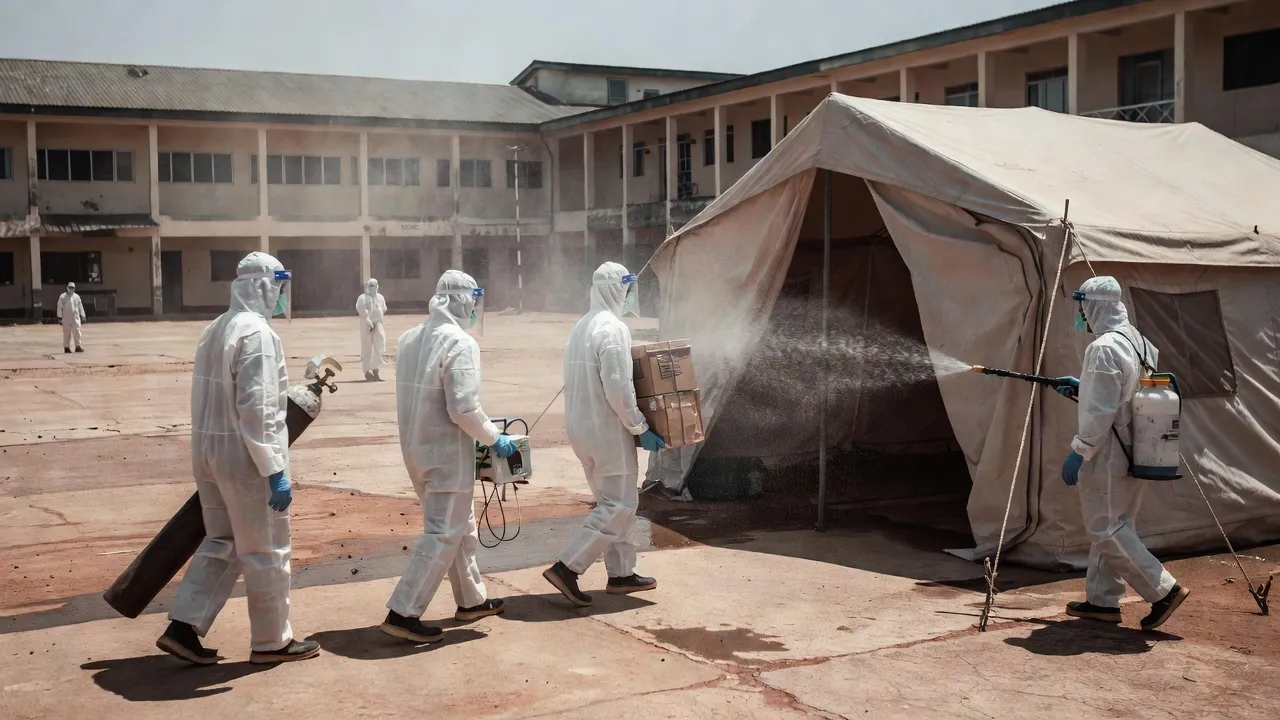

DOMINANT ANGLE
Copenhagen is quietly relaying Abuja's alert and is particularly focused on contact tracing, following a Congolese epidemic that is crossing borders.
Dominant angle identified — does not reflect unanimity of this country’s media
KEY POINTS
- 01
Nigeria's Health Minister, Muhammad Ali Pate, confirmed on Tuesday a case of Ebola in Abuja in a woman from Uganda, who was initially treated for several days in a private hospital.
- 02
44 close contacts of the patient have been identified; authorities will monitor healthcare workers, patients, relatives, and others she encountered during her trip.
- 03
In Kenya, a new case (a 49-year-old hospital cleaner) brings the total to eight, according to Patrick Amoth, cited by Reuters via Politiken.
ANALYSIS
Copenhagen, October 21, 2026. The Danish press treats the Nigerian announcement as a news agency dispatch, without editorializing or dramatization. Berlingske and Politiken headline almost identically: "Nigeria confirms its first case of Ebola," and both rely on AFP.
The Nigerian Minister of Health, Muhammad Ali Pate, confirmed a case in Abuja, the capital, on Tuesday. It involves a woman who had traveled from Uganda to Nigeria. According to the official statement reported by AFP, she was admitted to a private hospital after her arrival, where she received care for several days before the diagnosis was definitively confirmed. She has since been isolated and is continuing treatment, the minister specifies.
The focus is on contact tracing. A significant search effort has been launched, and 44 close contacts have been identified so far. Berlingske notes, however, that it is not specified whether these individuals are considered particularly exposed. The Nigerian Ministry of Health indicates that the authorities will monitor people who may have been exposed: healthcare workers, patients, relatives, and others encountered during the patient's journey.
The two daily newspapers place the case in the regional dynamic. The epidemic that started in the Democratic Republic of Congo, declared in May but which, according to Berlingske, was probably already circulating beforehand, has spread to several neighboring countries. Politiken associates the information with Kenya, which has confirmed a new case, bringing the total to eight. Patrick Amoth, Director-General at the Kenyan Ministry of Health, told Citizen TV: "Today, 38 people were tested, and one tested positive for Ebola." The patient, a 49-year-old man, was cleaning instruments and laundry in a hospital; he is believed to have been contaminated by the first Kenyan case, a traveler from the DRC who died in Nairobi on October 5.
The Danish account remains factual and focused on the health care system: isolation, contact tracing, and the delay before diagnosis. It does not address the issue of vaccination, the funding of the response, or the human toll in the DRC, and does not quote any Danish voices, whether from the government or experts, on the potential risk to Europe.


