
DOMINANT ANGLE
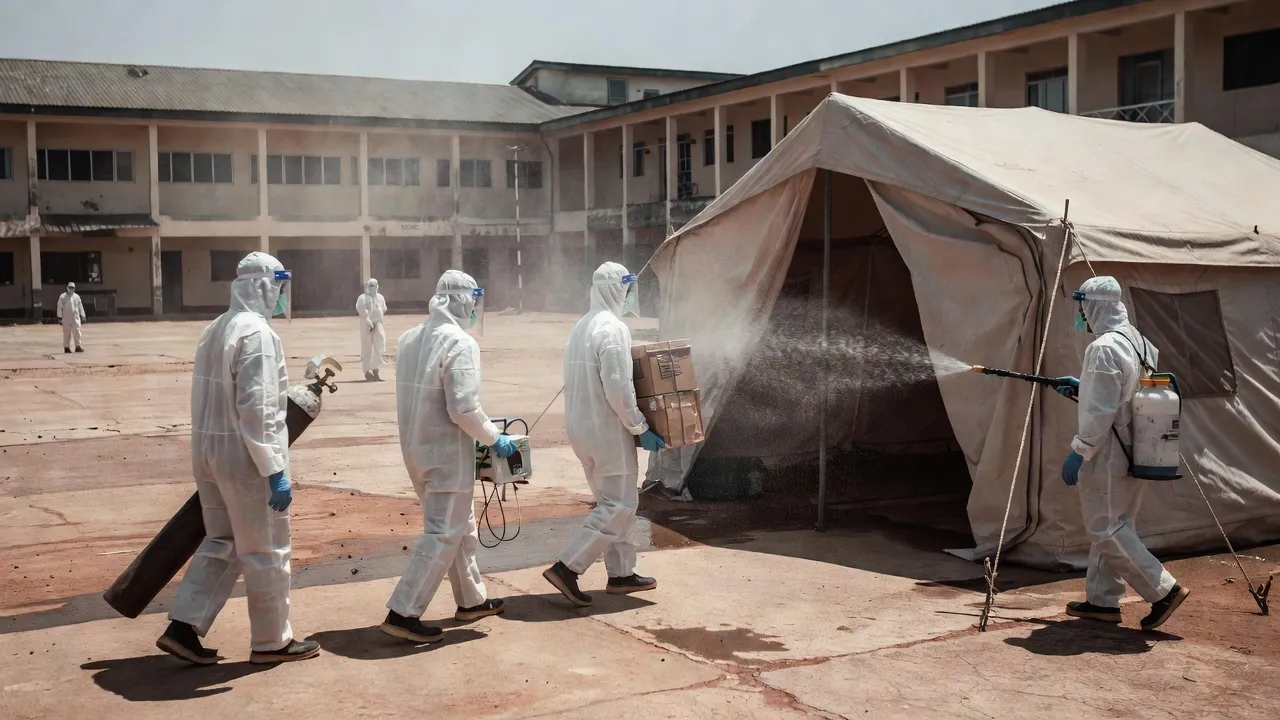
Kinshasa takes away from this Nigerian case the urgency of funding: the Congolese press relays the call from Africa CDC and places the DRC, with a lethality rate close to 50%, at the center of a continental threat.
Dominant angle identified — does not reflect unanimity of this country’s media
KEY POINTS
- 01
On Tuesday, October 20, 2026, Professor Muhammad Ali Pate informed Jean Kaseya of the confirmation of an Ebola Bundibugyo case in Nigeria (Radio Okapi, Actualité.cd).
- 02
Jean Kaseya is calling for "immediate and flexible funding, medical supplies, diagnostics, trained responders, and enhanced community surveillance".
- 03
Africa CDC, which declared the epidemic on May 15, 2026, mentions a fatality rate close to 50% and the largest geographical spread in history for this strain.
ANALYSIS
Kinshasa, October 21, 2026. Congolese media are covering the confirmation of a case of Ebola of the Bundibugyo strain in Nigeria almost exclusively through the words of Africa CDC. Actualité.cd and Radio Okapi are reporting the statement published on Tuesday, October 20, 2026, on the X account of its Director General, Jean Kaseya, after an interview with the Nigerian Minister of Health and Social Welfare, Professor Muhammad Ali Pate. The latter announced the confirmation of the case to him.
The tone is one of regional alert. Jean Kaseya "praises his transparency and leadership" and states that "early notification of cases saves lives." He recalls that when Africa CDC declared the epidemic on May 15, 2026, the organization had already warned of its regional dimension and the risks of cross-border spread. According to him, this Bundibugyo epidemic has become the most geographically widespread in history, with affected countries in three regions of Africa.
The DRC appears in these articles as the reference hub. The two media outlets note that the lethality is approaching 50% in the country, a figure that Jean Kaseya invokes to speak of an "extremely serious" threat to Africa. Radio Okapi specifies that Africa CDC is intensifying its response activities in the DRC and Kenya, while maintaining increased vigilance in Uganda, and that it has begun to mobilize support for Nigeria.
The essence of the message lies in a request for resources. The Director General is calling for "immediate and flexible funding, medical supplies, diagnostics, trained responders, and enhanced community surveillance." Actualité.cd headlines with an "urgent mobilization of the international community" and the financial, logistical, and medical support that partners must reinforce without delay.
The articles do not detail the patient, isolated contacts, or hospital management in Abuja: the Nigerian case serves as a signal of the extension of an epidemic that the DRC has been bearing the weight of for five months. The narrative emphasizes cooperation between countries and the speed of notification as levers to contain the spread, rather than Nigeria's health policy.


