
DOMINANT ANGLE
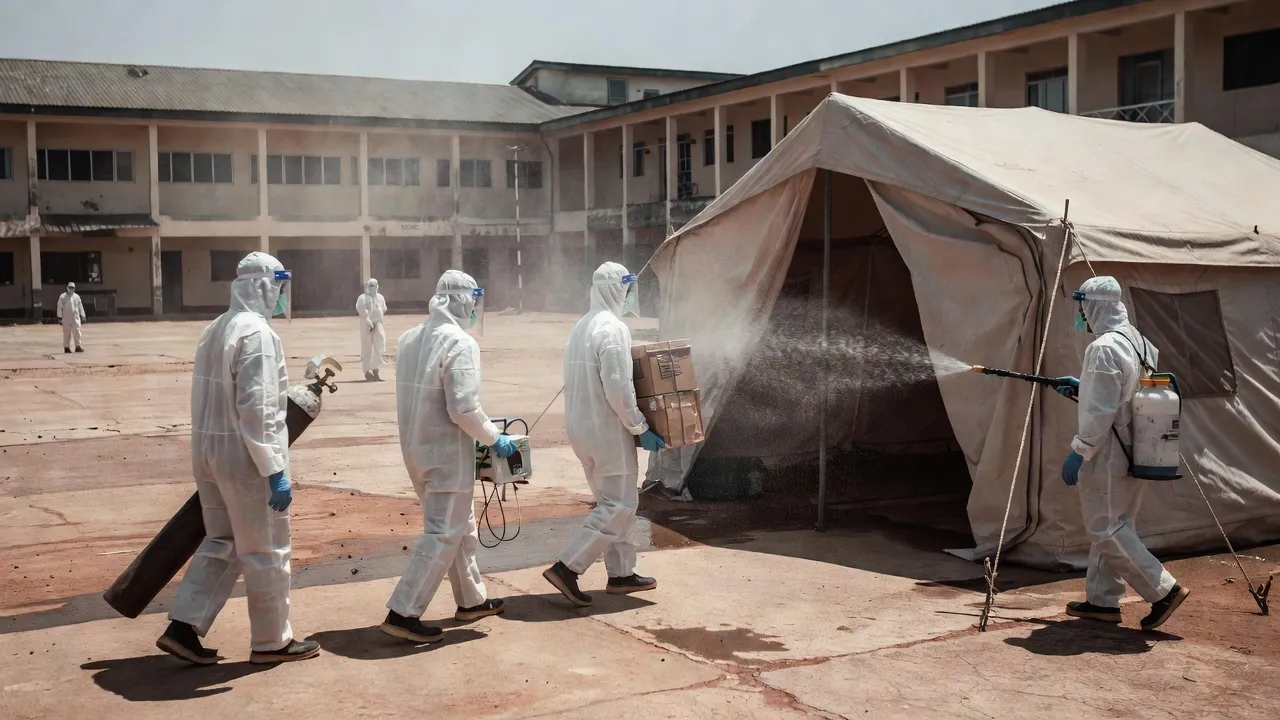
London is gauging the geographical spread of Ebola through the Abuja case, emphasizing the tracing of 44 contacts and the regional scope of the Bundibugyo strain.
Dominant angle identified — does not reflect unanimity of this country’s media
KEY POINTS
- 01
Nigeria has confirmed an Ebola case in Abuja in a woman from Uganda; 44 close contacts have been identified for tracing (BBC).
- 02
Symptoms appeared on October 7 according to the WHO; Uganda claims the patient only transited and asserts it has no confirmed active cases (BBC, Guardian).
- 03
The epidemic in the DRC has killed at least 4,600 people with over 9,500 cases; Kenya has nine infections (BBC, Guardian).
ANALYSIS
London, 21 October 2026. The British press is treating the Abuja case as a stage in an epidemic that is changing scale. The BBC reports that Nigeria has recorded an Ebola case in a woman who traveled from Uganda to the capital, "Abuja, capital of the West African state". The Minister of Health, Muhammad Ali Pate, specifies that the diagnosis was confirmed by laboratory tests. According to health sources cited by the channel, the patient is not Nigerian and is the wife of a diplomat; she is isolated and being treated in a hospital in Abuja.
The medical calendar is given with precision. According to the WHO, as reported by the BBC, the symptoms appeared on 7 October, four days after the patient arrived in the country. The Guardian indicates that she was admitted to the hospital four days later, then diagnosed, while noting that it is unknown when she arrived in Nigeria. The authorities have begun contact tracing: 44 people have been identified. "We are doing everything possible to contain this case," Pate tells the daily.
The two titles recall that Nigeria, the first state in West Africa to report a case related to the current crisis, had managed to halt a previous epidemic in 2014. The Guardian makes this case the latest in a series: Kenya confirmed its first case this month and now has nine infections.
A point of friction appears with Kampala. The Ugandan Ministry of Health claims that the patient only transited through Uganda and that she is a Nigerian on a business trip in eastern Democratic Republic of Congo. "Travel through Uganda does not establish that infection occurred here," it writes, adding that the place of exposure remains under study and that there are "no confirmed active Ebola cases" in the country. The Nigerian authorities have not published the patient's nationality, which The Guardian notes.
The regional context dominates. The Guardian quotes the Director-General of the Africa CDC, Jean Kaseya: "we are facing an extremely serious threat", with a fatality rate close to 50%, and a Bundibugyo epidemic that has become "the most geographically extensive in history", affecting several countries in three regions of Africa. The BBC situates the Congolese outbreak, declared in May, at over 4,600 deaths and more than 9,500 cases according to the European Centre for Disease Prevention and Control, and recalls the modes of transmission through contact with bodily fluids.


