
DOMINANT ANGLE
The United States is analyzing the Abuja case as another link in a regional Bundibugyo epidemic, where everything hinges on tracing the 44 contacts.
Dominant angle identified — does not reflect unanimity of this country’s media
KEY POINTS
- 01
Nigeria confirmed an Ebola case on Tuesday in Abuja in a woman who arrived from Uganda; symptoms on October 7, admission on October 11 to a private hospital.
- 02
Minister Muhammad Pate indicates that 44 contacts have been identified and their tracing has begun.
- 03
Jean Kaseya, from Africa CDC, mentions an "extremely serious threat", a fatality rate close to 50%, and the most geographically extensive Bundibugyo epidemic in history.
ANALYSIS
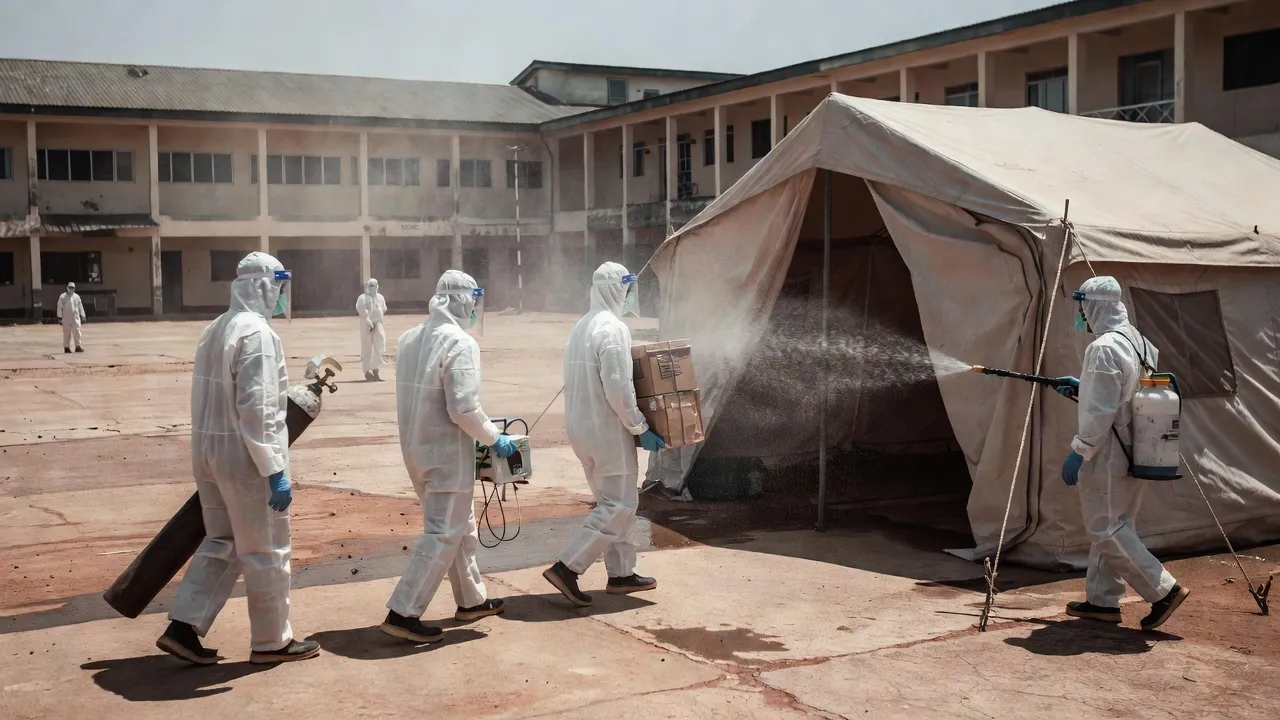
Washington, October 21, 2026. US media outlets are reporting an Associated Press dispatch from Lagos, stating that Nigeria confirmed a case of Ebola in its capital, Abuja, on Tuesday, October 20, in a woman who arrived from Uganda and tested positive, according to the Ministry of Health.
The account focuses first on the clinical timeline. The patient presented symptoms on October 7 and was then admitted to a private hospital in Abuja on October 11, where the Ebola diagnosis was made. The text does not detail what happened between these two dates, but the reader can measure the interval.
The Minister of Health, Muhammad Pate, is the central voice. He indicates that the authorities have begun to track down 44 people identified as contacts of the patient: "We are doing everything possible to contain this case by tracking down all the contacts this person may have had." The Nigerian Centre for Disease Control (NCDC) is cited for having strengthened surveillance two weeks ago, after the virus was detected in Kenya, with an emphasis on early detection, isolation, laboratory diagnosis, infection prevention, contact tracing, and protection of healthcare workers.
The case is placed in a regional dynamic. Uganda had reported cases before declaring itself free of the disease; Kenya confirmed its first case earlier in October and has since recorded nine infections. Nigeria is presented as "the last country" to be affected by the outbreak.
The alert comes from the Africa CDC. Its Director-General, Jean Kaseya, writes on X: "We are facing an extremely serious threat," with a fatality rate close to 50% of cases. He adds that the Bundibugyo epidemic "has already become the most geographically widespread in history," affecting several countries across three regions of Africa.
The coverage remains factual and sober, without editorial commentary or an angle on American politics in the available excerpts. The two media outlets in the corpus, ABC News and NPR, publish the same agency text, which limits the diversity of voices: only Nigerian and continental officials are heard, not independent experts or witnesses.


