
DOMINANT ANGLE
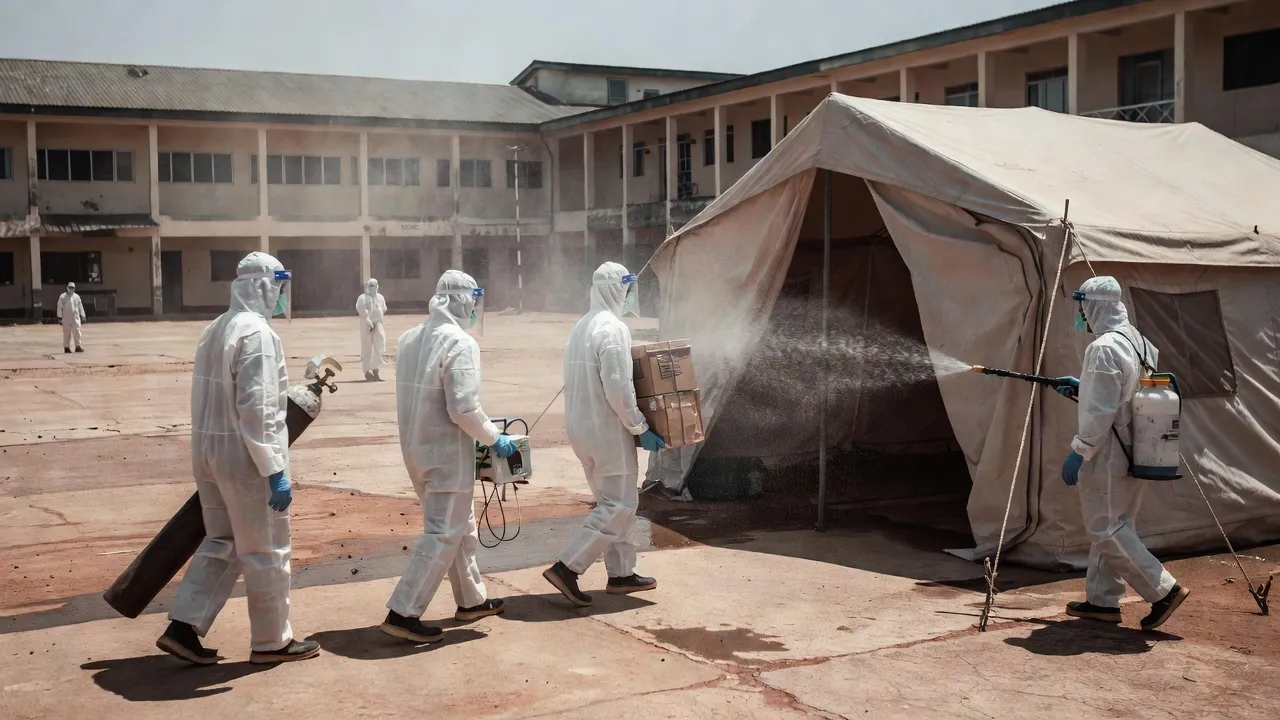
Berlin notes from the Nigerian announcement the contact tracing effort: 44 people identified around a patient carrying the Bundibugyo variant, fourth African country affected.
Dominant angle identified — does not reflect unanimity of this country’s media
KEY POINTS
- 01
44 contacts identified around the patient, including medical staff, other patients, caregivers, and travel contacts (Tagesschau)
- 02
Nigeria, the fourth African country affected by the Bundibugyo variant, after the DRC, Uganda, and Kenya (Tagesschau)
- 03
DRC: 9,552 cases and 4,602 deaths recorded according to Tagesschau; the epidemic began in mid-May
ANALYSIS
Berlin, October 21, 2026. For the Tagesschau as for the Deutsche Welle, the news first concerns a geography: Nigeria, "Afrika's bevölkerungsreichstes Land" with some 220 million inhabitants, records its first case of Ebola in the current epidemic. The Tagesschau headlines "Nigeria bestätigt ersten Ebola-Fall" and specifies that it is the Bundibugyo variant.
The facts are presented in a sober manner. According to the Ministry of Health cited by the Tagesschau, the patient recently arrived from Uganda by plane and was treated for several days in a private clinic in the Abuja region before laboratory results confirmed the infection. She is in isolation and receiving care. The DW, which dates the announcement to Tuesday, cites Minister Muhammad Ali Pate: the woman arrived "on an international flight from Uganda". The channel indicates that the first symptoms appeared on October 7 and that hospitalization in a private establishment in Abuja dates back to October 11.
Contact tracing is at the center of both texts. Forty-four contacts have been identified, including medical staff, other patients, caregivers, and people met during travel. Pate assures: "We are doing everything possible to contain this case by tracing all contacts the individual may have had". The government has called on all public and private establishments to be on "höchster Wachsamkeit".
The DW recalls that the Nigerian Center for Disease Control had strengthened surveillance two weeks earlier after the first cases in Kenya, and that the country created an Ebola crisis cell in June. It cites the desire not to repeat the episode of the previous epidemic, where a carrier had entered the country and where everyone had to improvise.
The regional context is detailed with figures. The epidemic began in mid-May in the Democratic Republic of Congo, where the Tagesschau reports 9,552 cases and 4,602 deaths according to the health authority. Kenya has eight cases, including one death, according to the Tagesschau, nine cases according to the DW; Uganda, which borders Congo and Kenya, has a total of 20 confirmed cases. The DW emphasizes that the vast majority of cases remain concentrated in the DRC, especially in the eastern provinces.
The two media outlets remain in the register of service information: no criticism of the Nigerian authorities, no debate on late management, little room for funding appeals. The emphasis is on the transmission chain and health surveillance.