
DOMINANT ANGLE
Accra is watching the arrival of Ebola in Abuja as a regional tracing test: an imported case from Uganda, 44 contacts, and a strain without an approved vaccine.
Dominant angle identified — does not reflect unanimity of this country’s media
KEY POINTS
- 01
Nigerian Health Minister Muhammad Ali Pate confirmed on Tuesday a case of Ebola in Abuja in a traveler from Uganda, with 44 contacts identified.
- 02
The outbreak that began in May in the DRC has caused at least 4,600 deaths out of more than 9,500 cases according to the ECDC, cited by Graphic Online.
- 03
The Bundibugyo strain has no approved vaccine or treatment, with trials underway.
ANALYSIS
Accra, October 21, 2026. The Ghanaian press reported on Tuesday the confirmation of an Ebola case in Abuja. According to GBC Ghana Online, Nigerian Health Minister Muhammad Ali Pate announced that a traveler from Uganda had tested positive, marking the first appearance of the disease in the capital during the recent regional outbreak. Graphic Online adds that Nigeria is the first West African state to report a case related to the current crisis in East Africa, and recalls that it had managed to contain a previous epidemic in 2014.
The chronology is detailed by GBC: symptoms appeared on October 7, the patient was admitted on October 11 to a private hospital in Abuja, and the infection was then verified in a laboratory. She is in isolation and receiving specialized care, while the authorities have launched containment procedures to prevent local transmission.
Contact tracing is at the center of the story. Epidemiologists have identified 44 people who came into contact with the patient before her isolation. "We are doing everything possible to contain this case by tracing all the contacts this person may have had," said Mr. Pate. On public television NTA, he assured that she "is receiving quality care" and that contact tracing "is underway".
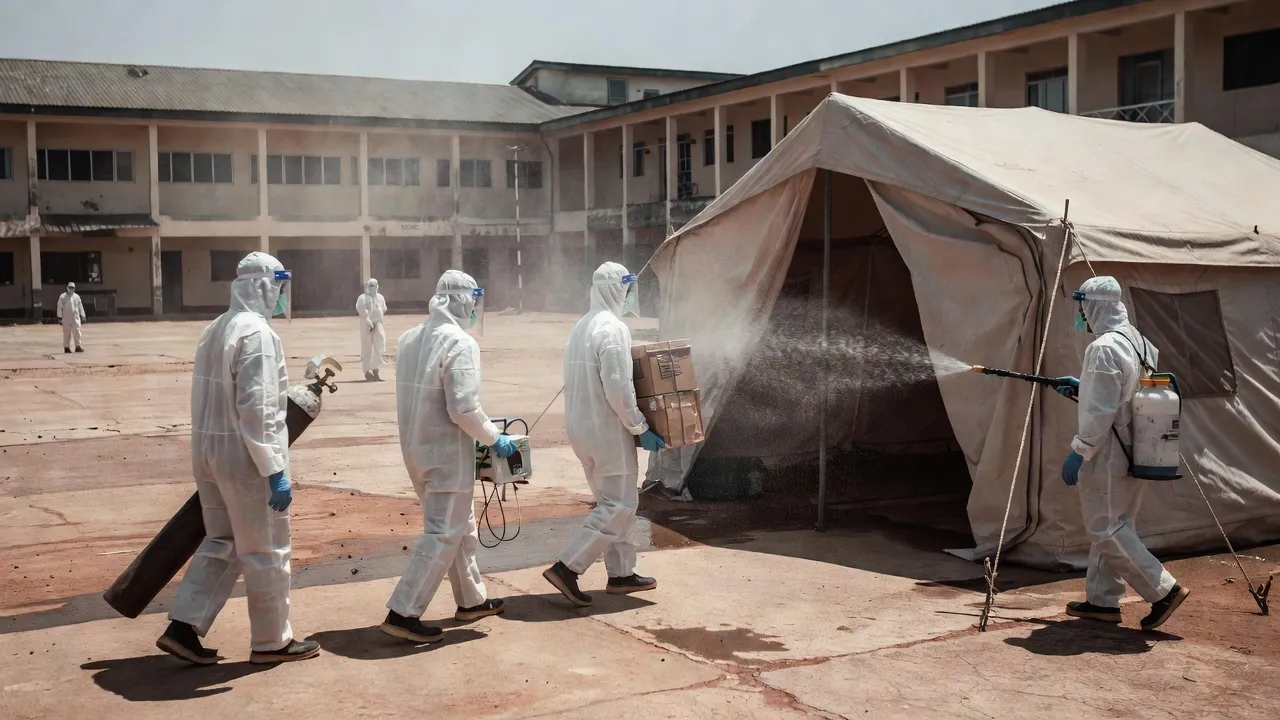
Graphic Online puts the case into the context of the epidemic that began in May in the Democratic Republic of Congo: at least 4,600 deaths and more than 9,500 cases, according to the European Centre for Disease Prevention and Control. It is caused by the relatively rare Bundibugyo species, for which there is no approved vaccine or treatment, although trials are ongoing. Uganda, where at least two people have died, had declared itself free of the disease in August; Kenya has at least nine infections, and the United States raised its travel alert level for the country on Monday.
The two media outlets finally highlight the cross-border dimension: GBC notes that regional travel continues to complicate surveillance between neighboring countries. Nigeria, according to Graphic, had already strengthened its health surveillance since the start of the epidemic. Neither of the two articles directly addresses Ghana's preparation.
SOURCES (2)
- GBC Ghana OnlineMEDIUM
- Graphic OnlineMEDIUM


