
DOMINANT ANGLE
Nairobi is assessing the Abuja case based on its own record, with nine cases and 134 contacts out of 135 in quarantine, and is echoing Kampala's deflection of responsibility.
Dominant angle identified — does not reflect unanimity of this country’s media
KEY POINTS
- 01
The Nigerian Health Minister, Muhammad Ali Pate, announced the case on Tuesday, October 20, and reported 44 people identified as contacts.
- 02
Nine Ebola cases have been confirmed, including one death, with 134 of the 135 identified contacts placed in quarantine.
- 03
Uganda claims to have no confirmed active cases and says the patient's transit does not prove an infection on its soil.
ANALYSIS
Nairobi, October 21, 2026. The Kenyan press is covering the first confirmed Ebola case in Abuja from the angle of regional health response, immediately linking it to the situation in Kenya. Tuko reports on the "44 identified contacts" and recalls that Kenya has confirmed nine Ebola cases, including one death, with 134 out of 135 identified contacts found and quarantined.
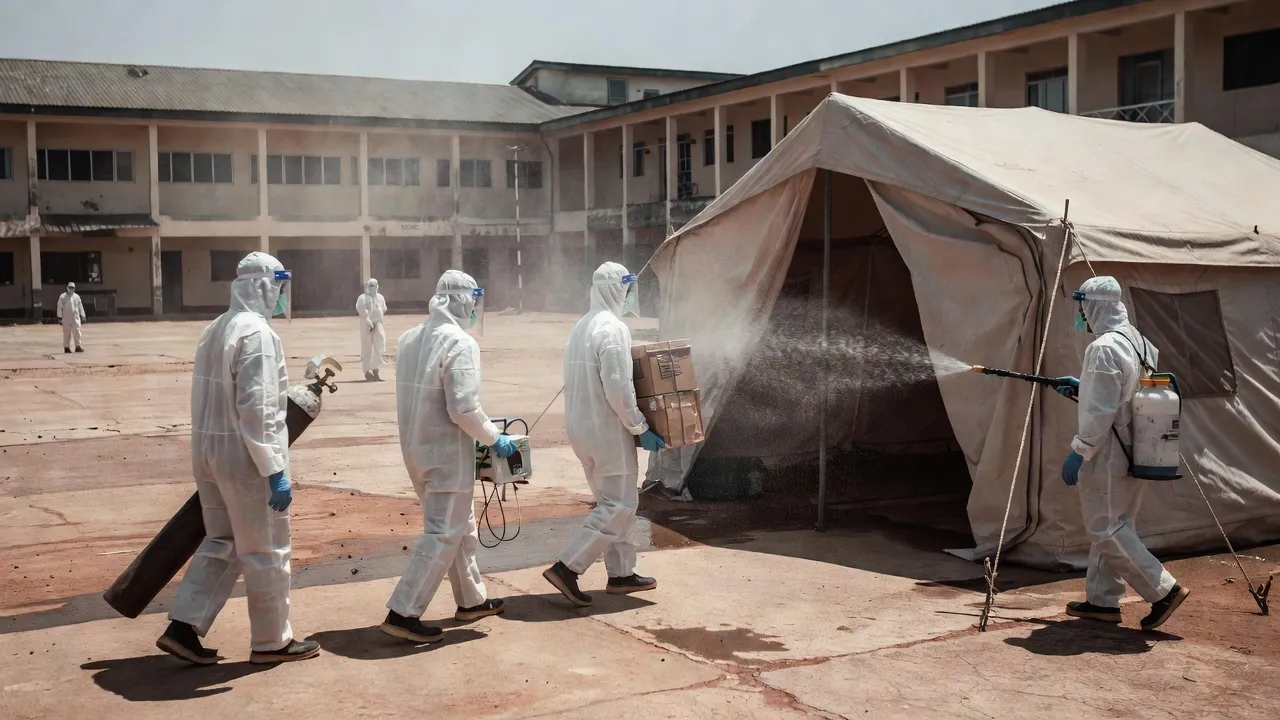
The Nigerian Minister of Health, Muhammad Ali Pate, announced the case on Tuesday, October 20, on the public channel NTA. It involves a woman who recently traveled to Uganda, initially admitted to a private hospital in Abuja where she was treated before laboratory tests confirmed the infection. "She is in isolation and receiving quality care," the minister said, specifying that contact tracing is ongoing. The authorities are trying to determine if others have been exposed, including healthcare workers and others who came into contact with the patient.
Capital FM, which picked up a Xinhua dispatch dated October 21 from Kampala, provides the Ugandan version. The Ugandan Ministry of Health indicated in a statement released late Tuesday that it had not recorded any active confirmed cases. According to the ministry, the Nigerian woman had traveled to eastern Democratic Republic of Congo for business before transiting through Uganda in early October. She had not shown any symptoms in Uganda, with signs appearing after her arrival in Nigeria. "Travel through Uganda does not establish that infection occurred here," the ministry wrote: transiting through Uganda does not prove that the infection occurred there. The location of exposure remains under investigation.
Kampala adds that the Nigerian authorities have not yet provided details of the patient's itinerary and medical history, necessary for potential investigations and additional tracing. This point of friction between the two capitals is relayed as is by the Kenyan media.
For the Kenyan reader, the narrative thus links three elements: an imported case in a West African metropolis, a travel chain passing through East Africa, and a national balance presented as controlled, with almost all contacts monitored. The articles do not detail the strain involved, the patient's condition, or the funding needs for the response.


