
DOMINANT ANGLE
Brussels is claiming this Nobel Prize as one of its own: the press is emphasizing Tienen, KU Leuven, and cycling, while also noting a career made abroad.
Dominant angle identified — does not reflect unanimity of this country’s media
KEY POINTS
- 01
Francis Halzen, born in Tienen in 1944 and a graduate of KU Leuven, receives the 2026 Nobel Prize in Physics for IceCube and high-energy astrophysical neutrinos.
- 02
He is presented as the second physicist to be awarded, after François Englert, whose career mostly took place abroad.
- 03
VRT describes IceCube: 86 cables, 5,000 sensors, 2.5 km under the ice of the South Pole; in Tienen, Mayor Jonathan Holslag mentions a family of builders.
ANALYSIS
Brussels, October 7, 2026. The 2026 Nobel Prize in Physics, announced on Tuesday, October 6, in Stockholm, goes to Francis Halzen, and the Belgian press initially makes it a national affair. La Libre Belgique headlines with "a Belgian," "hunter of elusive particles at the South Pole," and recalls that he was born in Tienen in 1944 and graduated from KU Leuven. La Dernière Heure specifies that he is "the second Belgian to receive this prestigious prize, after François Englert," while noting that most of his career took place abroad, at the University of Wisconsin-Madison.
The Nobel Committee distinguishes him "for his decisive contributions to the IceCube neutrino observatory and the discovery of high-energy neutrinos of astrophysical origin." According to La Libre, the committee judges his "vision and scientific leadership" to be decisive for this ice volume of one cubic kilometer equipped with light sensors. La DH quotes UCLouvain, which speaks of "a unique telescope of its kind."
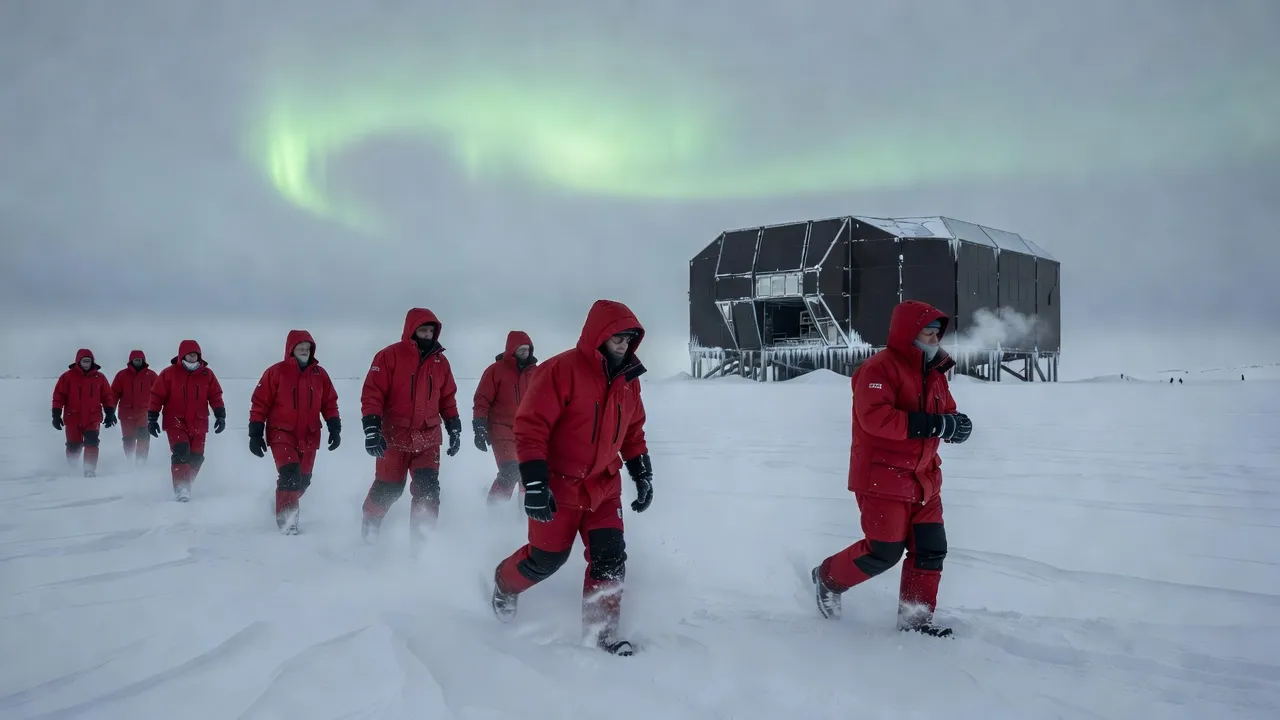
On the Flemish side, VRT NWS takes care to educate. It details the installation: 86 cables, 5,000 sensors, 2.5 kilometers under the ice. It recalls that millions of neutrinos, these "ghost particles," pass through the reader's body while they read. Dirk Ryckbosch, emeritus professor at UGent, summarizes the paradox: they interact very weakly with matter, which makes them "exceptionally difficult" to observe.
Local pride occupies a special place. In Tienen, VRT collects the reactions of Mayor Jonathan Holslag: Halzen is "from a family of builders," and it was on the family's construction sites that his "reflective work" was prepared. The local atheneum has dug up its archives: "an excellent student." The mayor recalls that the physicist has lived and worked in the United States for a long time, but spent his youth in the sugar city.
The laureate, reached in Italy during the press conference, says he is "completely taken aback": "It was a huge surprise." He was attending a scientific festival in Bergamo the previous weekend. He thanks those who believed in the project from the beginning: "We didn't know if it would ever work." La Libre notes that his name had been regularly circulating among the favorites, and that this great cycling enthusiast, "a memory of his country of origin," took it with detachment.
SOURCES (3)
- La Libre BelgiqueMEDIUM
- VRT NWSMEDIUM
- DH (Dernière Heure)MEDIUM